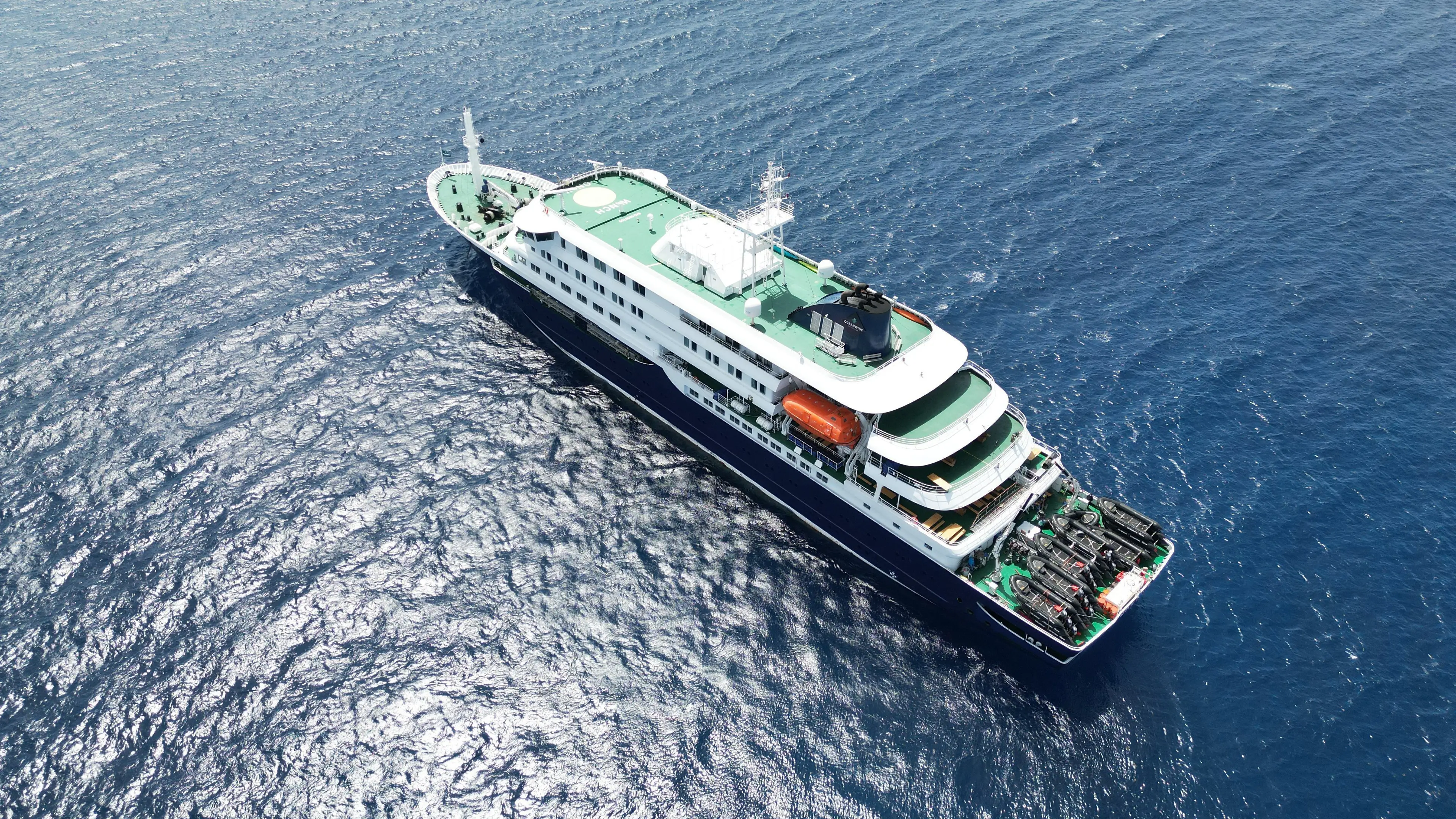
Two terrifying possible causes of hantavirus as three dead following cruise ship outbreak

There are reportedly two possible causes of the ongoing hantavirus outbreak on a cruise ship that's now headed for the Canary Islands.
News broke in recent days that three passengers on a Dutch cruise ship have died after setting sail from Argentina in what's suspected to be a hantavirus outbreak. Those who have died are reported to be Dutch nationals.
Several others have also fallen seriously unwell, including the ship's doctor, BBC News reports.
Another crew member is also sick and both of them needed urgent medical attention after experiencing respiratory symptoms. They were due to be evacuated from the ship yesterday (May 5) and were being taken to the Netherlands, per The Guardian.
Advert
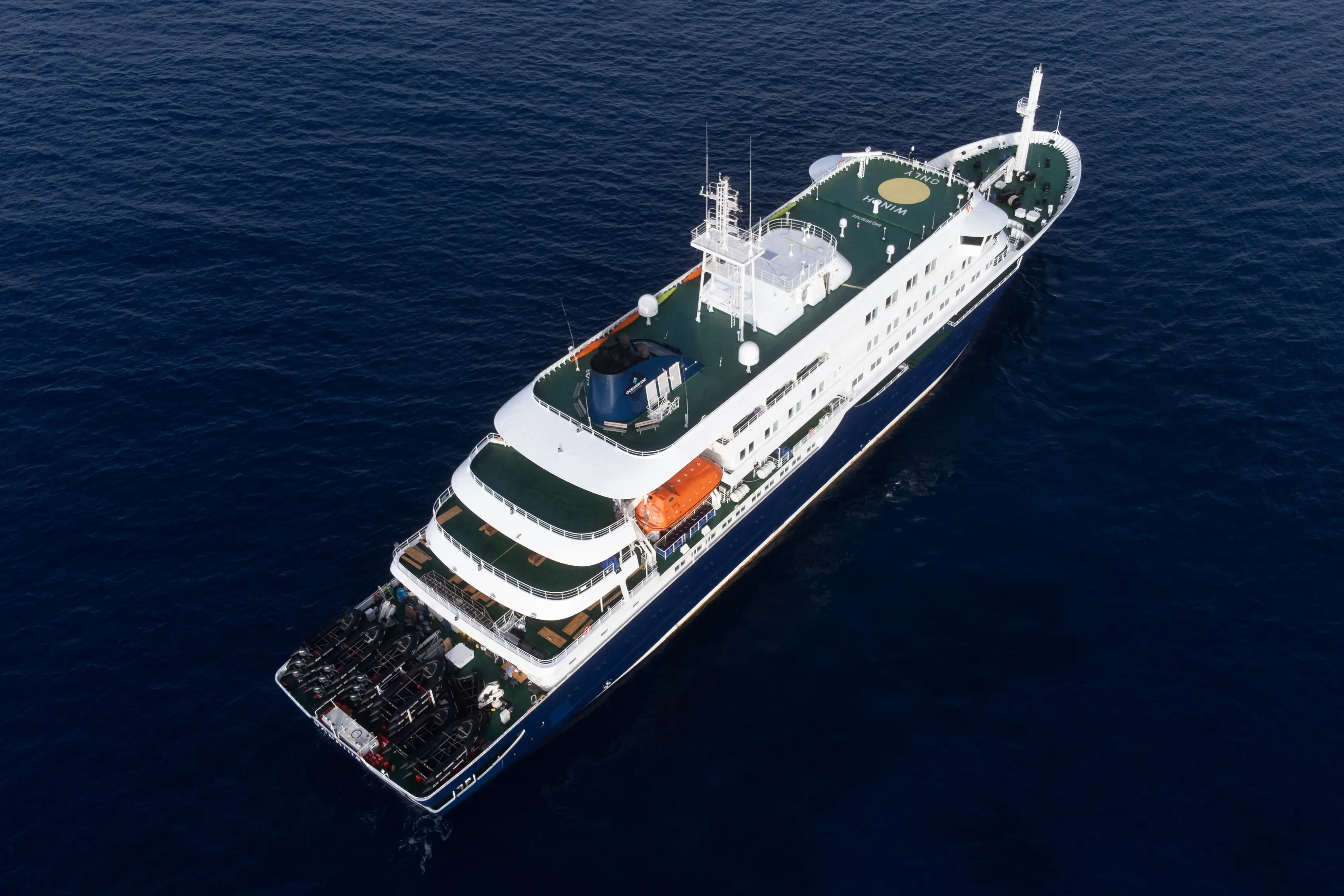
As for the remaining passengers, they will set said to the Canary Islands, according to Spain's health ministry. They will arrive at their destination in the coming days. As of yesterday it was unclear which dock the ship, called the MV Hondius, will arrive at.
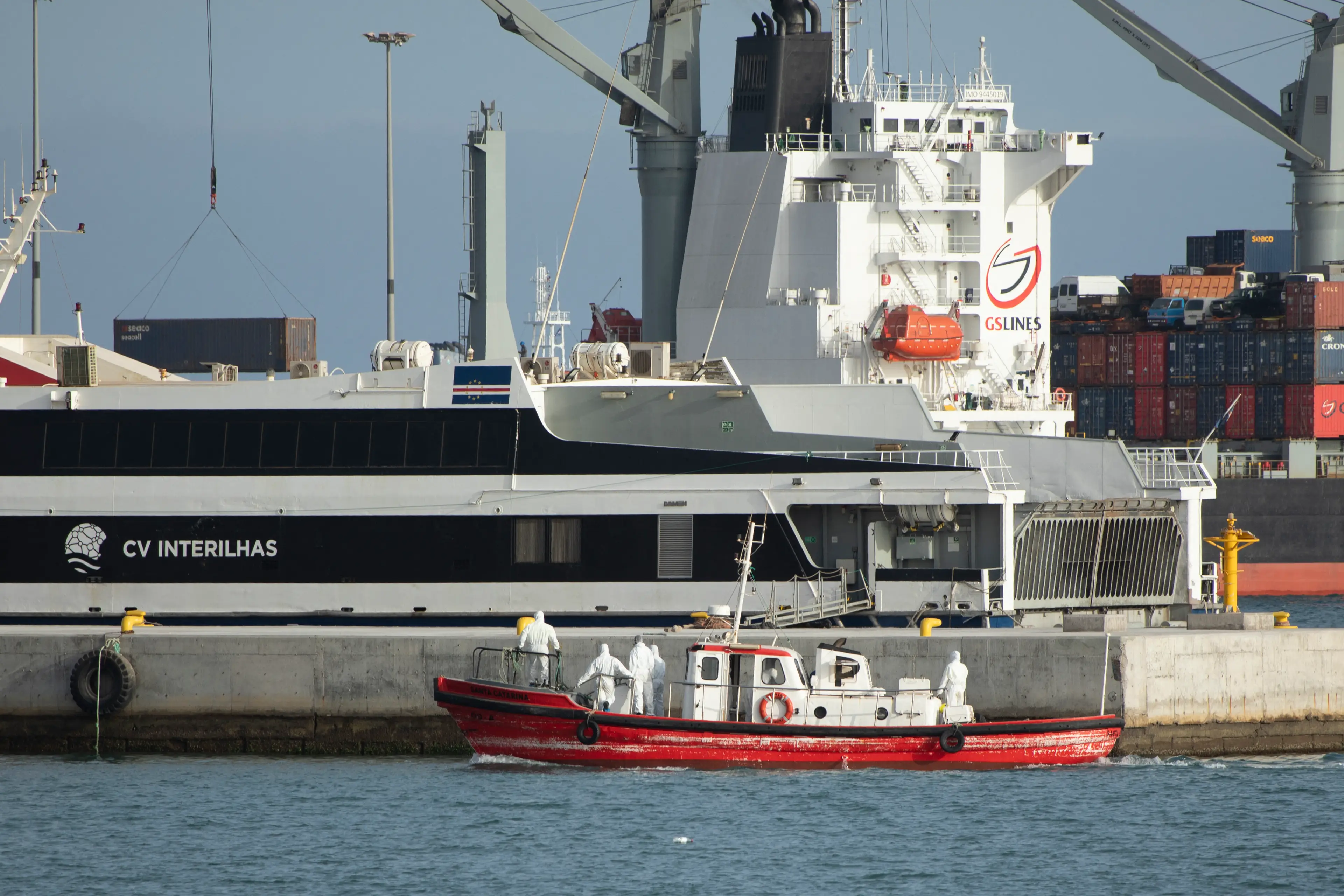
Some 149 people from 23 countries remain aboard, 22 of whom are reportedly British nationals.
Questions have been raised regarding how the outbreak happened and there are said to be two possible causes.
One way hantavirus is spread is through rodents such as a mice and rats. Passengers may have contrated the virus from the feces, urine or saliva of infected rats or mice.
According to physician Zaid Fadul, a former Air Force flight surgeon, this is the usual cause of transmission. However, the World Health Organization (WHO) has reported that no rodents have been found onboard the ship, New York Post stated.
Another cause that cannot be ruled out by health officials is the rare possibility that the virus has been transmitted from person-to-person.
"The Andes virus — that one specific subtype of the hantavirus — in Argentina, where they were, is the one that’s transmitted person-to-person," Fadul told NYP, adding: "And that’s where a lot of anxiety in this case is coming from."
Reportedly this strain of the virus has an alarming 40 percent mortality rate.
Per the WHO, Andes virus is found in South America — where the MV Hondius set sail from.
Its website says of this particular strain: "To date, human-to-human transmission has been documented only for Andes virus in the Americas and remains uncommon.
"When it occurs, transmission between people has been associated with close and prolonged contact, particularly among household members or intimate partners, and appears most likely during the early phase of illness, when the virus is more transmissible."
Doubling down on the theory that the virus has been spread between passengers, WHO official Dr Maria Van Kerkhove told the BBC: "We do believe that there may be some human-to-human transmission that is happening among the really close contacts."
She added that the first person who contracted the virus might have become infected before boarding the ship.
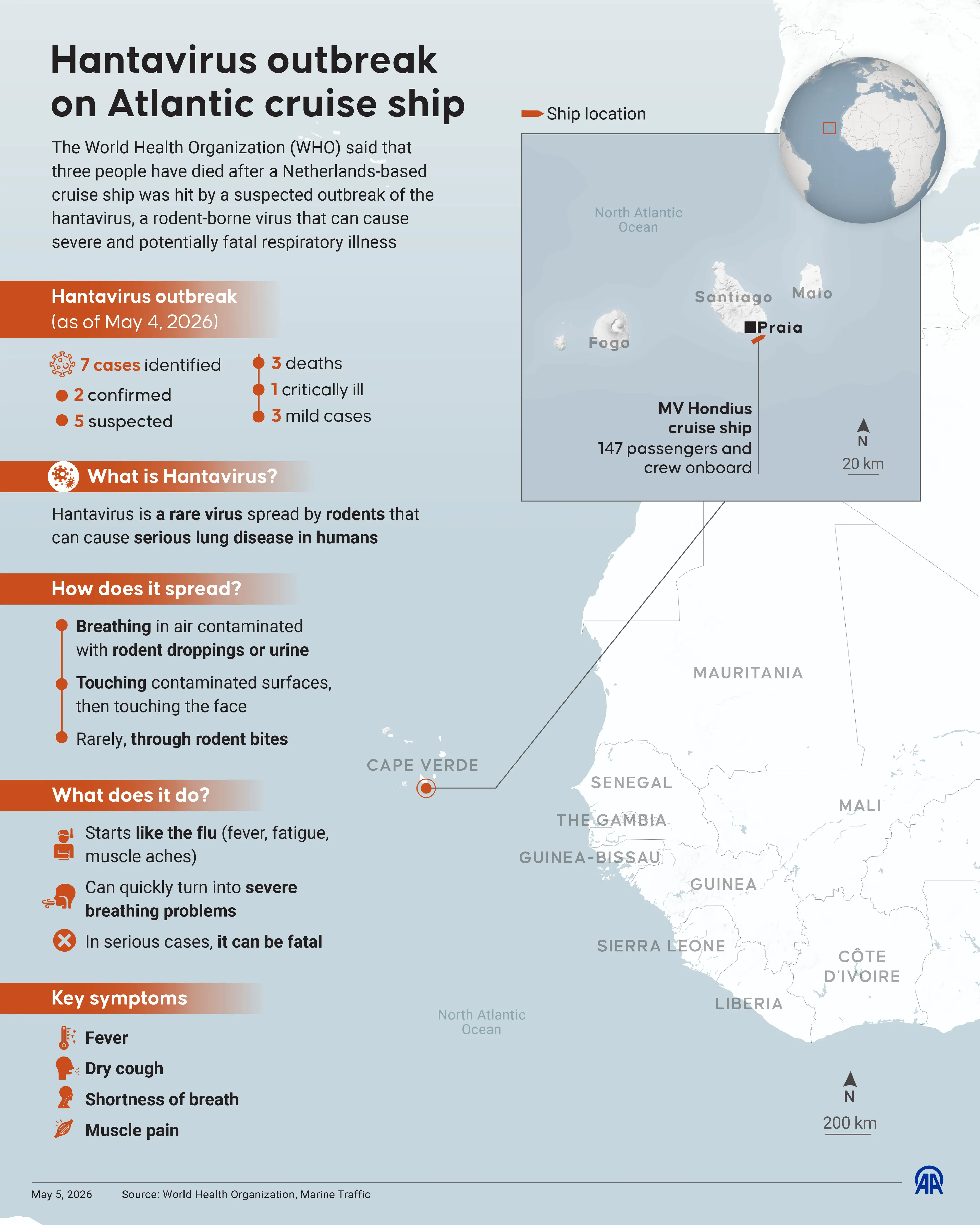
The symptoms of hantavirus:
Hantavirus can cause two life-threatening syndromes, according to the WHO: hantavirus pulmonary syndrome (HPS) and hemorrhagic fever with renal syndrome (HFRS).
The early symptoms of HPS, which attacks the lungs, start one to eight weeks after infection, and include:
- Fatigue
- Fever
- Muscles aches
- Headaches
- Dizziness
- Chills
- Nausea and vomiting
- Diarrhoea
Later symptoms include:
- Coughing
- Shortness of breath
- Tightness in the chest
Early symptoms of HFRS, which affects the kidneys, start one to two weeks after infection, and include:
- Intense headaches
- Back pain
- Abdominal pain
- Fever/chills
- Nausea
- Blurred vision
Later symptoms include:
- Low blood pressure
- Internal bleeding
- Acute kidney failure
Topics: Cruise ship, Travel, Health, World News
 Niamh Shackleton