McDonald's CEO explains why adults are suddenly swapping Big Macs for Happy Meals

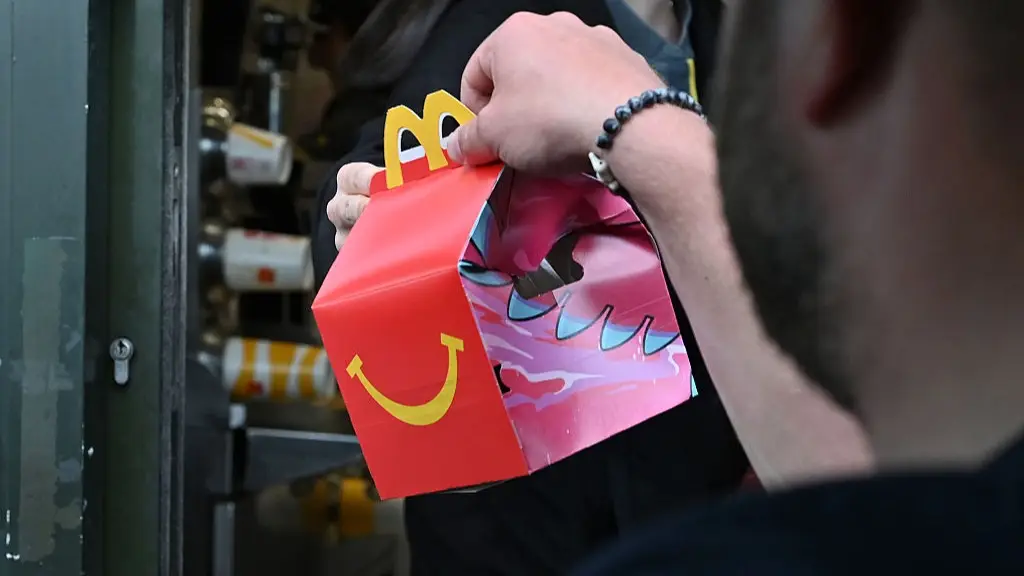
Chris Kempczinski, the CEO of McDonald's, has explained why more adults are ditching the Big Mac for a Happy Meal.
When growing up, many longed for the day they could ditch the smaller portion size of a Happy Meal and tuck into a juicy burger with the Big Mac instead.
Of course, there's also the toy that gives the Happy Meal the one up, but according to the McDonald's head honcho, there's another reason why adults are trading in the fast food chain's iconic offering for what is a children's meal.
Kempczinski told the Harvard Business Review in a recent interview that due to the rise in GLP-1 medications, McDonald's are noticing an increase in adults purchasing Happy Meals.
Advert
It's a well documented that GLP-1 drugs reduce your appetite by slowing down digestion and sending fullness signals directly to your brain.
As such, adults on the medication are typically eating less.
Kempczinski said: "What everybody knows is when you go on a GLP-1, certainly your calorie consumption goes down, calorie consumption decreases, typically 700, 800 calories per day per person when they’re on a GLP-1. So you just play that, of course, that’s going to have an impact in the future.
"I think what’s important, though, is when you get into that to understand how the behavior changes. And certainly one of the things that we see with people who go on GLP-1s is they eat more protein.
"There’s a need to eat more protein. That actually works really well with our menu, because our menu is very protein forward, and we’ve got the ability to continue to innovate in protein."

Discussing how Happy Meals come into this, the McDonald's CEO continued: "One of the interesting things is we’re seeing more adults actually buy our Happy Meals. Why are they buying their Happy Meals?
"Anecdotally—again, we don’t have it in broad numbers data—but anecdotally, when we ask people, some of them say, well, 'I like the portion size on that better because I’m on a GLP-1'. So we’re thinking about, how we might evolve the menu from a portion-size standpoint."
Health expert Susannah Streeter explained to the Mail Online that McDonald's are not alone in having to adapt their menu to changing attitudes towards food.
"The rise of GLP-1 weight-loss drugs is creating another headwind for food companies, as growing numbers of consumers using these treatments around the world eat less – shifting towards smaller portions and healthier choices," she told the outlet.
"For a business built around burgers and fries, changing appetites look set to be a big challenge ahead."
Topics: McDonalds, Weight loss, Food and Drink
 Callum Jones