Scientists stumped as mysterious 'footprints' spotted on Mars

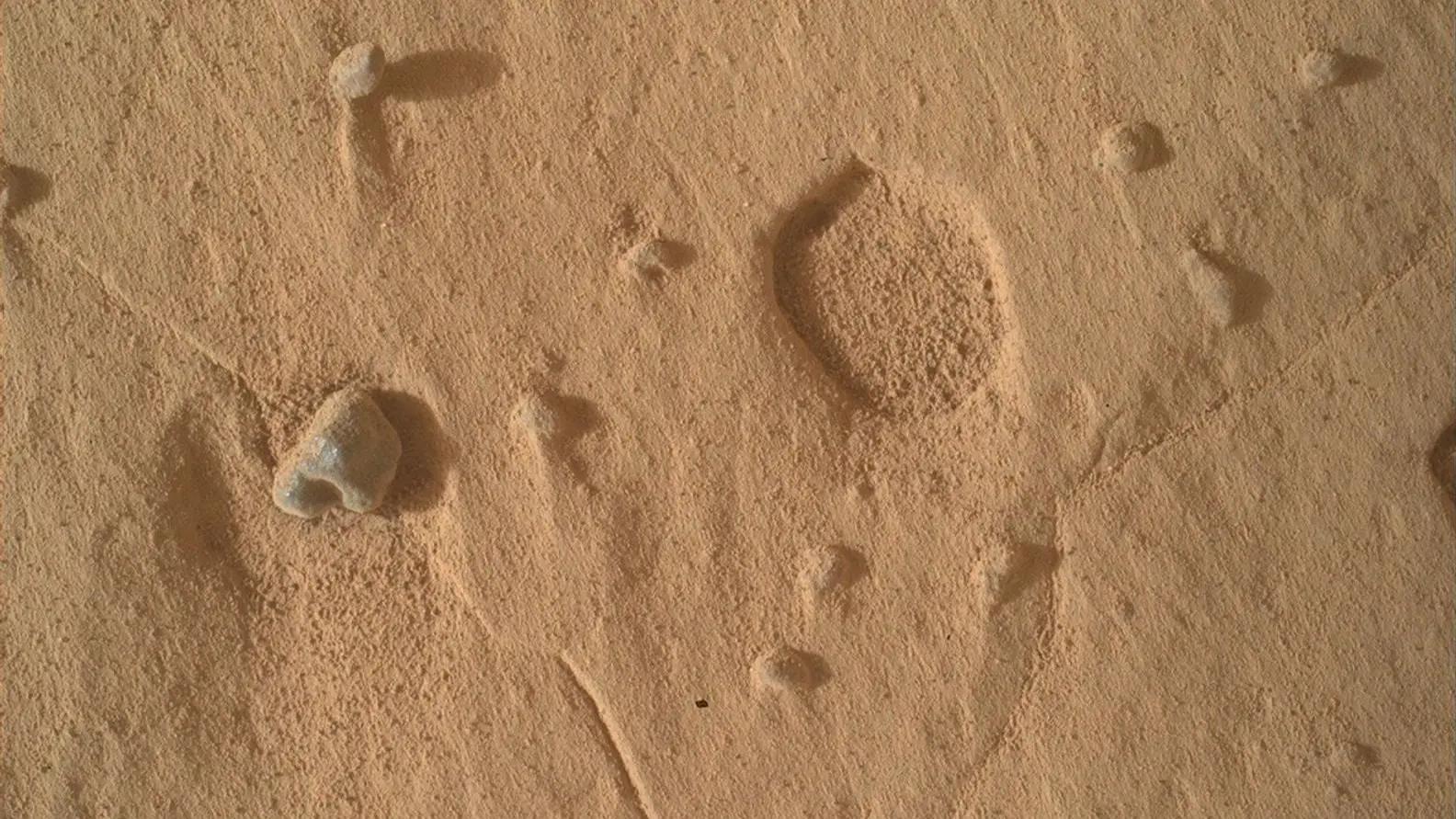
NASA's Curiosity rover has spent nearly 14 years crawling across the surface of Mars, and it's just captured something that has left the scientists monitoring it stumped: a set of broad, shallow pits that bear an uncanny resemblance to footprints.
The strange markings were photographed while Curiosity was making its way up Mount Sharp, the towering mountain that dominates the floor of Gale Crater, according to NASA.
Researchers say the formations don't match anything the rover has documented before during its time on the planet.
Despite the eerie appearance, the team behind the mission isn't claiming Mars has visitors.
Advert
The pits are not believed to be actual footprints, but that hasn't stopped them from becoming one of the more puzzling finds of Curiosity's long run on the Martian surface.
What are the mysterious marks found on Mars?
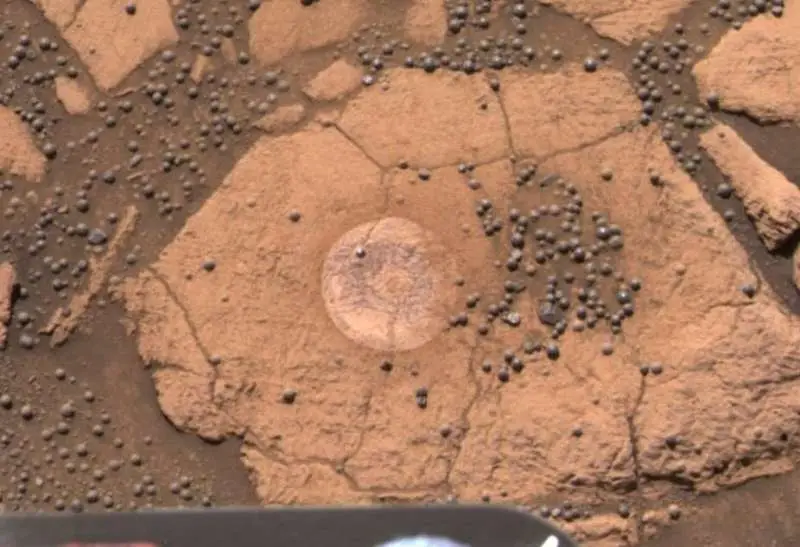
Small pits and depressions aren't unusual on Mars. Typically, they form when tougher pebbles or nodules embedded within the rock slowly erode away over time, leaving behind a hollow where the object used to sit.
What sets these new pits apart is their size and shape. They're notably wider and shallower than any comparable formations spotted previously, and crucially, scientists haven't been able to identify anything that might have once filled them, deepening the mystery around how they formed.
To get a closer look, the Curiosity team turned to two of the rover's onboard instruments, MAHLI and Mastcam, which captured a series of overlapping images.
Combined, those images allow scientists to build three-dimensional models of the pits, giving them a clearer picture of their structure without having to guess from flat photographs alone.
While the footprint-like pits haven't been fully explained, they've handed researchers a fresh clue about the geological history of this particular stretch of Mount Sharp.
The surrounding bedrock also proved to be a rich source of information in its own right.
Has the Curiosity rover found anything else unusual nearby?
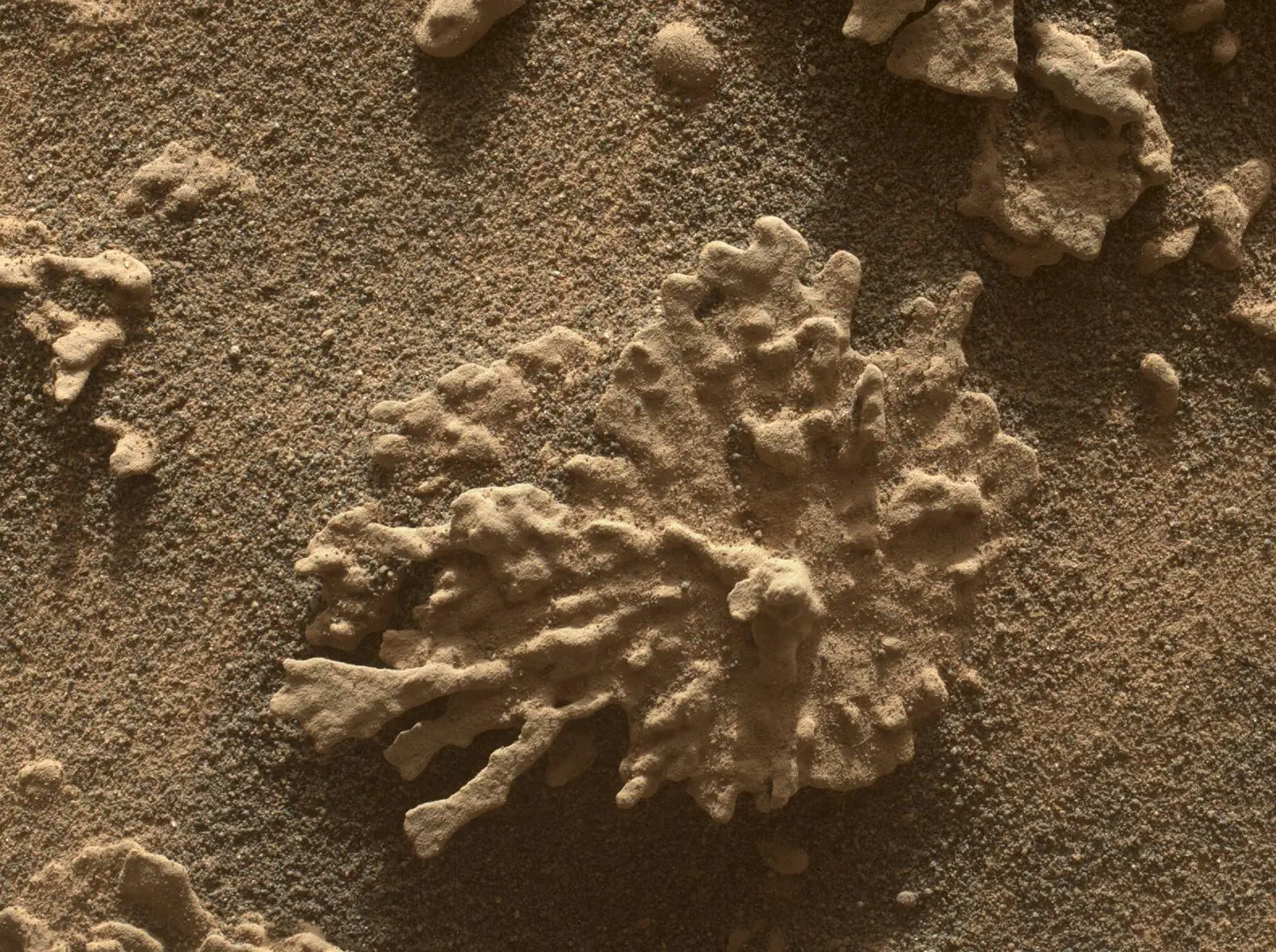
Nearby, Mastcam imagery combined with data from the ChemCam instrument revealed rock layers whose texture and structure shifted noticeably over relatively short distances. Scientists believe those variations could point to changing conditions at the time the sediment was originally laid down.
Curiosity also examined a series of rough, grey-colored rock layers in the area that appeared more resistant to erosion than the bedrock surrounding them. Three separate instruments, ChemCam, MAHLI, and the Alpha Particle X-ray Spectrometer, or APXS - were used to study the material, which scientists suspect may differ chemically from the rock nearby.
The rover, which touched down on Mars back in 2012, has built something of a reputation for uncovering oddities that spark public fascination.
In 2013, one image beamed back from the surface led some online to speculate that Curiosity had photographed a mushroom growing on the planet - a claim that was never substantiated but became a viral moment in its own right at the time, per NASA.
For now, the newly discovered pits remain unexplained, and NASA's science team continues to analyze the data gathered by Curiosity as it makes its way further up Mount Sharp.
 Thomas Bamford