Expert claims Iran 'strategy' has lured Trump into military trap using clever war tactic

Despite continued claims that the Iranian regime and military assets have been destroyed by US-Israeli strikes coming from the White House, drones and missiles continue to wreak havoc across the Middle East.
While President Donald Trump's end goal in the war remains unclear, his plan for bringing the regime to its knees is about as clear as it gets, after dropping an estimated $5.6 billion in explosive ordinance on the country in just the first two days, per The Washington Post.
But despite Trump claiming there's 'nothing left to target', Iran's cheap but deadly Shahed drones have continued to strike at US military installations and allied nations across the Gulf. However, an expert on global security matters says this could show that we are walking right into a trap.
'America and Israel may have bitten off more than they can chew'
Proving the famous line that 'history repeats itself, first as tragedy, then as farce', the University of Chicago's Professor Robert Pape believes that Iran's tactics indicate that Trump is sleepwalking into the same trap that led to the death of around 2,000 US soldiers in Vietnam.
Advert
Professor Pape, who wrote a book on why you can't change a regime with air power alone, Bombing to Win: Air Power and Coercion in War, warned in Foreign Affairs that 'America and Israel may have bitten off more than they can chew'.
This is in spite of the rather heavily weighted balance of casualties, with seven US service personnel dying in the last week-and-a-half, while more than 1,200 people have died in Iran as a result of continuous US-Israeli bombardments.
But despite the casualty figures being heavily one-sided, Pape says that increasing the geopolitical risk in the war is exactly what Iran wants.
The academic explained: "Iran’s strikes cannot be dismissed as acts of scattered retaliation, the flailing lashing out of a dying regime. Rather, they represent a strategy of horizontal escalation, a bid to transform the stakes of a conflict by widening its scope and extending its duration."
Pape also wrote: "Horizontal escalation occurs when a state widens the geographic and political scope of a conflict rather than intensifying it vertically in a single theatre.
"It is especially appealing as a strategy for the weaker parties in a military contest. Instead of trying to defeat a stronger adversary head-on, the weaker side multiplies arenas of risk - drawing additional states, economic sectors, and domestic publics into the remit of the conflict."
This isn't some genius new strategy by the Iranian military, but a recognition of how America lost another large-scale conflict, despite winning on paper. That is, by repeating the infamous Vietnamese Tet Offensive.
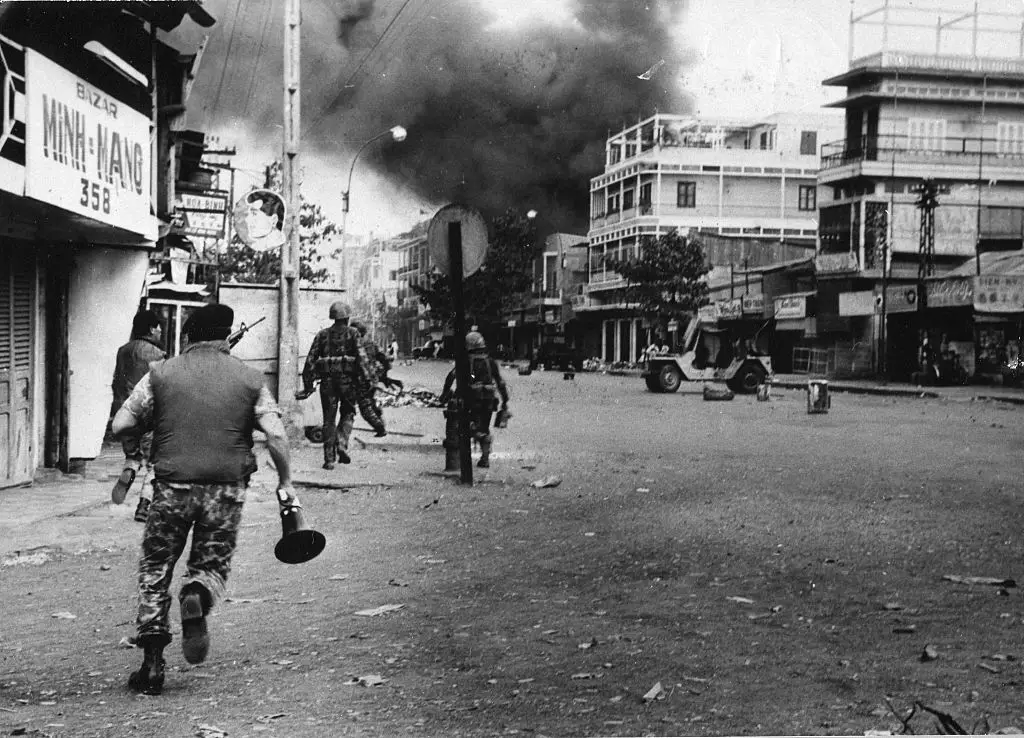
By 1968, three years after America joined the war to stop the spread of Communism in Asia, the US had dropped more ordnance on Vietnam than during the entirety of World War Two.
During this air campaign, dubbed Operation Rolling Thunder, US airmen had essentially wiped out the North Vietnamese's military and industrial centers, with Washington believing that an escalation in the protracted conflict could bring it to an end.
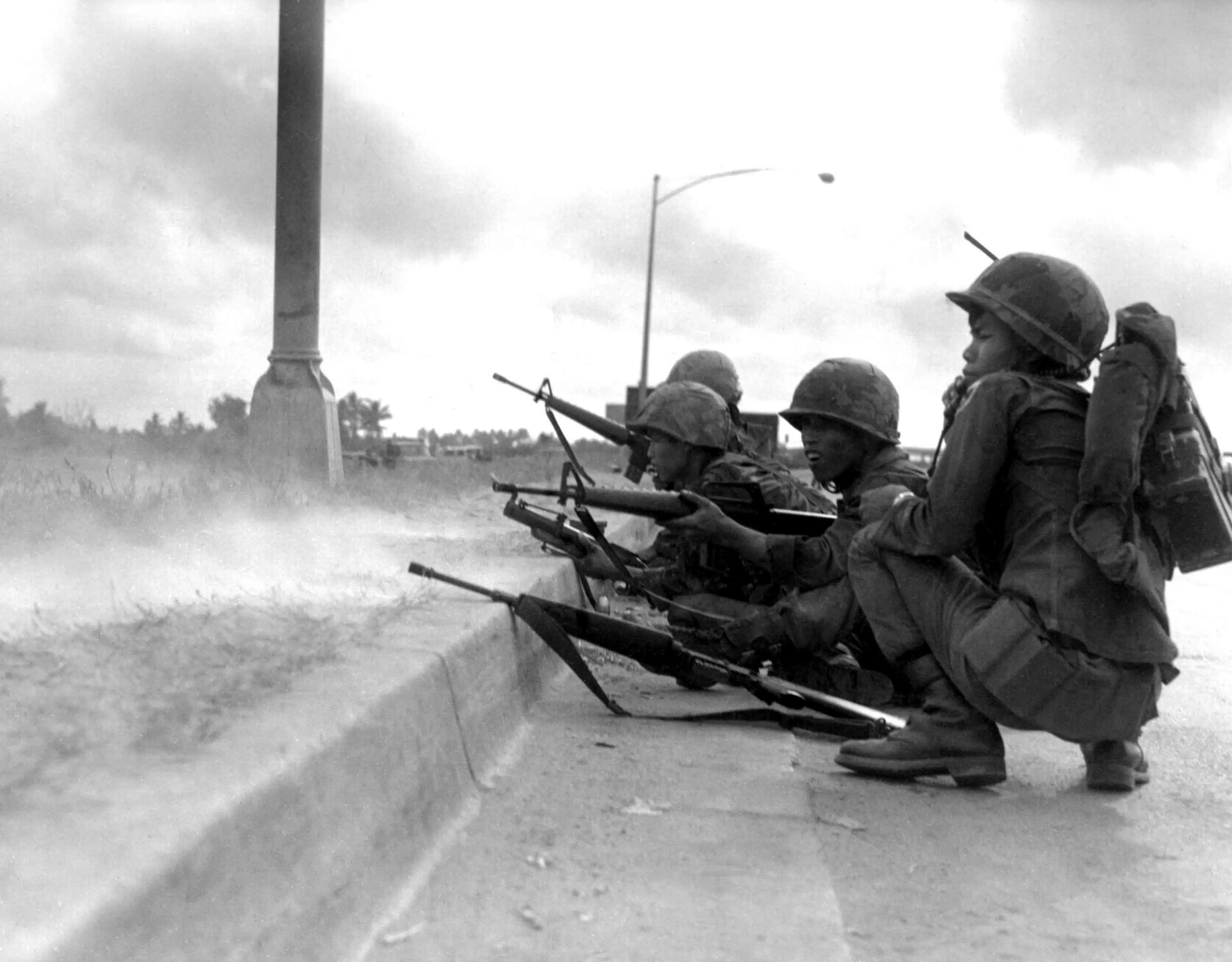
Instead, during a national holiday a few months later, Communist forces carried out a coordinated attack simultaneously on more than 100 targets across Vietnam. This is thought to have led to tens of thousands of dead North Vietnamese, while roughly 2,000 Americans were killed.
But the ultimate victory of the Tet Offensive took place back in the US, where the public's confidence in the administration to bring the war to an end was irrevocable shattered. Even though American forces had won every battle.

'In Vietnam, the United States never lost a battle — but it still lost a war'
Professor Pape explained: "The lesson was not that bombing failed tactically. It was that Hanoi escalated horizontally, widening the conflict beyond rural battlefields into South Vietnam’s cities and political nerve centers, transforming a military contest into nationwide political upheaval, and reshaping domestic calculations in Washington.
"In Vietnam, the United States never lost a battle — but it still lost a war."
With threats to mine the globally important Strait of Hormuz and attacks on oil infrastructure across the Middle East, Pape pointed out that this was the same strategy being used by the Iranian military.
However, President Trump can avoid walking into the same trap as Lyndon B. Johnson, the professor said.
Pape added: "Whether this conflict is merely a contained episode or it becomes a prolonged strategic setback for the United States will depend not on the next volley of missiles but on whether Washington recognizes the enemy’s unfolding strategy — and responds with one of equal clarity."
Fact check: Iran's 'drone threat' to California

According to an alert reviewed by ABC News, the FBI has warned police departments in California over unverified claims that Iran could retaliate to US strikes in the Middle East by launching drones at the state.
"We recently acquired information that as of early February 2026, Iran allegedly aspired to conduct a surprise attack using unmanned aerial vehicles from an unidentified vessel off the coast of the United State Homeland, specifically against unspecified targets in California, in the event that the US conducted strikes against Iran," the alert read. "We have no additional information on the timing, method, target, or perpetrators of this alleged attack."
While the alert sounds worrying, it's important to note that it's common for investigators to share unverified and uncredible information with local law enforcement partners just out of caution.
According to CNN, a law enforcement source said they do not currently believe there is an imminent threat.
Meanwhile, California Governor Gavin Newsom echoed this sentiment on Wednesday (11 March), writing on X: "While we are not aware of any imminent threats at this time, we remain prepared for any emergency in our state."
President Donald Trump said the government is investigating the unverified claim.
Topics: Donald Trump, Iran, World News
 William Morgan