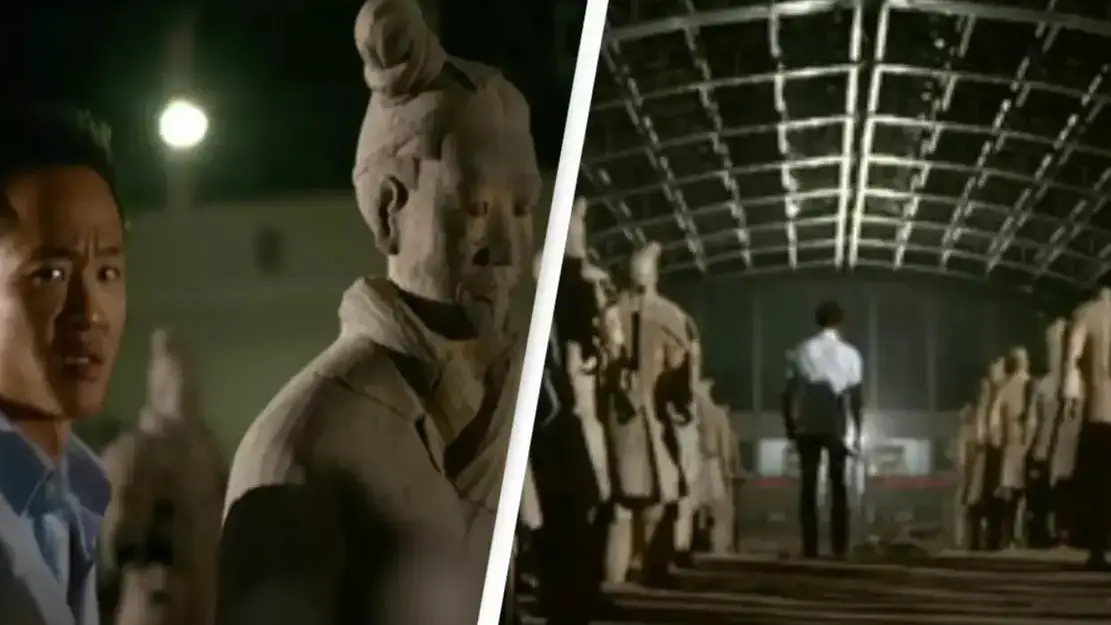
Explorer got very close to China's first emperor's army where archaeologists are too scared to open his tomb

One explorer got as close to the tomb of China's first emperor as archeologists currently dare, as the historical figure's burial place remains undisturbed 2,000 years on.
Qin Xi Huang's tomb complex has been hailed as one of the world's most significant archaeological discoveries and is home to the famous Terracotta Army.
The city-sized lot contains everything he felt he'd need for the afterlife, including an army of clay soldiers.
Advert
The idea was that these figures would protect him after his death in 210 BC.
He was only 49 years old at the time of his passing.
Given that his tomb has remained unopened after all these years, it appears his soldiers are doing a solid job of standing guard.
Archaeologists have long steered clear of opening up the tomb, but not for any superstitious reasons.
There's a scientific reason behind their caution.
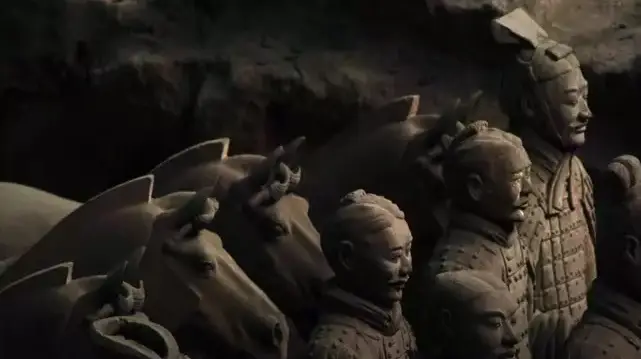
When the complex was first excavated, the clay soldiers were covered in rich colours.
However, a sudden change in atmosphere meant the paint peeled off, leaving them completely bare.
As such, scientists are worried that a similar effect could happen should they open up the emperor's tomb.
It's hoped that archaeological science and technology will advance to allow preservation of the chamber before it can be opened.
Kristin Romey, a curatorial consultant for an exhibition on the Terraccotta Warriors, told Live Science: "Nobody in the world right now has the technology to properly go in and excavate it."
On top of this, there are also concerns that outlandish accounts of booby traps such as self-firing crossbows and rivers of mercury in the tomb may have some truth to them.
But while experts have to remain cautious about how they proceed with some areas, one explorer was once able to have a rare meeting with the Emperor’s Army – an experience he said was ‘incredible’.
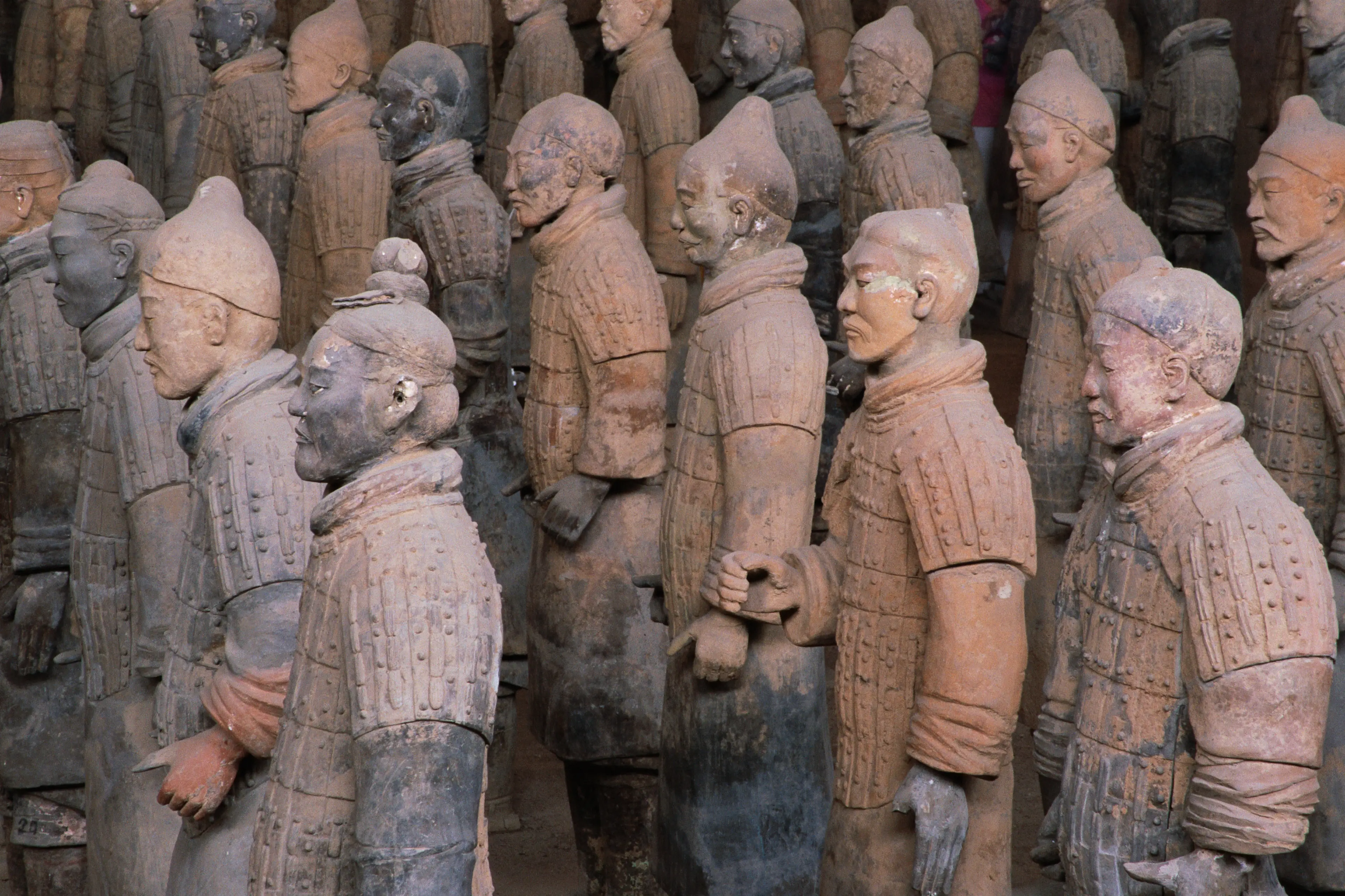
In a video shared six years ago, National Geographic’s Albert Lin explained: "This is the Terracotta Army - 8,000 warriors buried over 2,000 years ago – one of the greatest wonders of the world.
"This is the first Emperor's army. He ordered his real army to be recreated in clay and buried with him, ready to fight his battles in the afterlife.
"Each face is individual and unique. Look at the scale of this place – tells you a lot about the guy, his ego, his vision for his afterlife."
Taking it in, he went on: "What an experience."
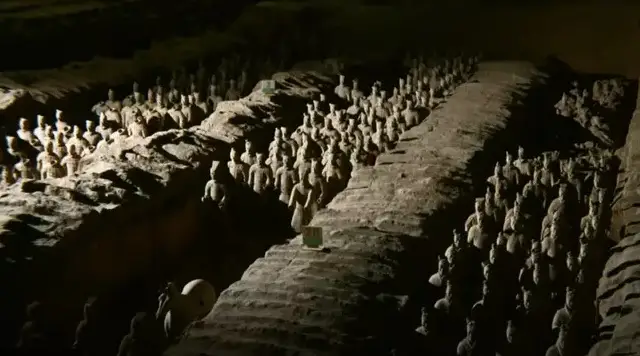
Lin said the warriors he could see were clearly ‘set for battle – exactly like the Emperor’s real army’, with light infantry at the front, then heavy infantry and even cavalry at the rear, along with 520 life-sized horses.
He added: "It’s a really incredible feeling to be here. Standing in a place where nobody really gets access.
"I mean, we’re at the centre, at the heart, of this unbelievable World Heritage Site, which is, in a lot of ways, a symbol of my own cultural heritage, my ancestry."
Topics: Science, Technology
 Ben Thompson