
Archaeologists make groundbreaking 'real-life Atlantis' discovery as submerged city found after 525 years

Archaeologists have made an incredible discovery after unearthing 'traces of a submerged' Atlantis-like city in Asia.
Researchers from the Russian Academy of Sciences have discovered the 'city' in Lake Issyk Kul in Kyrgyzstan, which is the eighth deepest lake in the world.
The lake is located in the western Tianshan Mountains and served as a stopping place on the Silk Road - a route often used by those traveling to Europe from the East.
Incredibly, not only did the excavation into the huge salt lake unearth a medieval burial ground and buildings, researchers think the city could also have featured a Muslim prayer house, schools and bath houses.
Advert
Expedition leader Valery Kolchenko, researcher at the National Academy of Sciences of the Kyrgyz Republic, explained that they believe the site was a city or 'major trading hub'.

Meanwhile, a spokesperson from the Russian Geographical Society added: "All this confirms an ancient city really once stood here."
As part of their investigations, the research team examined four underwater zones and found several brick structures in the first zone, as well as evidence of a mill used to make flour.
According to Heritage Daily, they also found stone structures, wooden beams and in the second zone, a Muslim necropolis.
Meanwhile, the third zone revealed evidence of expansion, including a burial ground, while the fourth zone unearthed 'round and rectangular structures made of mudbrick'.
"The site we are studying was a city or a major trading hub on a key section of the Silk Road," explained Kolchenko.
The lake has no outflow, although some believe it may be connected to a nearby river.
However, its levels have been rising significantly since medieval times which could shed light on why the remains are so submerged.
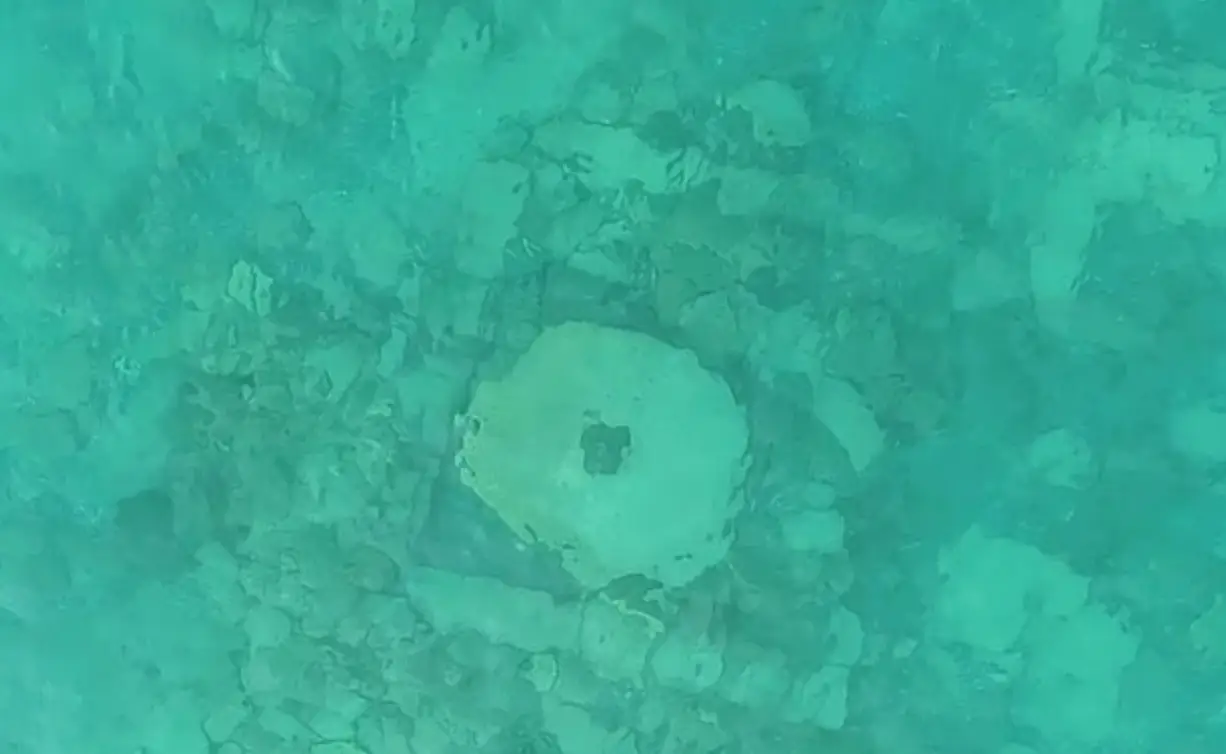
It's believed that the city was lost in the 15th century, to a disaster similar to that of Pompeii, in which the nearby Mount Vesuvius volcano erupted, billowing smoke and gases into the nearby town, eradicating the city and its 10,000 inhabitants.
It is thought that the city sitting in Lake Issyk Kul could have been lost to a 'terrible earthquake'.
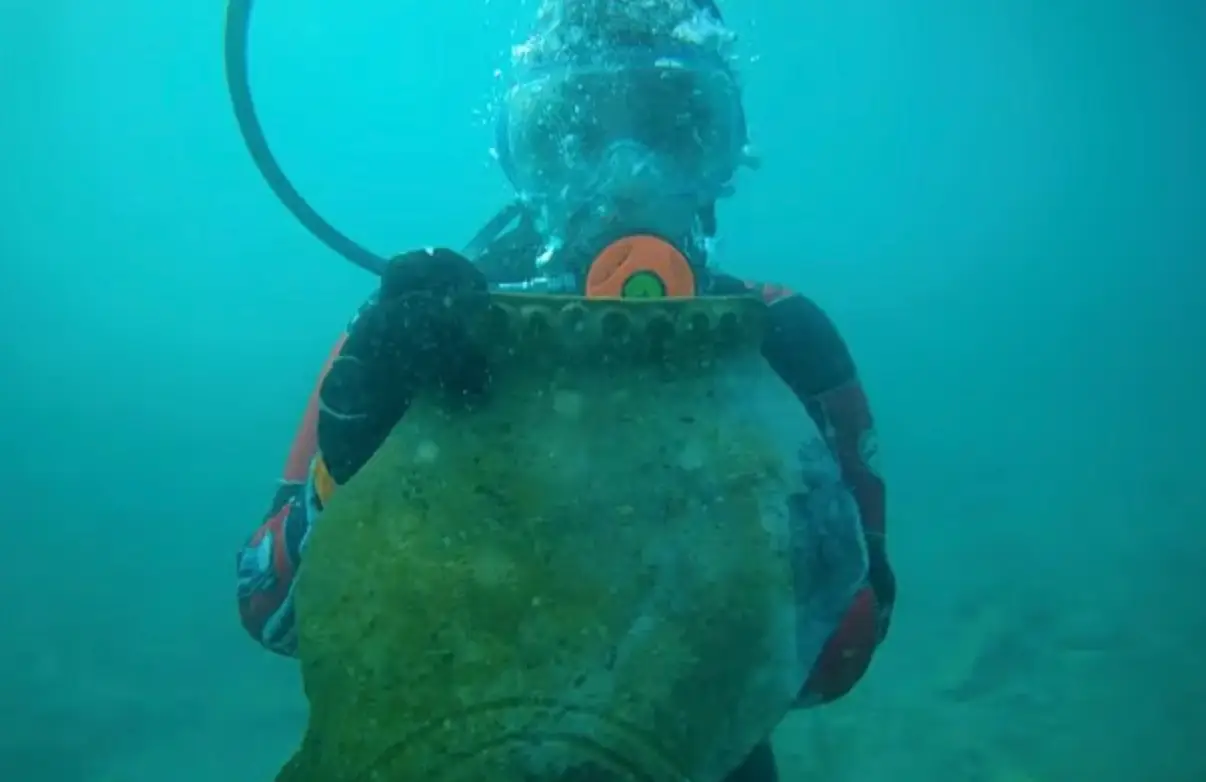
"According to our assessment, at the time of the disaster, the residents had already left the settlement," said Kolchenko.
"After the earthquake disaster, the region’s population changed drastically, and the rich medieval settlement civilization ceased to exist."
Following the earthquake, it's believed that people began to reside on the shoreline, which features several small villages.
Topics: History, World News, Science
 Lucy Devine