unilad homepage
unilad homepage
  • News
    • UK News
    • US News
    • World News
    • Crime
    • Health
    • Money
    • Sport
    • Travel
  • Music
  • Technology
  • Film and TV
    • News
    • DC Comics
    • Disney
    • Marvel
    • Netflix
  • Celebrity
  • Politics
  • Advertise
  • Terms
  • Privacy & Cookies
  • LADbible Group
  • LADbible
  • SPORTbible
  • GAMINGbible
  • Tyla
  • UNILAD Tech
  • FOODbible
  • License Our Content
  • About Us & Contact
  • Jobs
  • Latest
  • Archive
  • Topics A-Z
  • Authors
Facebook
Instagram
X
Threads
TikTok
YouTube
Submit Your Content
 Scientists say they've finally discovered what came first the chicken or the egg
Home>News
Published 12:50 13 Sep 2024 GMT+1

Scientists say they've finally discovered what came first the chicken or the egg

After eggs-ploring all the options, scientists may've cracked it

Poppy Bilderbeck

Poppy Bilderbeck

google discoverFollow us on Google Discover
Featured Image Credit: Tina Terras/Michael Walter/Richard Drury/Getty Images

Topics: Animals, Science, Nature, Dinosaurs

Poppy Bilderbeck
Poppy Bilderbeck

Poppy Bilderbeck is a freelance journalist with words in Daily Express, Cosmopolitan UK, LADbible, UNILAD and Tyla. She is a former Senior Journalist at LADbible Group. She graduated from The University of Manchester in 2021 with a First in English Literature and Drama, where alongside her studies she was Editor-in-Chief of The Tab Manchester. Poppy is most comfortable when chatting about all things mental health, is proving a drama degree is far from useless by watching and reviewing as many TV shows and films as possible.

Advert

Advert

Advert

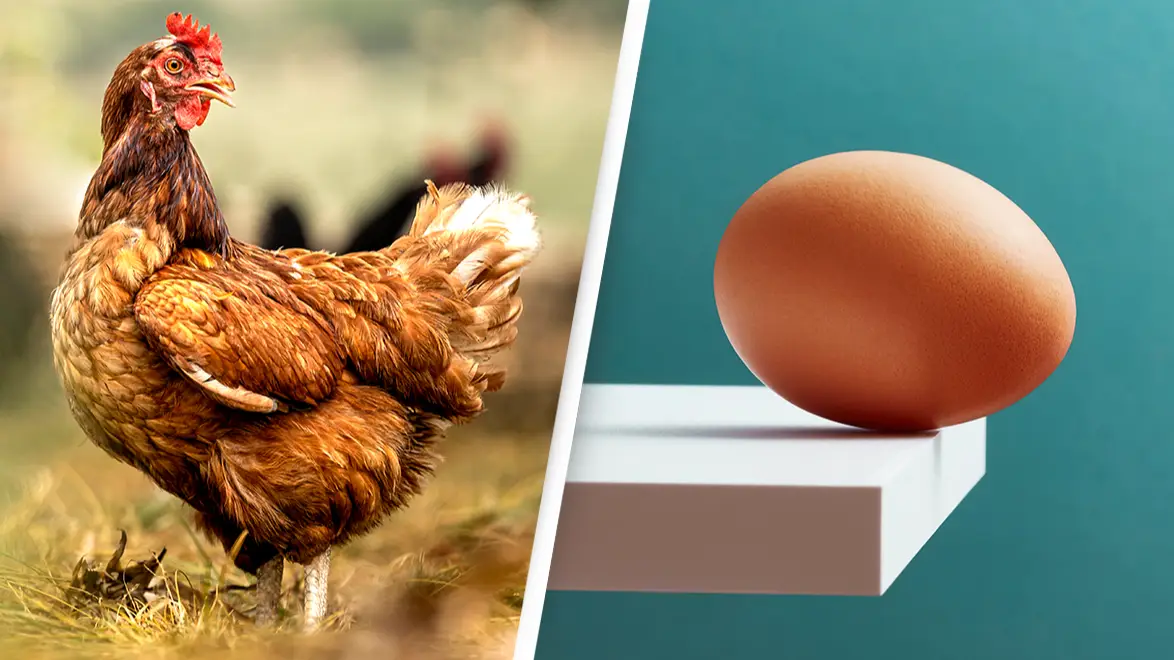
Was it the egg and then the chicken? Or the chicken and then the egg? Well, a group of scientists have suggested a new theory as to eggs-actly which came first.

Before we reached an age where we had so many other deliberations to worry about - taxes, electricity bills and what we're actually going to do with the rest of our lives - there was nothing better than the biggest questions on our minds being what we would have for dinner, when our next playdate was or what came first - the chicken or the egg.

So, a team at the UK's University of Bristol's School of Earth Sciences decided to find out once and for all.

Advert

Some argue the eggs came first - laid by dinosaur ancestors of the fluffy, squawky bird that funds establishments such as KFC. Others have argued a chicken popped out of nowhere and then proceeded to lay an egg.

And in a study, published in Nature Ecology & Evolution, a team of scientists decided to take 51 fossil species and 29 living species and split them into two categories for examination: oviparous (laying hard or soft shelled eggs) and viviparous (giving birth to live young - like us humans do).

The study found the early reptilian ancestors of chickens were viviparous - they gave birth to live animals and didn't lay eggs.

And while both the teams at Bristol and Nanjing University in China noted that animals laying hard-shelled eggs have been one of the greatest innovations, this research is particularly noteworthy.
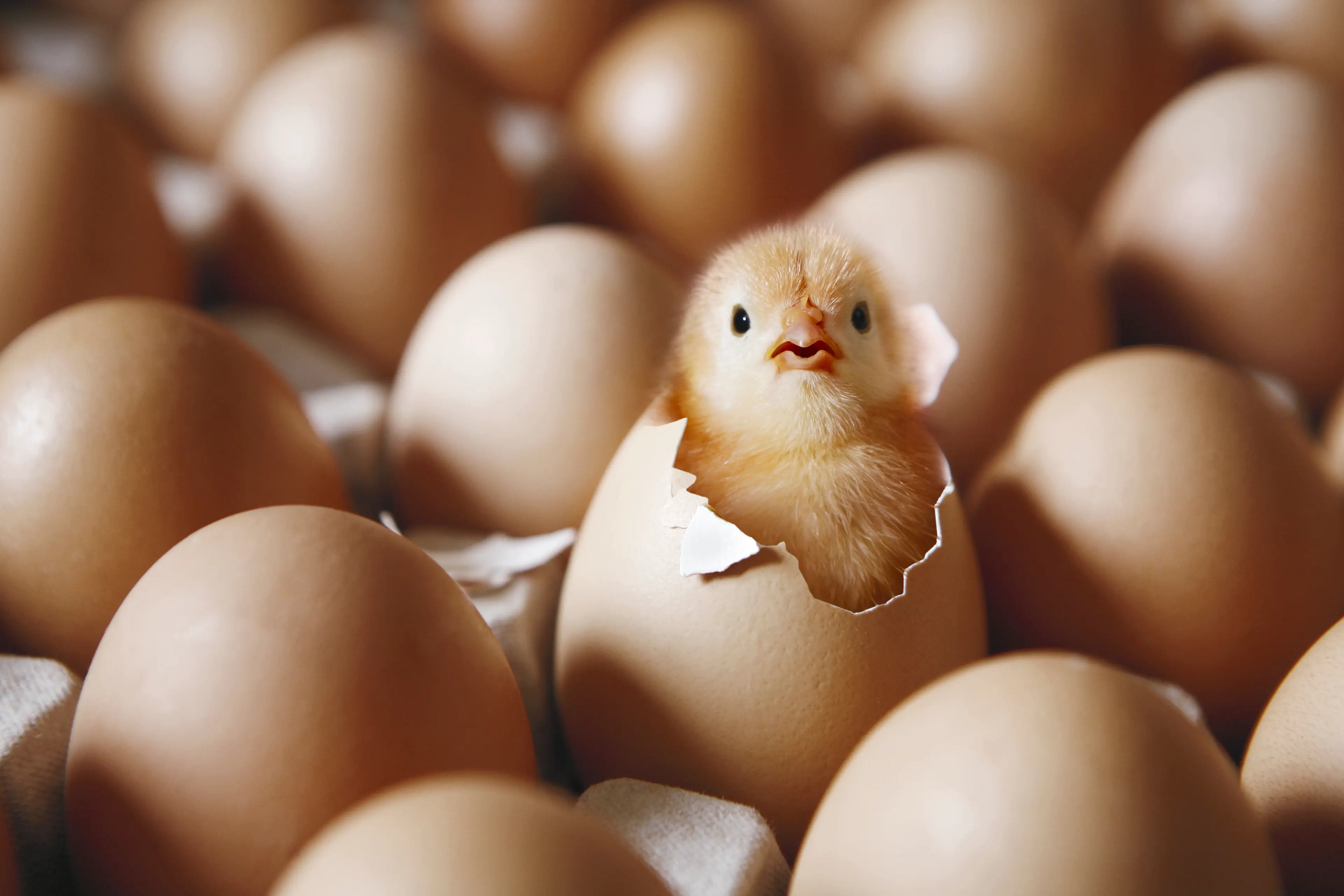
Which came first? (Getty Stock Images/ David Malan)

The team explained the research implies extended embryo retention (when the mother retains their young before birthing) was the ultimate protection for this group of animals in particular - so basically, way back then, birthing a live chicken was safer than laying an egg.

And in far more science-y terms than that, Professor Michael Benton, from the University of Bristol, said: "Before the amniotes, the first tetrapods to evolve limbs from fishy fins were broadly amphibious in habits.

"They had to live in or near water to feed and breed, as in modern amphibians such as frogs and salamanders.

"When the amniotes came on the scene 320 million years ago, they were able to break away from the water by evolving waterproof skin and other ways to control water loss. But the amniotic egg was the key."
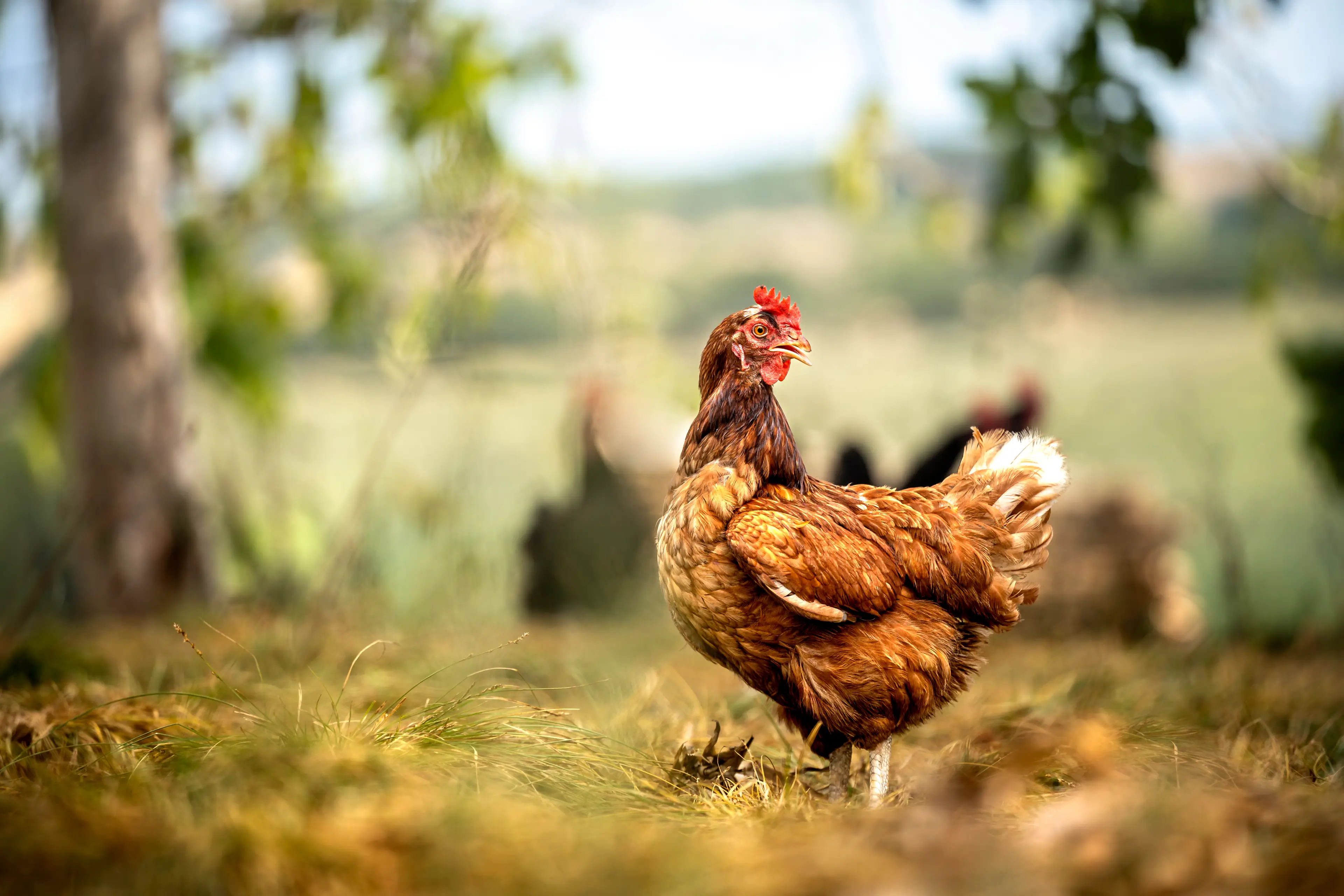
Was it the chicken? (Getty Stock Image)

He added: "Our work, and that of many others in recent years, has consigned the classic 'reptile egg' model of the textbooks to the wastebasket."

And project leader Professor Baoyu Jiang said: "This standard view has been challenged. Biologists had noticed many lizards and snakes display flexible reproductive strategy across oviparity and viviparity.

"Sometimes, closely related species show both behaviors, and it turns out that live-bearing lizards can flip back to laying eggs much more easily than had been assumed."

So it seems the debate could be cracked after all - or at least chipped - with the scientists hatching a new theory it could be the chicken that came first.

So, what do you think?

Choose your content:

an hour ago
2 hours ago
3 hours ago
6 hours ago
  • Kevin Carter/Getty Image
    an hour ago

    United Airlines confirms it's testing a new economy row with a 'permanently blocked' middle seat

    Yet as well as providing ample elbow room, it could have one distinct advantage for the company

    News
  •  Aidan Monaghan/HBO
    2 hours ago

    HBO’s Harry Potter series casts fan-favourite character who was famously cut from the movies

    Peeves the Poltergeist will be making his on-screen debut in the upcoming series

    Film & TV
  • MB Media/Getty Images
    3 hours ago

    Why is almost every player wearing pink boots at the World Cup?

    The brightly colored footwear has dominated the World Cup this year, but what exactly is the reason behind it?

    News
  • Getty Stock
    6 hours ago

    European country introduces bizarre new beach rule for anyone aged 10-65

    Only certain people are allowed access to an important bit of beach equipment

    News
  • Scientists make chilling discovery after finally reaching the bottom of the Red Sea
  • Scientists discovered a way to potentially slow or even halt the ageing process
  • Scientists say they've discovered ancestral home of all human beings
  • Scientists discovered perfectly preserved dinosaur embryo inside fossilized egg