unilad homepage
unilad homepage
    • News
      • UK News
      • US News
      • World News
      • Crime
      • Health
      • Money
      • Sport
      • Travel
    • Music
    • Technology
    • Film and TV
      • News
      • DC Comics
      • Disney
      • Marvel
      • Netflix
    • Celebrity
    • Politics
    • Advertise
    • Terms
    • Privacy & Cookies
    • LADbible Group
    • LADbible
    • SPORTbible
    • GAMINGbible
    • Tyla
    • UNILAD Tech
    • FOODbible
    • License Our Content
    • About Us & Contact
    • Jobs
    • Latest
    • Archive
    • Topics A-Z
    • Authors
    Facebook
    Instagram
    X
    Threads
    TikTok
    YouTube
    Submit Your Content
    Scientists make chilling discovery after finally reaching the bottom of the Red Sea

    Home> News> World News

    Updated 10:09 31 Aug 2024 GMT+1Published 10:08 31 Aug 2024 GMT+1

    Scientists make chilling discovery after finally reaching the bottom of the Red Sea

    They discovered a place where most animals 'are immediately stunned or killed'

    Joe Yates

    Joe Yates

    google discoverFollow us on Google Discover
    Featured Image Credit: Getty stock photo/YouTube/Ocean X

    Topics: Science, Nature, Earth, Space

    Joe Yates
    Joe Yates

    Joe is a journalist for UNILAD, who particularly enjoys writing about crime. He has worked in journalism for five years, and has covered everything from murder trials to celeb news.

    X

    @JMYjourno

    Advert

    Advert

    Advert

    Only five percent of the ocean has been explored... and with 'death pools' discovered on the floor of the Red Sea, I understand why.

    OK, obviously the potential that something scary lurks in the deepest darkest parts of the ocean isn't what is preventing mankind from exploring just shy of 70 percent of the planet.

    But, I'm sure it won't help.

    Advert

    The deep sea holds many frightful fish like the fangtooth, gulper eel, goblin shark, vampire squid and anglerfish, but none are more terrifying than the unknown.

    With those beasts you at least know what you face - OK, the vampire squid isn't really that scary but sounds it.

    Well, research is being carried out by scientists looking into the bottom of the Red Sea, which is located in the Middle East between Africa and Asia.

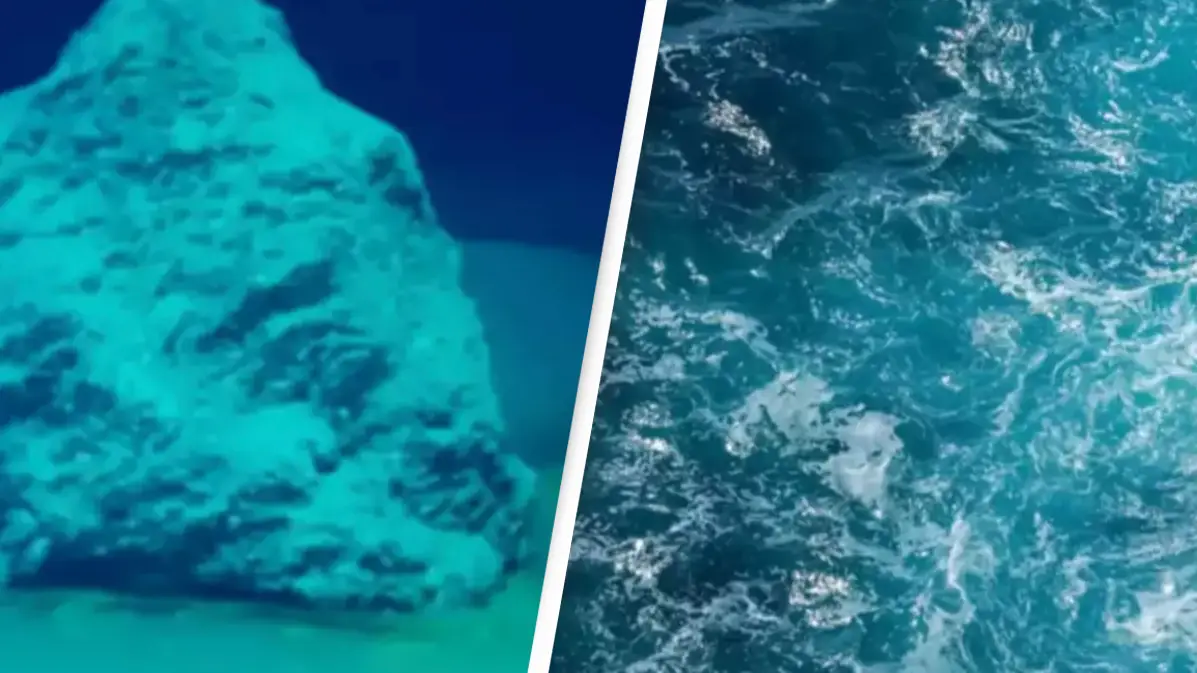
    A research team sent divers and probes down to explore, but what they actually uncovered was 'death pools'.
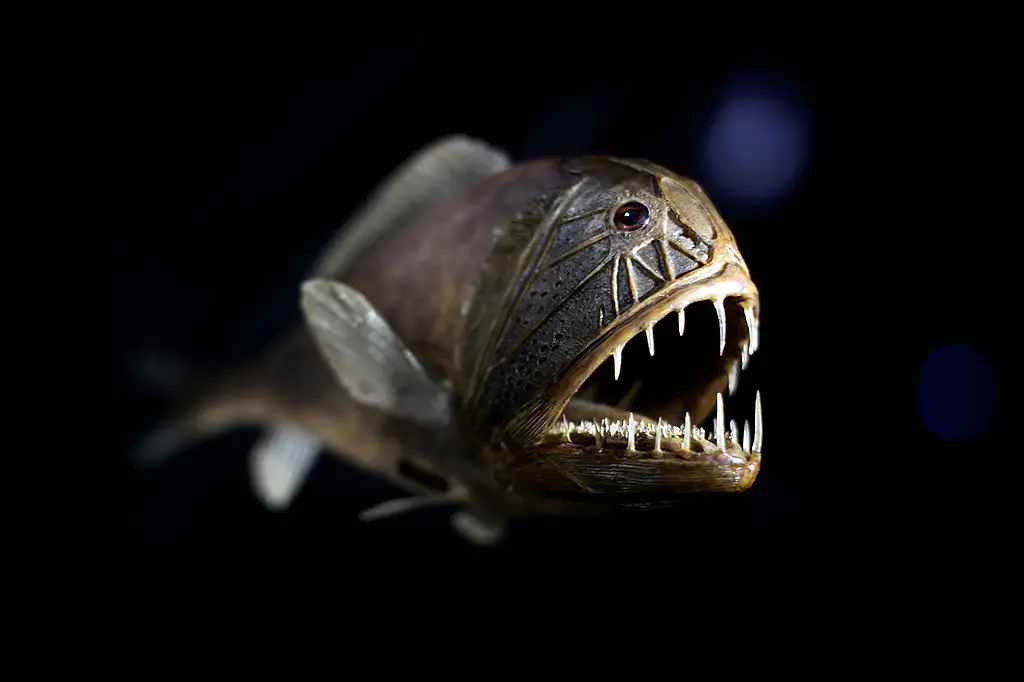
    Fangtooth fish can be found at the bottom of the ocean... or at the Natural History Museum in London, where this one was on display (Dan Kitwood/Getty Images)
    Fangtooth fish can be found at the bottom of the ocean... or at the Natural History Museum in London, where this one was on display (Dan Kitwood/Getty Images)

    Just the name of them sends chills down your spine, but what are they?

    Discovered at the depth of the sea inlet, part of the Indian Ocean, they are holes that go beyond the sea bed and they hold no oxygen at all and are extraordinarily salty, so most life can't survive there.

    Why is that frightening? Well, there are opportunistic predators that lurk there ready to snap up breakfast, lunch and dinner - if any bamboozled creatures happen upon them.

    Professor Sam Purkis, chair of the Department of Marine Geosciences at the University of Miami, explained fish that stumble into the brine pools are 'immediately stunned or killed', and predators camp out near the holes to 'feed on the unlucky'.

    But it turns out the discovery of these chilling, mysterious trenches hold vital information into life on Earth as we know it.

    Purkis said: "Our current understanding is that life originated on Earth in the deep sea, almost certainly in anoxic - without oxygen - conditions.
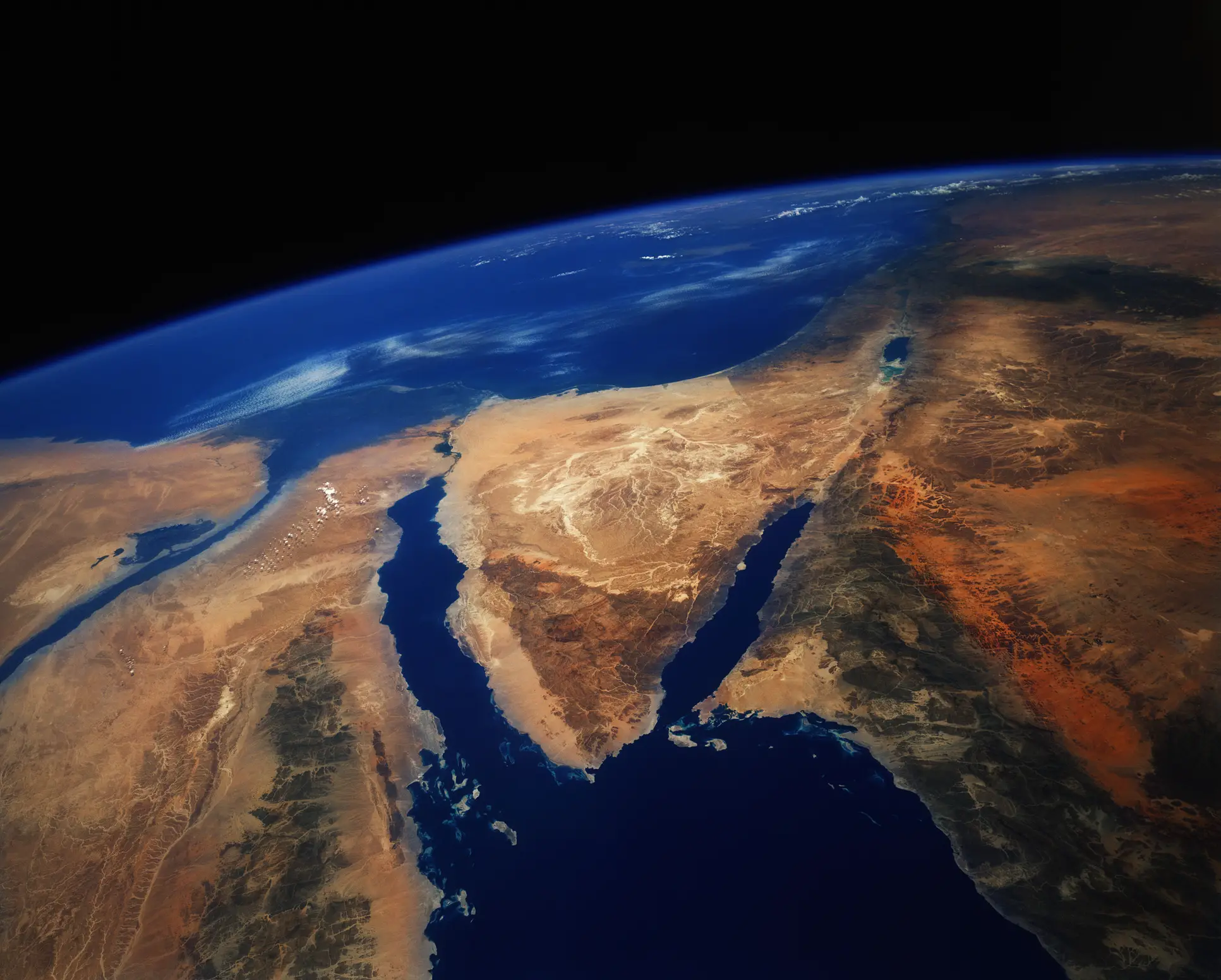
    The Red Sea pictured from space (Getty stock image)
    The Red Sea pictured from space (Getty stock image)

    "Studying this community hence allows a glimpse into the sort of conditions where life first appeared on our planet, and might guide the search for life on other 'water worlds' in our solar system and beyond."

    So unearthing these pools will actually aid in space exploration.

    What also offers a great insight is into 'life before life' is the fact that there are so few living things in these pits, meaning we have a rare window into the distant past.

    He added: "Ordinarily, these animals bioturbate or churn up the seabed, disturbing the sediments that accumulate there. Not so with the brine pools. Here, any sedimentary layers that settle to the bed of the brine pool remain exquisitely intact."

    I'm sure we're going to be hearing a lot more about these death pools, and as long as I'm not exploring myself then... bring it on nature.

    Choose your content:

    23 mins ago
    an hour ago
    2 hours ago
    • Getty Stock Image
      23 mins ago

      Scientists uncover the age people feel 'peak happiness' and reveal why

      Forget your mid-life crisis - those might just be your golden years

      News
    • James Broadnax's legal team
      an hour ago

      Death row inmate's final words before being executed despite his cousin's confession

      Though James Broadnax maintained his innocence to the very end, Texas didn't believe him

      News
    • Getty Stock Image
      2 hours ago

      Scientists discover unexpected link between eating chips and dementia increasing your risk

      Just one extra bag of potato chips a day could have a negative impact

      News
    • SWNS
      2 hours ago

      Dad who 'died for 10 minutes' and came back explains how it changed his life

      Matthew Allick's life fell apart after a serious health issue left him clinically dead, but the experience changed his life

      News
    • Scientists claim Earth’s core is leaking hidden gold after making surprising discovery
    • People have ‘chills’ after scientists filming in deep-sea make ‘unsettling’ discovery
    • Scientists completely baffled after finding parts of sea floor upside down in discovery that ‘defies principles’
    • Scientists think they've solved 180-million-year-old mystery of unusual heat beneath US mountains