Trump officially signs order to rename Lake Ontario as trade war escalates further

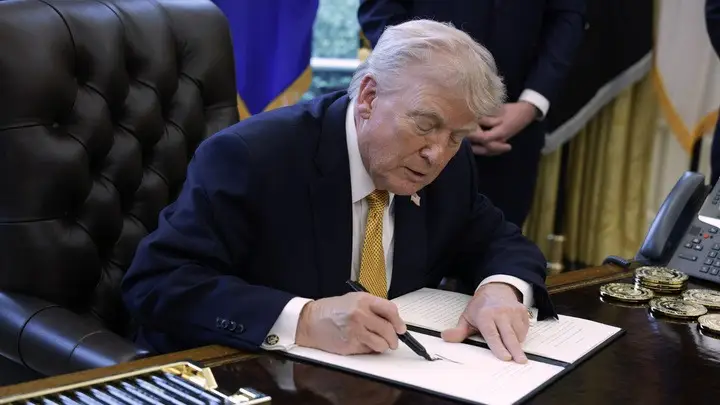
Donald Trump has signed an order directing the US government to call Lake Ontario 'Lake America,' adding a new flashpoint to his increasingly tense relationship with Canada.
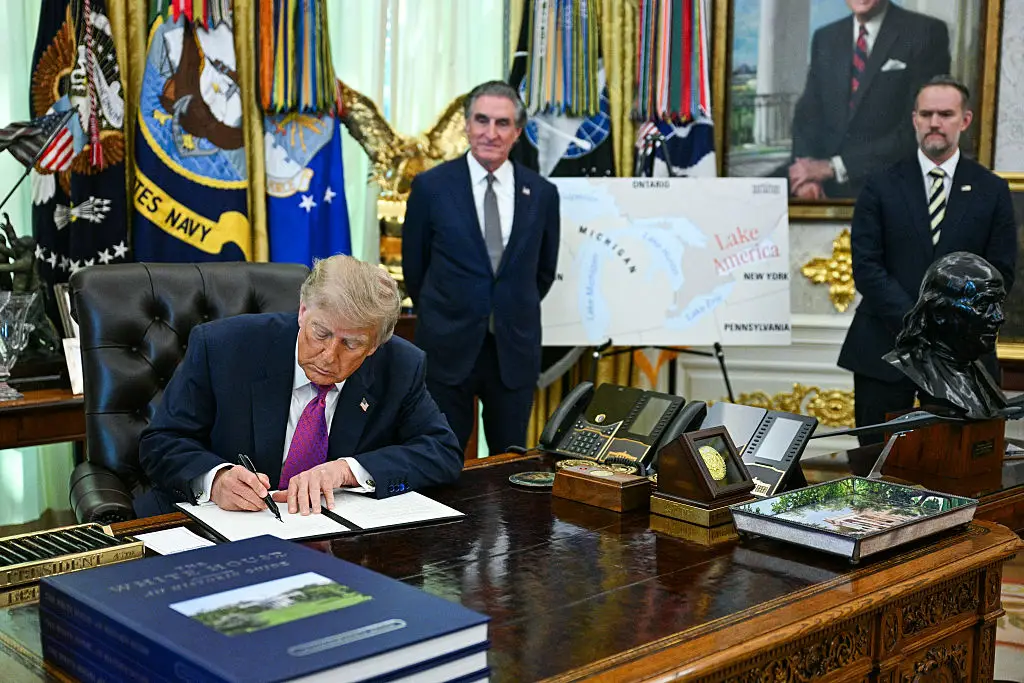
The president signed the order Thursday, August 27, directing federal agencies to use the new name in official documents and records.
It came after relations between the US and Canada reached a new low after trade talks between the two countries fell apart.
That meant on Saturday (August 22), the US applied 50% tariffs on $27.6 billion worth of Canadian goods - around five percent of the country's exports to the US, according to The Guardian.
Advert
Canada announced it would match the tariffs 'dollar for dollar', effective from September 8.
Trump then said on Tuesday (August 25) he was giving 'serious consideration to changing the name of Lake Ontario to Lake America in that we don’t expect to be doing much business with Ontario any longer', sharing a map to drive home his point.
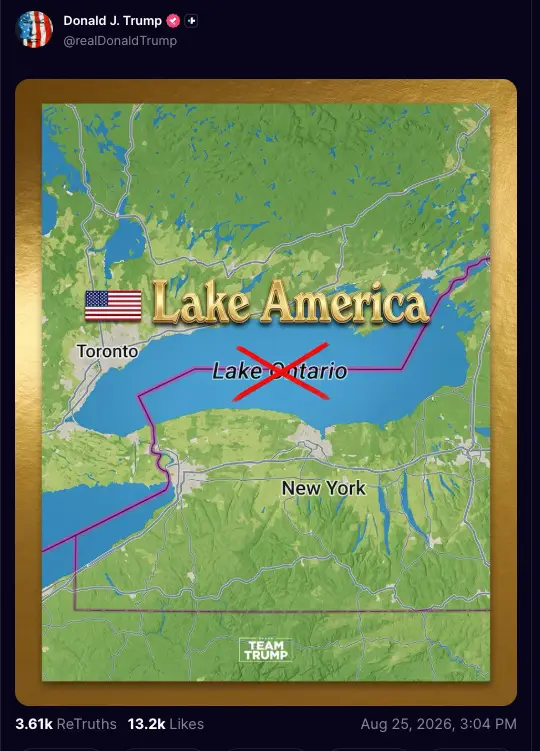
Lake Ontario is one of the five Great Lakes situated along the US-Canada border. It is bordered by New York State to the south and east, and Ontario province to the north and west.
Can Trump officially change Lake Ontario's name?
Trump does have authority to determine how the federal government refers to places and landmarks.
That means US agencies can follow his instruction and use 'Lake America' in government documents and records.
But the order has no effect outside the United States. Canada can continue calling the body of water Lake Ontario, while individuals and organizations are likewise not required to follow the president's preferred name.
Trump's latest move echoes an earlier attempt during his second term to rename the Gulf of Mexico as the 'Gulf of America.'
That decision similarly demonstrated the limits of presidential naming power: while the US government can establish how its own agencies identify geographical features, it cannot dictate what another sovereign country calls them.
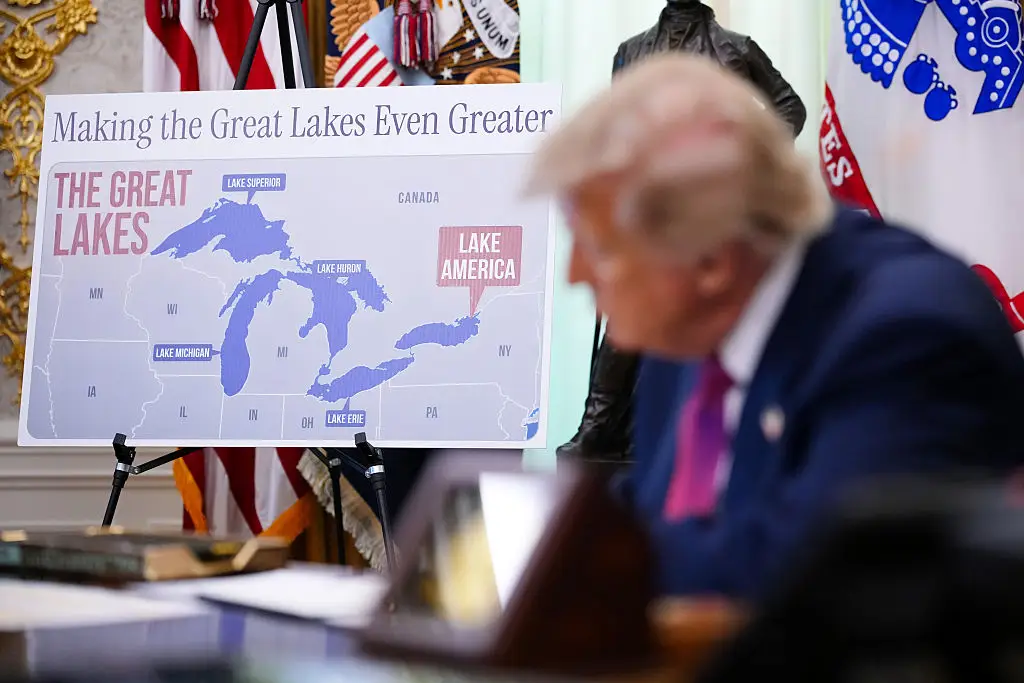
Trump's order therefore does not change what Canadians are required to call Lake Ontario, nor does it force people on either side of the border to adopt the new terminology.
'Threats to the French language' in Canada
Donald Trump has also rejected claims from Canadian Prime Minister Mark Carney that the US had threatened Canada's use of French amid tensions linked to the countries' trade conflict.
In Quebec, products are required to have French descriptions, while trademarks with generic words in them need to be translated into French.
Media companies like Netflix and Spotify are also compelled to promote content in French to Quebec customers.
Carney said 'threats to the French language' was one of the reasons he walked away from the trade negotiations with the US over the weekend.
Writing on Truth Social on Tuesday, Trump said suggestions that he would seek to influence the language Canadians speak were unfounded.
He said: "I would never interfere with Canadians speaking French! In fact, I have never even thought of doing such a stupid thing."
He went on to criticise Carney as an ineffective leader trying to bolster support in Quebec.
Trump also stressed his appreciation for French-speaking Canadians, adding that he would never seek to interfere with their language.
Topics: Donald Trump, Canada, US News
 Thomas Bamford