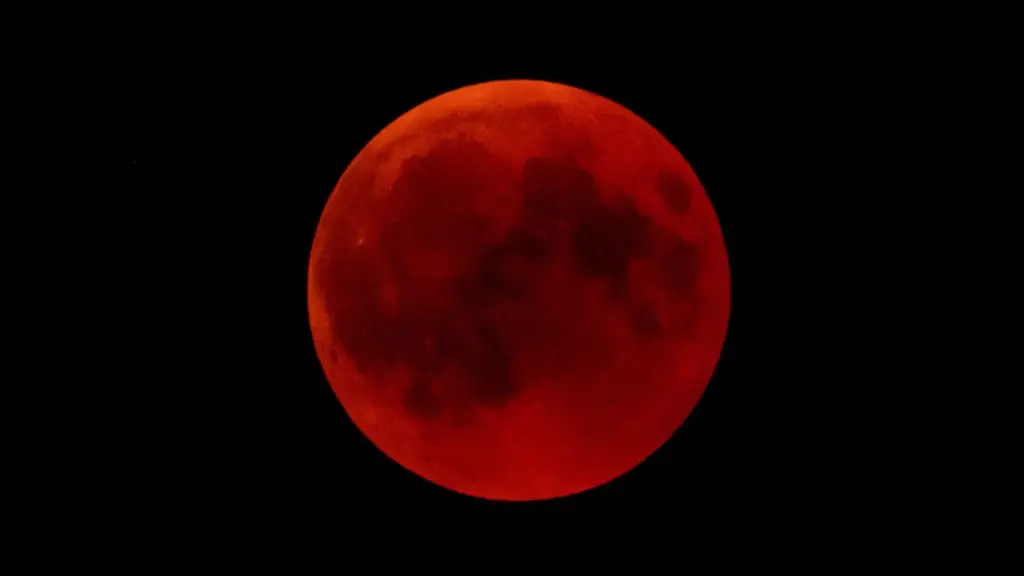
How to see rare blood Moon that's visible today - there's one thing you should check for

A blood moon will appear over the Americas today, and there is one thing in particular that you can watch out for if you want to view it.
During this event, the Moon changes from its usual silvery color into a red copper shade, making for a striking image in the night sky.
There's a big history of blood Moons being tied to particular religious and spiritual events.
For example some Christian texts say that the Moon turned to blood on the day that Jesus was crucified, and NASA has said that there was indeed a blood Moon on Friday April 3, 33AD.
Advert
Meanwhile, the Quran says that a similar event took place before the birth of the Prophet Mohammed, as well as on the day that his son Ibrahim died.
So it's fair to say that humans have long gazed up at these events in wonder and attached significance to them as portentous moments.
The phenomenon is actually a form of eclipse, a lunar eclipse as opposed to a solar eclipse. A solar eclipse is where the Moon passes in front of the Sun, blocking it from our view, and a lunar eclipse is different in that it's the Earth coming between the Sun and the Moon.
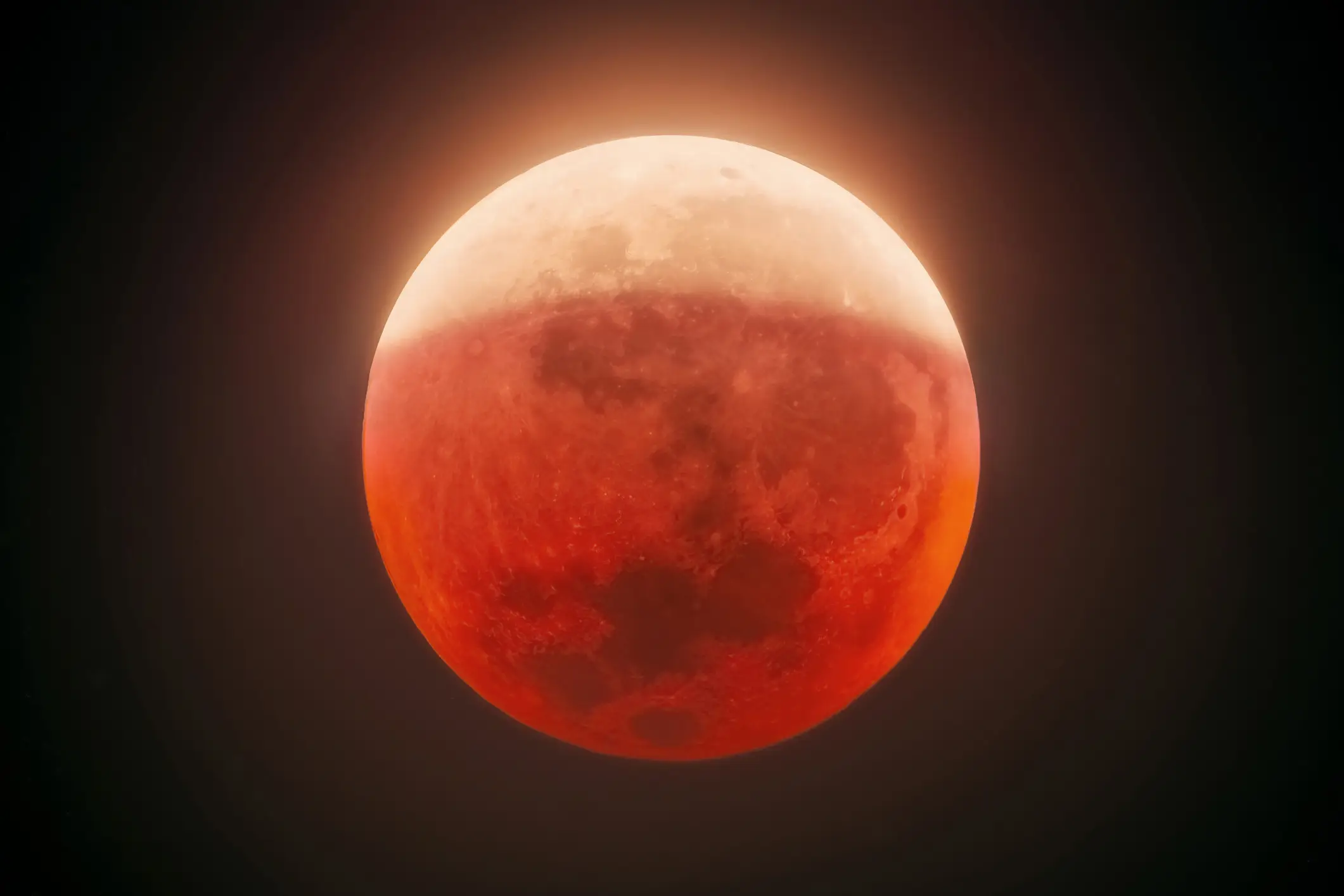
This blocks the Sun's light from hitting the Moon and being reflected off it, resulting in the dramatic change in its color.
August 27 and 28 will see a very deep lunar eclipse in North and South America, including in the US, though it won't quite be a total one, with around 96 percent of the Moon's surface eclipsed by the Earth's shadow, the BBC's Sky at Night Magazine reported.
If you are planning to observe this celestial event then there is one thing that you should take note of - light pollution.
This is in built up areas where the artificial light that humans produce interferes with the light in the night sky, and might make the lunar eclipse more difficult to discern.
So if you want the best view of the lunar eclipse then it's a good idea to head out to a less densely-populated area in order to make sure that the night sky is as dark as possible, the darker the sky the better the view.
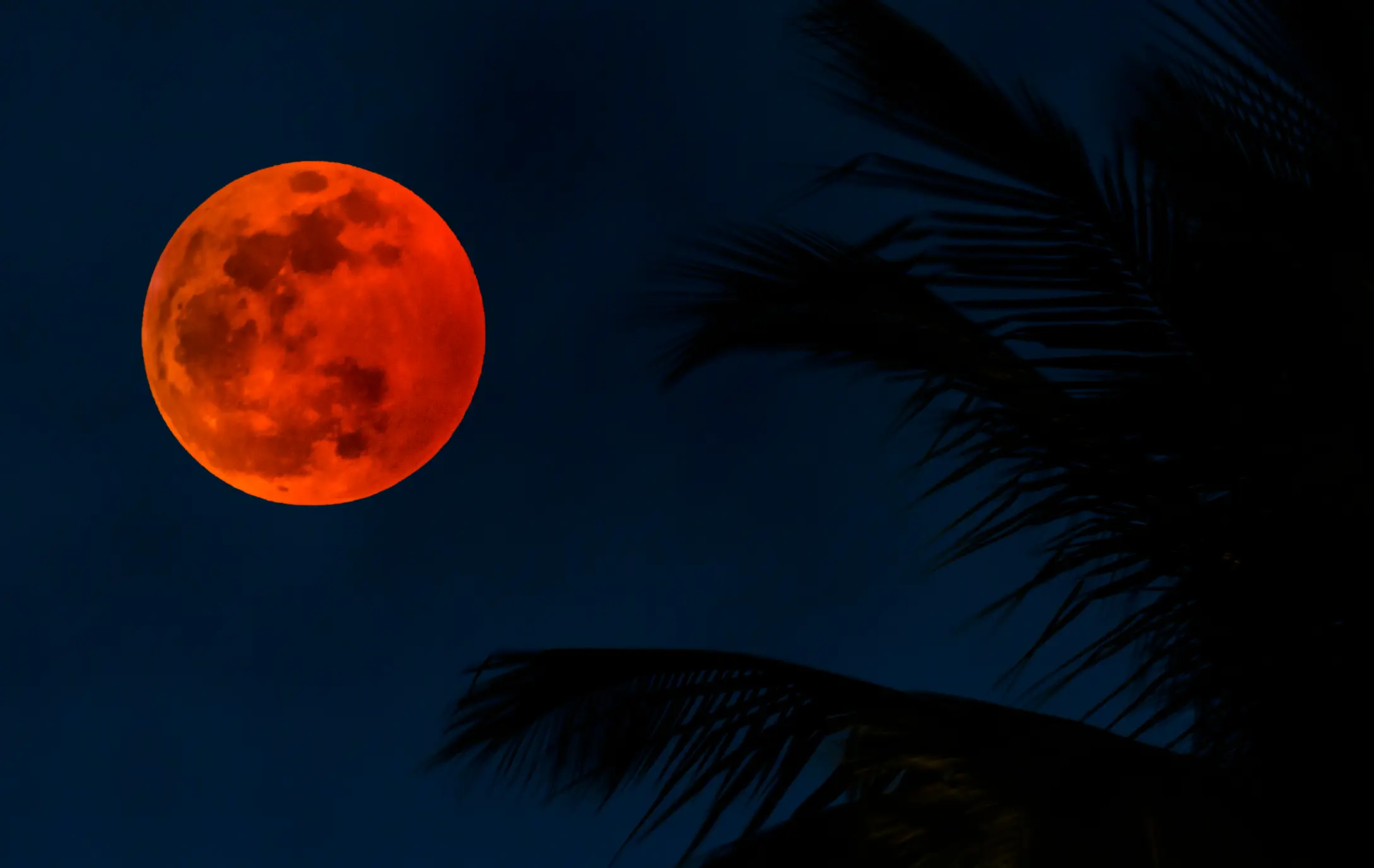
The full eclipse will be visible throughout South America and in the eastern half of North America, and western North America, Europe, and Africa will also be able to get a glimpse of a partial view of the event.
If you are planning to view the eclipse then you should try to get to where you plan to view around half an hour early so your eyes can adjust to the dark, and avoid looking at bright phone screens while you're there so your eyes can adjust properly.
The change in colour is expected to start at around 11:20pm and last until around 1am, with USA Today reporting maximum coverage at around 12:12am Eastern Time
The Moon turns this reddish copper colour because the Earth's atmosphere scatters light with a blue wavelength, which is also why the sky is blue, and this means that more light on the red part of the spectrum is reflected off the Moon, changing its color.
 Kit Roberts