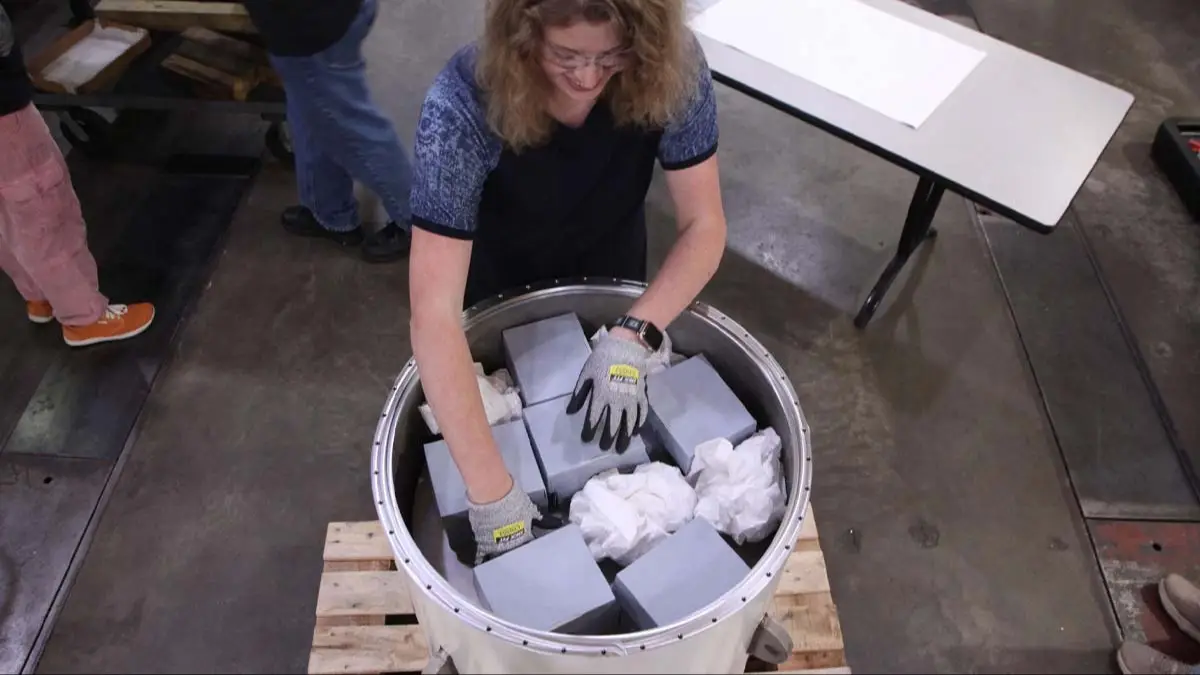
What items are being put in 900-pound time capsule for America's 250th anniversary revealed

America has buried a giant time capsule stuffed with everyday and historic treasures, and nobody alive today will ever get to see what's inside.
The 900-pound (400kg) stainless steel capsule was sealed and lowered into the ground in Philadelphia on Saturday, July 4, as part of a huge celebration marking 250 years since the United States declared independence from Britain.
Officials have confirmed the capsule won't be reopened until the year 2276, meaning the objects inside will remain hidden from human eyes for the best part of two and a half centuries, timed to coincide with the country's tricentennial celebrations.
The milestone marks the 250th anniversary of the signing of the Declaration of Independence on July 4, 1776, an occasion regarded by historians as the true birth of the nation, and one that's being used as a moment to reflect on both the country's founding ideals and its more turbulent chapters, including slavery and inequality.
Advert
Inside the capsule sits a bizarre and brilliant snapshot of modern America, packed with contributions from all 50 states, five US territories and a host of sporting and cultural organisations, designed to give future generations an authentic look at life in 2026.
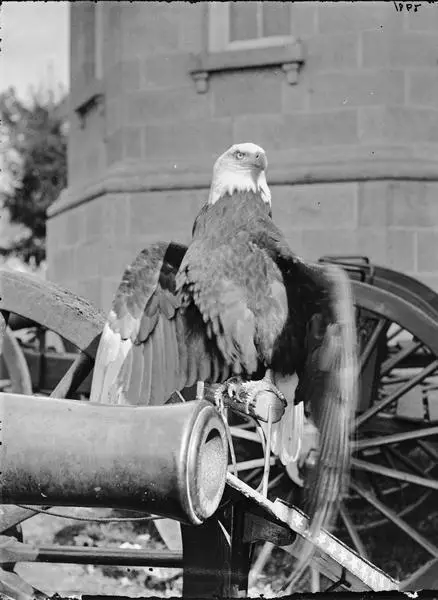
What's inside the America 250 time capsule?
The eclectic collection includes a brown feather from "Old Abe", the legendary bald eagle mascot who accompanied Union soldiers through more than 30 Civil War battles, donated by Wisconsin, alongside a scrap of fabric from the Wright brothers' 1903 aircraft, contributed by Ohio.
Elsewhere, Maine has thrown in a bone from an endangered North Atlantic right whale, while Arkansas contributed a diamond and New Mexico added a traditional anise-flavoured cookie recipe for good measure.
Perhaps strangest of all, California submitted a printed response from the artificial intelligence chatbot Claude, after it was asked to predict exactly what the state might look like once the capsule is finally cracked open in 2276.
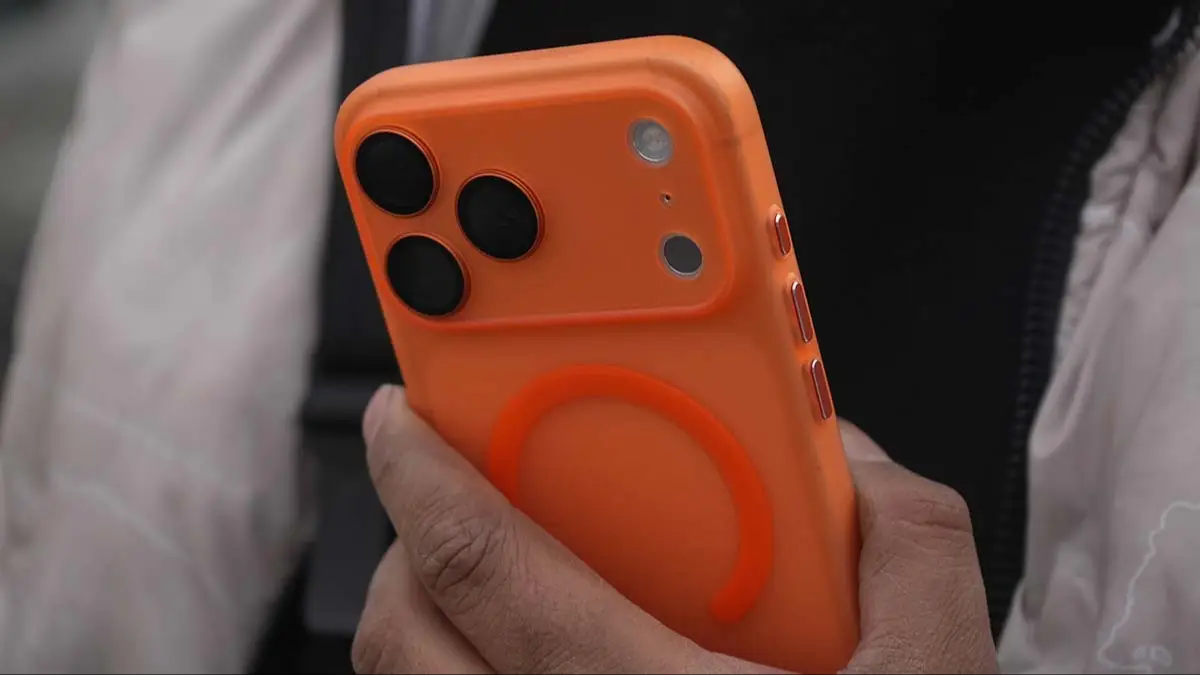
Modern life hasn't been ignored either, with an orange iPhone tossed in to represent just how central smartphones have become to everyday American life, plus a commemorative pin marking the Oklahoma City Thunder's 2025 NBA championship win.
Not every submission made the cut, however, with a leather American football reportedly rejected by engineers who feared it would rot away long before anyone got the chance to open the capsule again.
What is the Library of Congress’s molecular data storage device?
Among the most innovative contributions is the Library of Congress’s molecular data storage device, a tiny metal vial about the length of a pencil eraser, containing synthetic DNA encoded with digital copies of selected Library collection items.
This cutting-edge device includes digitized historic collection items, such as Thomas Jefferson’s rough draft of the Declaration of Independence; Francis Scott Key’s handwritten lyrics for “The Star-Spangled Banner;” an 1898 audio recording of “The Star-Spangled Banner” by John Philip Sousa’s band; a 3D rendering of President Abraham Lincoln’s hand; the 1791 L’Enfant Plan for Washington, D.C.; the Codex Quetzalecatzin, and other rare digitized materials from the Library’s collections.
How is the time capsule being kept safe for 250 years?
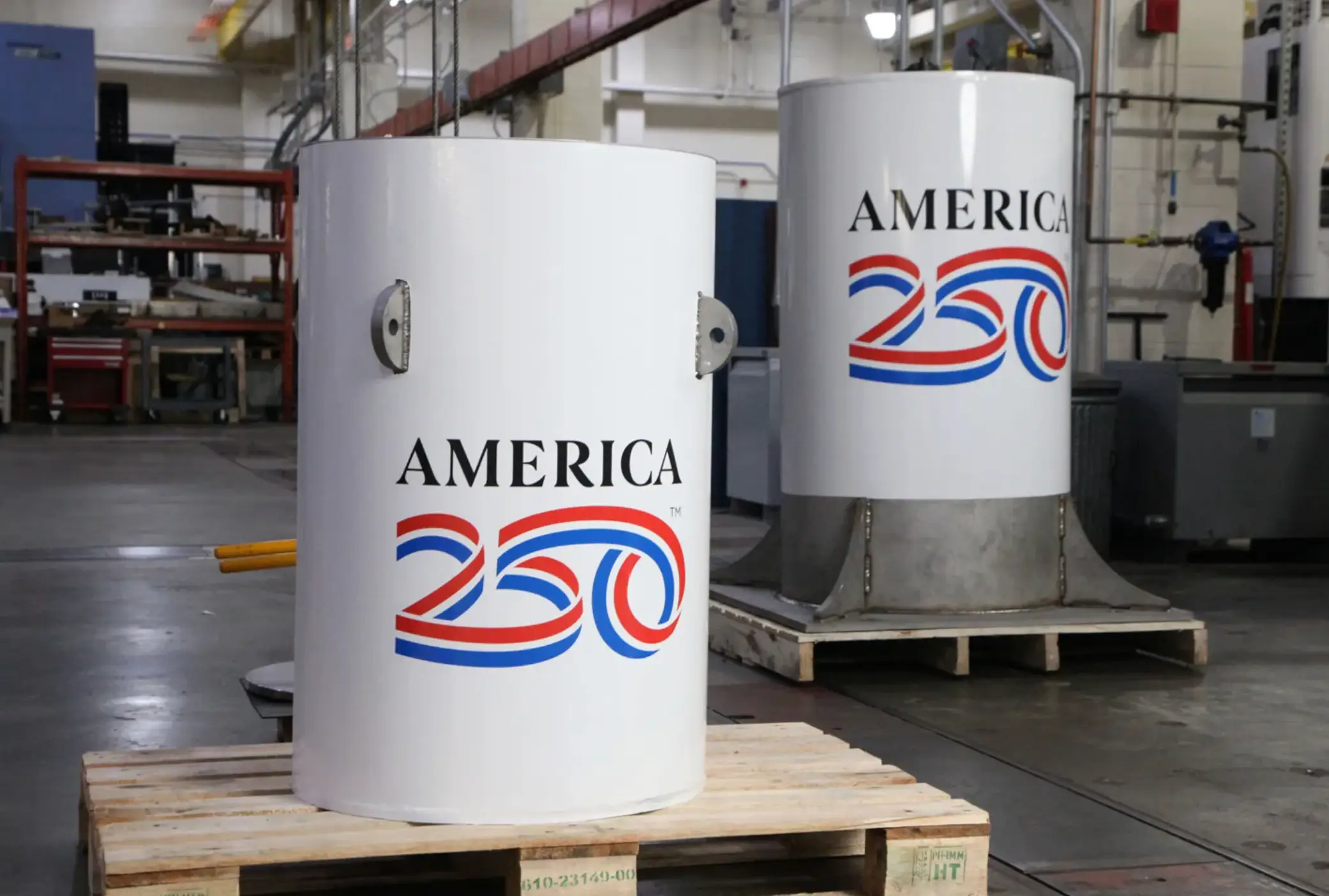
Rosie Rios, chairwoman of the America250 organisation behind the project, explained the capsule was designed to act as a genuine time-stamped record of the nation.
"Together it all makes for a representative record of the United States at 250 years," Rios said.
The stainless steel cylinder was chosen specifically to minimise seams and joints that could let moisture in over the coming centuries, and has been enclosed inside a metallic bell that creates an airtight pocket, reinforced further with a thin layer of soft, malleable indium metal.
NIST mechanical engineer Jay Nanninga, who led the capsule's design, said he was confident the structure would survive the long wait intact. "I do think in 250 years all the stainless will be in really good shape," he said.
Has there been other US time capsules?
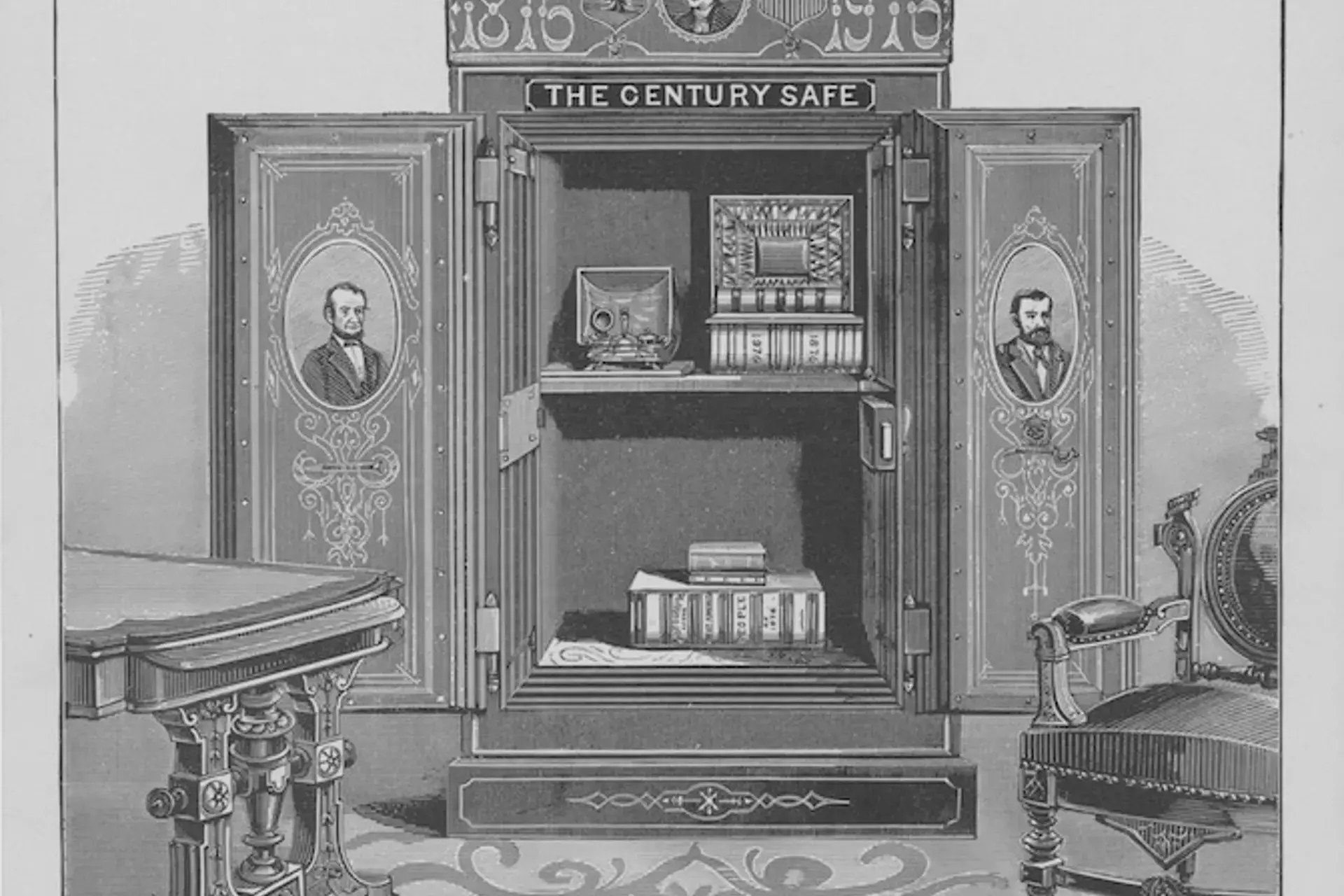
It follows a long-running American tradition of burying time capsules to mark major milestones, including one sealed during the 1876 centennial that was opened exactly a century later, and another from the bicentennial still stored at the National Archives, due to be unsealed in 2076.
Rios said she hoped the new capsule would offer an honest reflection of the country's values once it's eventually reopened.
"When the new capsule buried in Philadelphia is finally opened in 2276, we want future generations to have a clear, authentic window into who we were at 250," she said.
"What we valued, what we built, and how we saw ourselves as a nation."
Topics: Philadelphia, History, Technology
 Thomas Bamford