Argentina players handed disciplinary charges by FIFA following 'disgusting' World Cup behavior

Argentina players have been handed significant bans by FIFA following the chaotic scenes which erupted after their World Cup final defeat to Spain.
Lionel Scaloni's side missed out on becoming back-to-back world champions on July 19, with Spain securing a 1-0 extra-time victory at New York New Jersey Stadium.
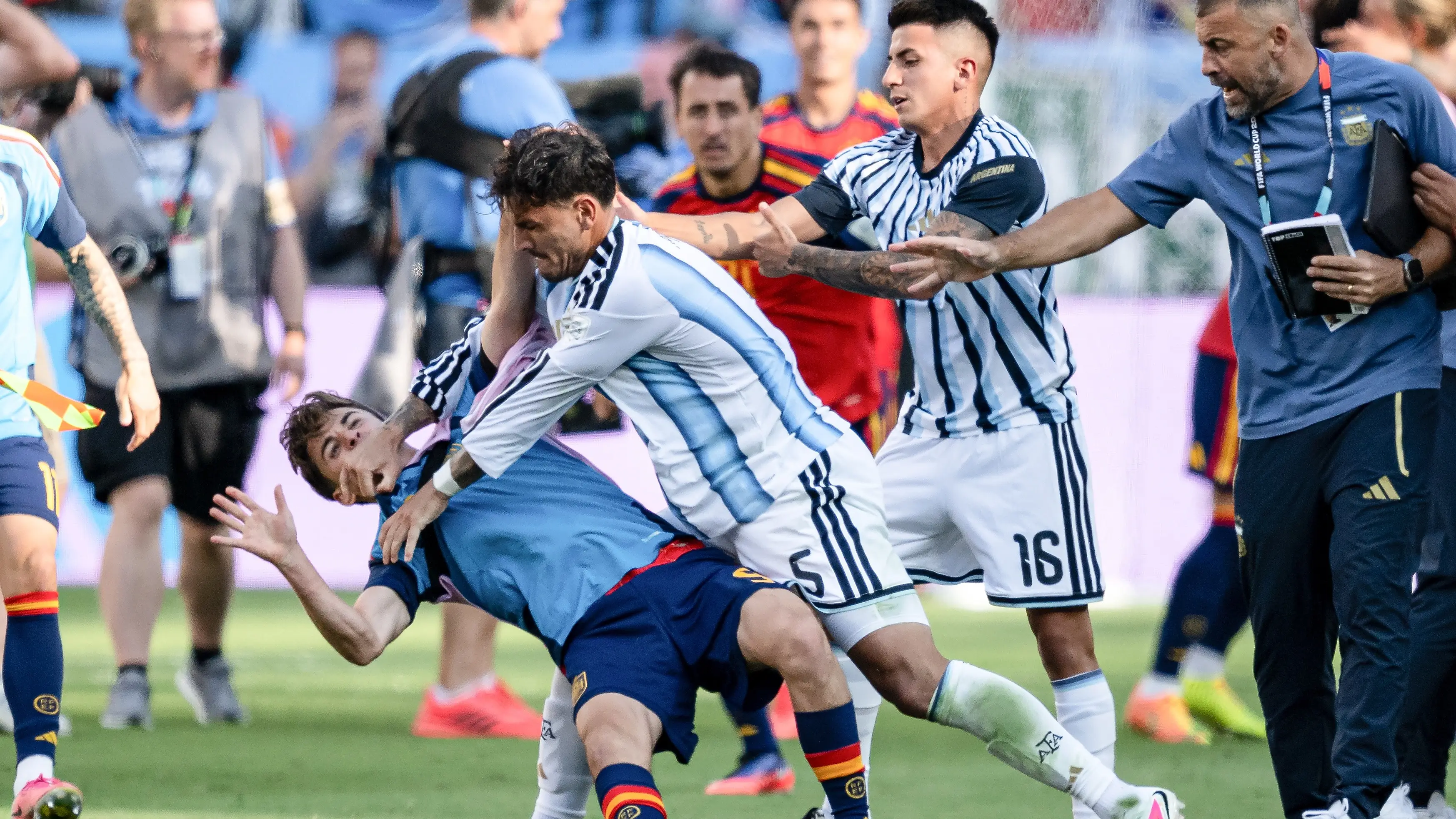
However, much of the attention following the final whistle quickly shifted away from Spain's celebrations after a number of heated confrontations broke out between players and staff from both teams.
Footage of the post-match melee sparked a furious reaction at the time, with Argentina's behavior being described as 'disgusting' as FIFA confirmed it would investigate what happened.
Advert
Among the players caught up in the scenes was Argentina midfielder Leandro Paredes, who appeared to grab Spain defender Eric García by the throat before becoming involved in another confrontation with Gavi.
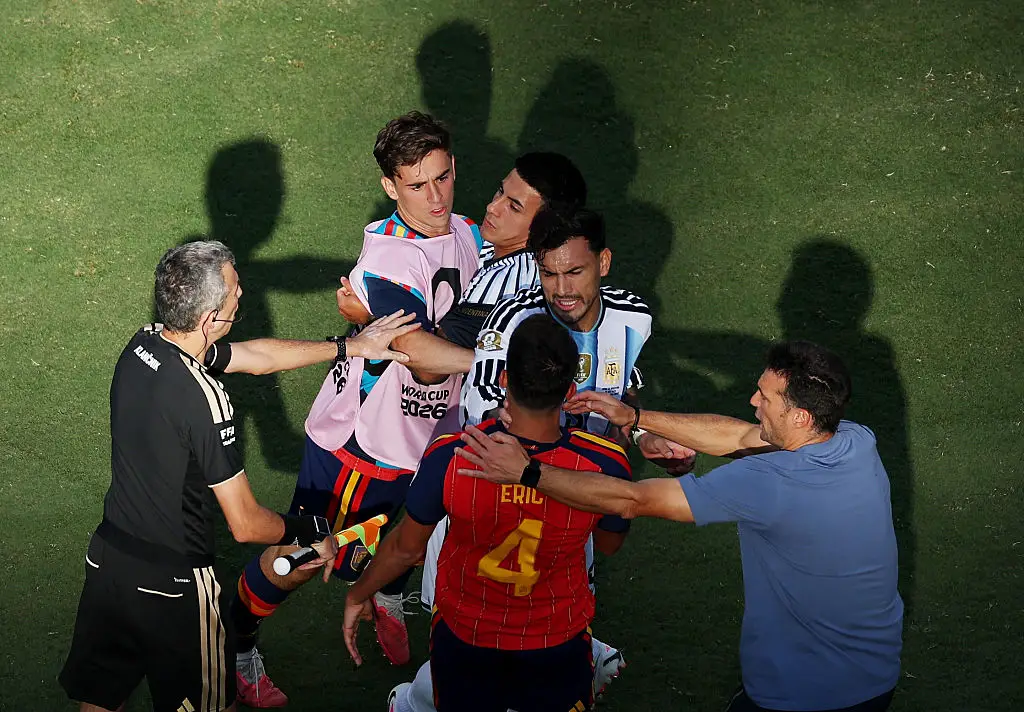
Argentina defender Nahuel Molina was also involved in the trouble, while assistant coach Roberto Ayala was among the members of Scaloni's staff drawn into the altercations.
Speaking after the final, Scaloni said: "We are gracious in victory, and we must be so in defeat."
FIFA imposes sanctions
More than a month on from the match, FIFA's Disciplinary Committee has now confirmed the punishments resulting from its investigation.
Paredes has received the most severe sanction, with the 32-year-old handed a 10-match suspension and a $90,000 fine.
Molina has been suspended for seven matches and fined $90,000, while teammate Thiago Almada has received a one-match ban and a $30,000 fine.
Ayala, meanwhile, has been suspended for three matches and fined $30,000.
Argentina weren't the only team to see someone punished over the final, however, as Spain midfielder Gavi - whose full name is Pablo Martín Páez Gavira - has also been handed a one-match suspension and a $30,000 fine.
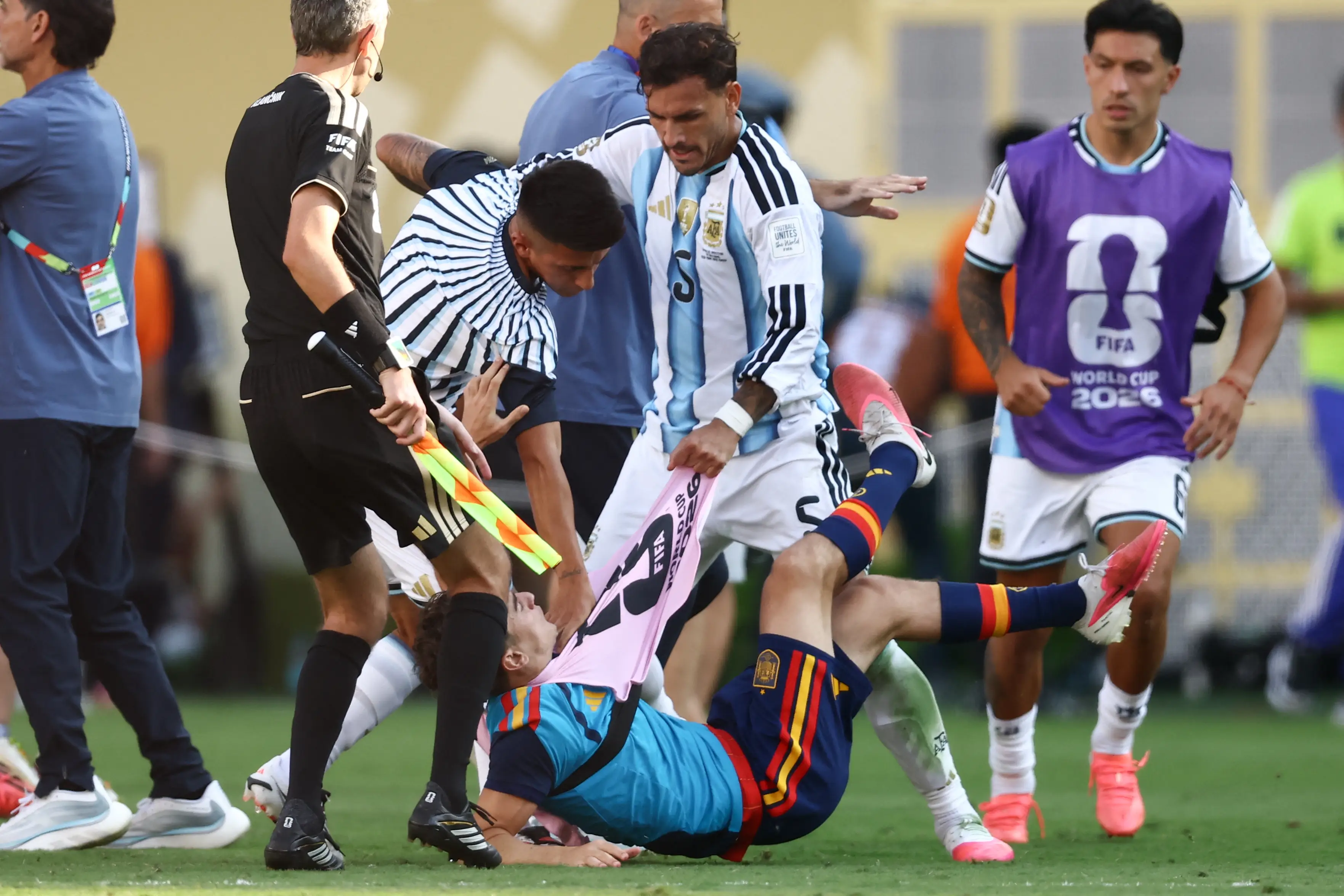
FIFA confirmed the match suspensions will carry over to the respective national teams' upcoming fixtures.
The Argentinian Football Association (AFA) has also been punished separately over several incidents during the World Cup, receiving fines totalling $321,000.
FIFA cited breaches relating to team misconduct, discrimination, and racist abuse involving chants and gestures by supporters, as well as order and security at matches.
Another breach concerned the controversial banner displayed by Argentina players after their 2-1 semi-final win over England.
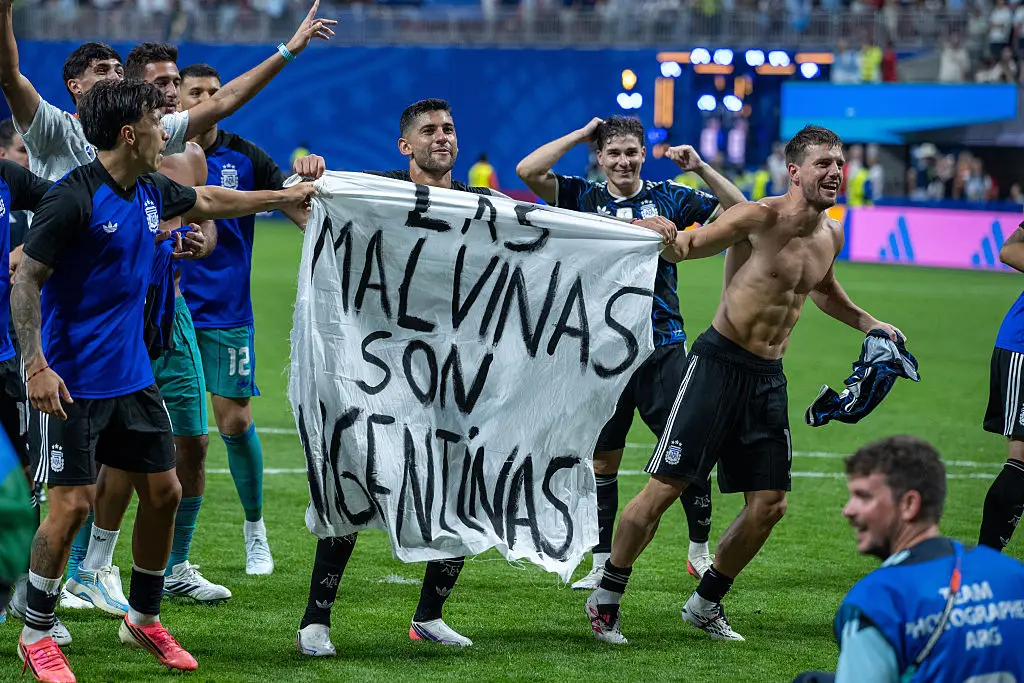
The banner read: "Las Malvinas son Argentinas," - translated as ‘The Falklands are Argentine’ - and resulted in FIFA sanctioning the AFA for using a sporting event for a demonstration of a non-sporting nature.
Argentina must also play their next two home matches with crowds restricted to 50 percent capacity.
Of the $321,000 fine, $100,000 must be invested in a plan to combat discrimination, whilst another $100,000 of the financial sanction has also been suspended subject to a probationary period.
FIFA said those affected have been notified of the decisions and have 10 days to ‘request a motivated decision’, with the punishments still subject to appeal.
Where is the next World Cup being held?
Morocco, Portugal and defending champions Spain will co-host the FIFA World Cup in 2030, marking the football tournament’s 100th anniversary.
It’s set to run from June 8 2030 to July 21 2030, making it the longest World Cup in history at 44 days.
FIFA also announced that three separate matches will take place in Argentina, Paraguay and Uruguay, as a tribute to the first-ever World Cup back in 1930.
All six host nations will automatically qualify, which means we'll definitely be seeing Morocco, Portugal, Spain, Argentina, Paraguay and Uruguay in at least the group stages.
In Spain, matches will take place in Barcelona, Bilbao, Las Palmas, Madrid, San Sebastian, Seville, Valencia, Vigo and Zaragoza.
In Portugal, stadiums in Lisbon and Porto have been earmarked, while the games in Morocco will be played in Agadir, Casablanca, Fez, Marrakesh, Rabat and Tangier.
Plus, the three special opening centenary games will be played at the Estadio Monumental in Buenos Aires, Argentina; the Estadio Centenario in Montevideo, Uruguay; and the Estadio Osvaldo Dominguez Dibb in Asuncion, Paraguay.
 Ben Williams