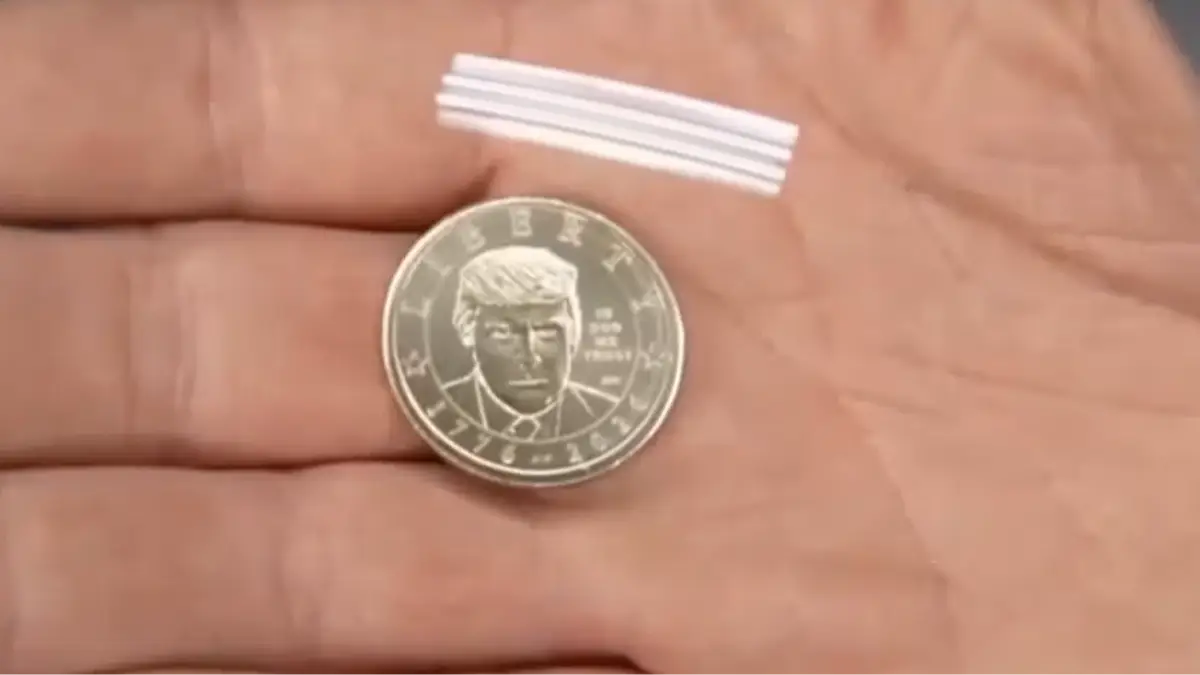
Trump might've just broken the law as people spot issue on $1 coin with his face on

People are claiming that the new $1 coin bearing the face of President Donald Trump breaks federal law - and the reality is pretty murky.
The Trump coins in question have been approved by the US Commission of Fine Arts for the nation’s 250th anniversary and we will soon see his face featured on money across the states.
However, the news has people divided, as many argue living presidents are not supposed to feature on currency thanks to age-old laws.
Users on X even claimed that Trump has actually broken the said law by preparing to create a coin with his face on it, with one stating: “Federal law strictly prohibits living individuals from being depicted on United States currency.
Advert
"Established by the Thayer Amendment of 1866, this law mandates that portraits on U.S. notes, bonds, and securities only feature deceased persons.”
So, is it true?
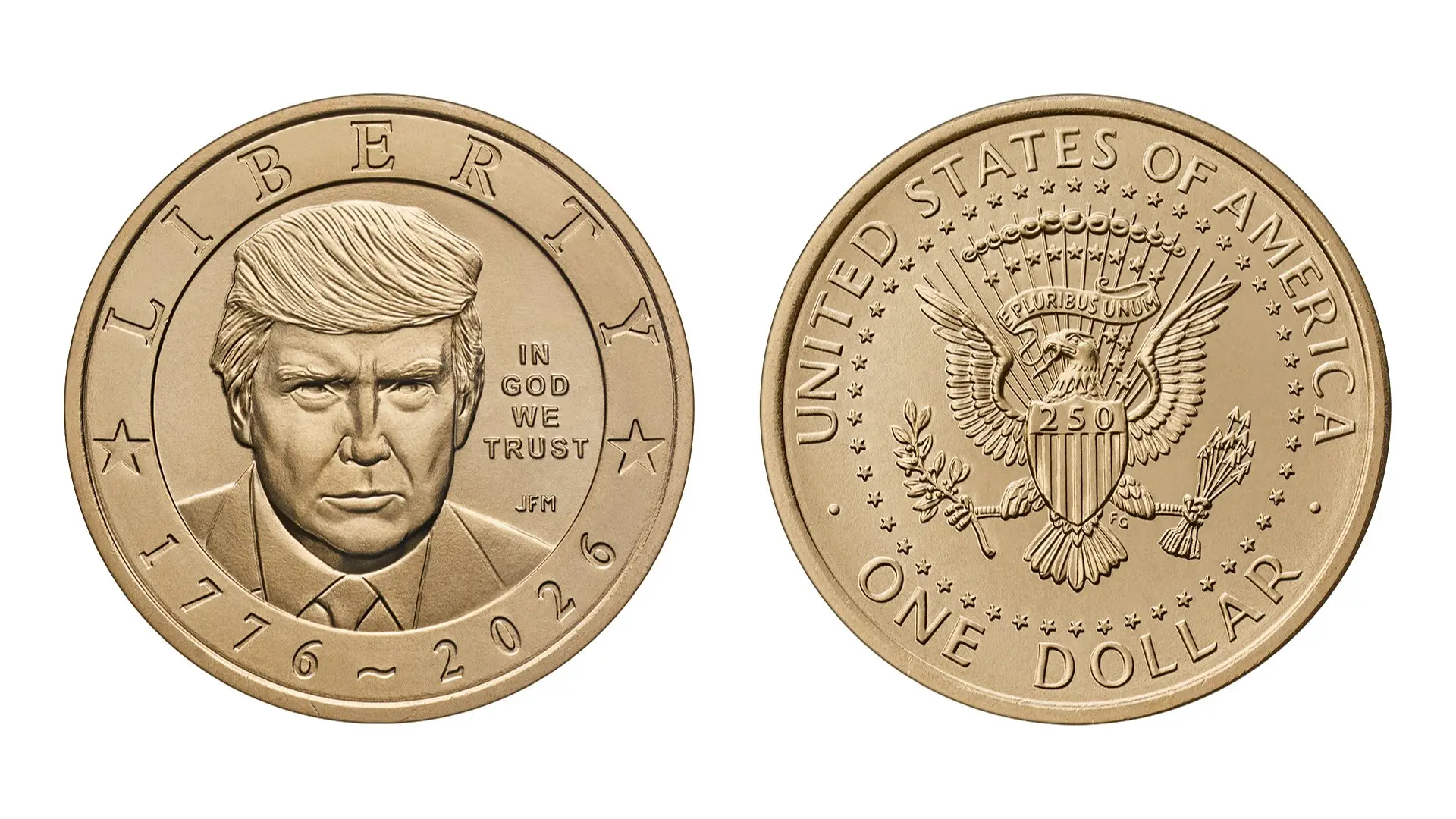
Well, according to the US laws... yes and no.
Apparently, there are two types of ways you can interpret it – in spirit or literally from what has been said.
This is because there are several laws which reveal who is allowed to be displayed on US currency, but whether they can be upheld legally is another question.
For example, there is an 1866 law called the Thayer Amendment, which prohibits the use of any living person’s image being featured on any type of currency, be it note or coin.
There’s also the Presidential $1 Coin Act, which came into force in 2005.
This law created a set of regulations to follow if creating $1 coins to pay tribute to past American presidents.
It states: “No coin issued…may bear the image of a living former or current President, or of any deceased former President during the two-year period following the date of the death of that President.”
Retired Portland lawyer James Rickher previously launched a legal challenge to try and stop the Trump coin being produced, on the grounds the currency shouldn't feature a living president.
But the lawsuit was struck down in June after the judge said Rickher couldn't demonstrate the coin would cause him to suffer personal harm.
According to the legal decision, seen by Newsweek, Judge Karin J. Immergut said he could not rule on if the coin broke federal law, since the legal challenge was moot.
Other rules say if it is a commemorative dollar and not currency to spend, it doesn’t technically count as breaking the law to put an image of a living president on a coin.
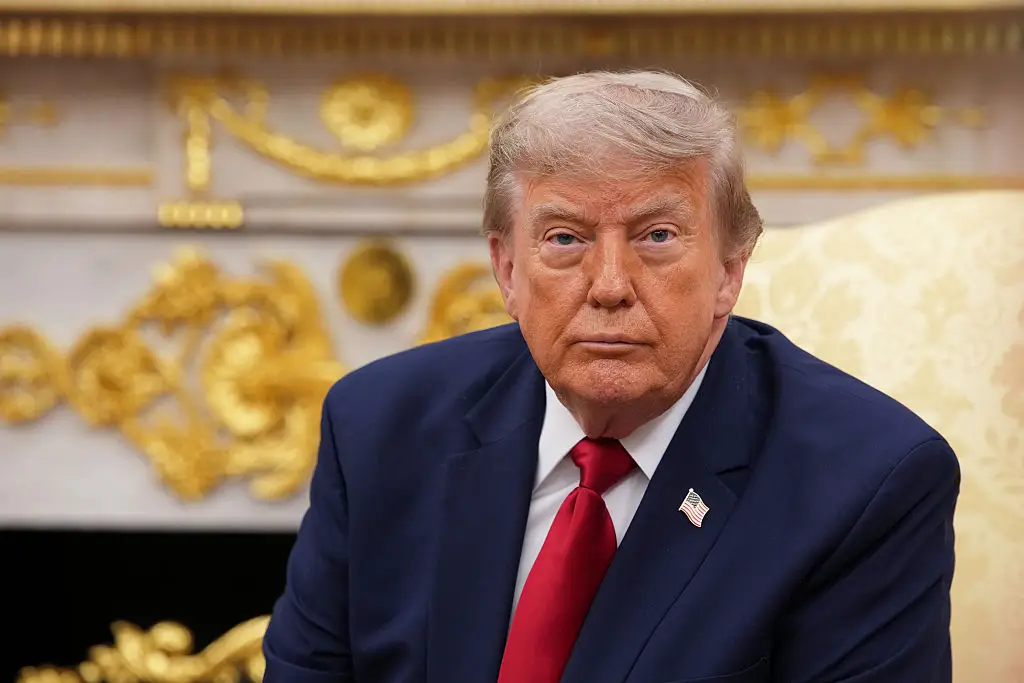
Since the US began making its own money in 1792, Calvin Coolidge has been the only living president to appear on currency in 1926.
To commemorate America’s 250th anniversary, the U.S. Mint confirmed it is planning to issue $1 coins featuring Trump’s face, which the administration says is allowed under the 2020 Circulating Collectible Coin Redesign Act that gives the Treasury secretary the authority to issue $1 coins ‘with designs emblematic of the U.S. semiquincentennial’ for one year.
Treasury Secretary Scott Bessent told Fox News on the Jesse Watters Primetime show that it’s completely above board to make the coin.
“As Treasury secretary, I only have two mandates: the currency has to say ‘In God We Trust’ somewhere on it and there cannot be an image of a living person,” Bessent said. “During the 150th, there was a Calvin Coolidge coin, so we can put living people’s images on a coin.”
UNILAD has contacted the US Treasury for a comment.
Topics: Donald Trump, Politics, US News, Money
 Britt Jones