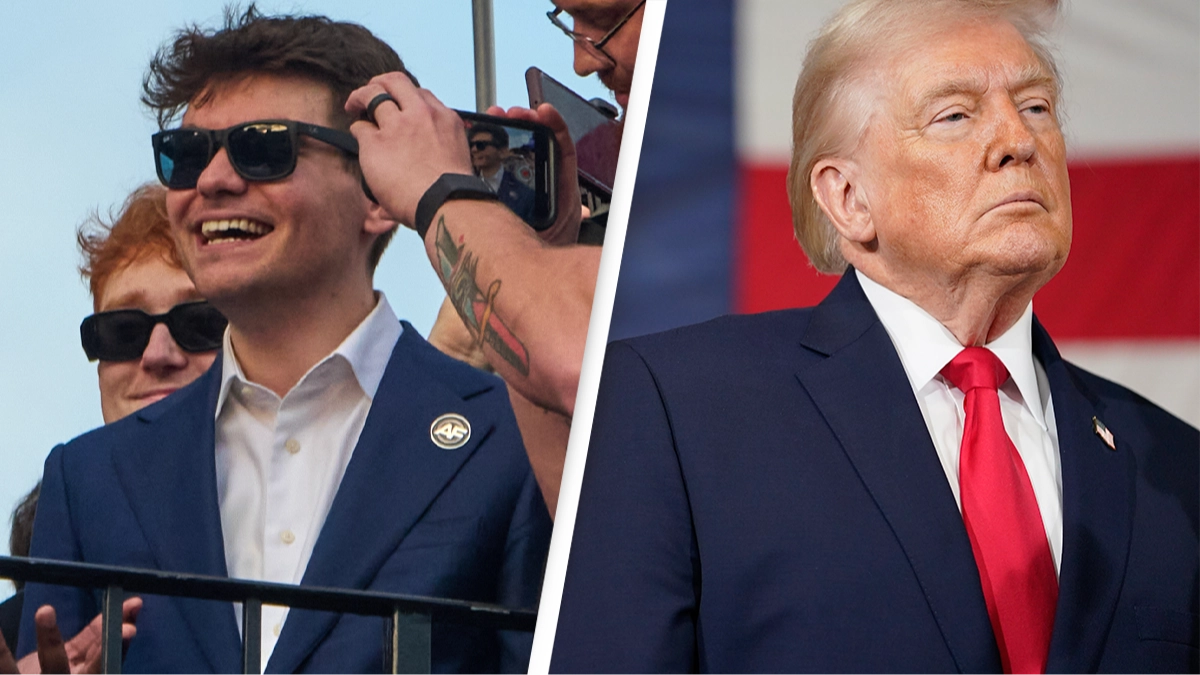
Far-right influencer Nick Fuentes hits out at Trump as MAGA supporters slam strikes on Iran as 'disgusting and evil'

Political commentator and livestreamer Nick Fuentes appears to have made a dramatic U-turn on his views on the Trump administration.
Fuentes is known for sharing his support of Trump and the far-right, but is now urging his followers to move away from the Republicans — even going as far as telling people to vote Democrat.
A lot of MAGA supporters have opposed America's recent strikes on Iran. Even long-time Trump supporter Tucker Carlson went as far as calling then 'disgusting and evil'.
Elsewhere, Megyn Kelly – who has also been a Trump advocate – has condemned the air strikes.
Advert
"My own feeling is no one should have to die for a foreign country," she said on her radio show, adding: "I don’t think those four service members died for the United States."
Now Fuentes has turned his back on the Trump administration too.
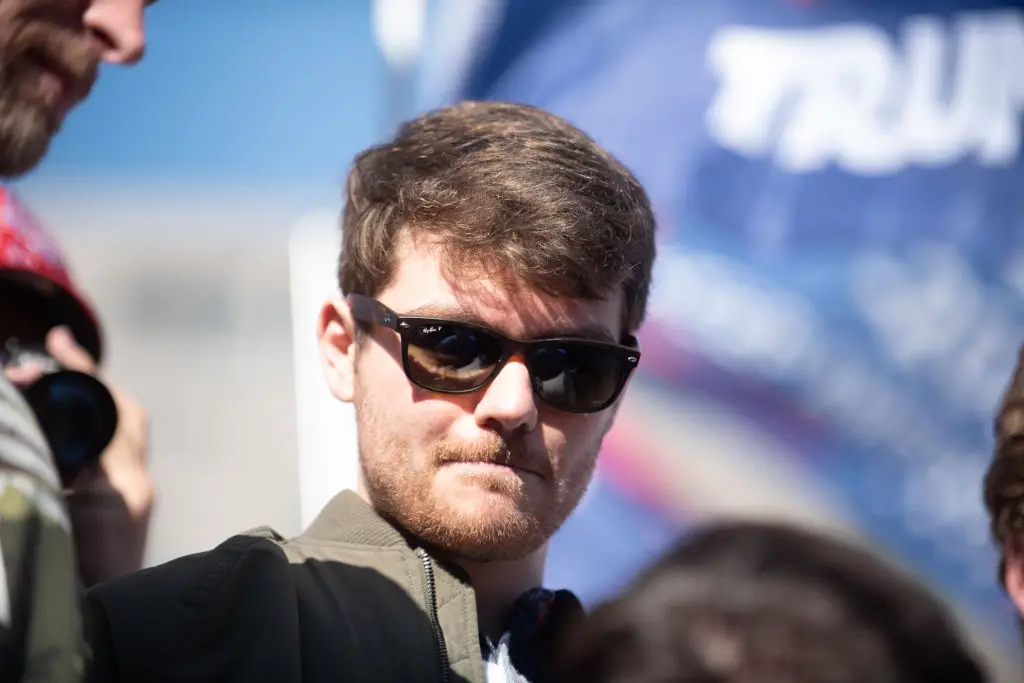
"Something has gone horribly wrong," the 27-year-old said on a Rumble livestream. "The movement is something else now. And what we need in 2028— this is our last chance. We need in 2026 for this administration to be shut the f*ck down."
Fuentes went on allege about Trump's party: "What does this administration do, other than cover up the Epstein files, embezzle money through government contracts, and bring us to war for Israel."
He continued to call for the Trump administation to be 'shut down immediately' and told people to vote Democrats in the upcoming mid-terms later this year.
Fuentes has also taken his criticisms to Twitter, where he's accused Trump, Marco Rubio, and JD Vance of having 'sold us out'.
"This is a war of aggression for Israel," he wrote on March 2. "Americans will die in terrorist attacks and in missile strikes so that Israel can expand its borders in every direction. Trump, Vance, and Rubio sold us out."
In a separate post shared on Sunday, he accused the president of 'betraying' MAGA.
He fumed: "I cannot and will not vote for the GOP unless they put America and Americans First. If you keep voting after they dragged us into a regional war with Iran, then you will vote for absolutely anything."
Trump has simply shrugged off the backlash he's received from the likes of Carlton, Fuentes, and Kelly.
Speaking about Kelly and Carlton specifically, the president said (per The Independent): "I think that MAGA is Trump — MAGA’s not the other two. MAGA wants to see our country thrive and be safe. And MAGA loves what I’m doing — every aspect of it...
"This is a detour that we have to take in order to keep our country safe and keep other countries safe, frankly."
The history of Iran's conflict with the US: a timeline
As the United States and Israel launch military operations against Iran, which are focused on the regime's nuclear facilities, military infrastructure and leadership, here is a look into the history of the Middle Eastern nation's conflict with the US.
1953: The US backs the ousting of PM Mohammad Mosaddegh
In a covert operation called Operation Ajax, the British and American intelligence services joined forces to overthrow Iran’s nationalist prime minister, Mohammad Mosaddegh, in August 1953, with the aim of retaining access to cheap oil and preventing communist expansion.
This would go on to fuel the decades-long anti-American movement in Iran.
1957-1968: Nuclear energy agreements
In 1957, Iran was given US backing to develop civilian nuclear power as part of US President Dwight D. Eisenhower’s 'Atoms for Peace' program.
Just over a decade later, in 1968, the US and Iran were among the initial signatories of the Treaty on the Non-Proliferation of Nuclear Weapons, which entered into force in 1970.
1970-80s: Civil unrest grows in Iran
While relations between the US and Iran appeared to be stable in the 1970s, civil unrest in the Middle Eastern nation was beginning to mount, resulting in the Islamic Revolution in 1979.
Around this time, the exiled Shah Mohammed Reza Pahlavi was permitted entry into the US for cancer treatment, triggering outrage among a group of Iranian university students who believed he had escaped justice.
They stormed the American embassy in Tehran in November in retaliation, taking 52 Americans hostage for more than a year and demanding the Shah be returned to Iran to face trial.
1980: Diplomatic ties with Iran are cut by the US
Following an unsuccessful rescue mission to retrieve the American embassy hostages in April 1980, which left eight US servicemen dead, US President Jimmy Carter cut diplomatic ties with the nation. Formal relations between the two have never been restored.
That same year, neighbouring country Iraq invaded Iran, sparking a war that would go on for eight years and kill hundreds of thousands of people on both sides.
The US backed Iraq during this conflict, providing money, training and technology.
It took 444 days to release the US embassy hostages, who were returned home in January 1981, minutes after Carter’s term ended and President Ronald Reagan was sworn into office.
Late 1980s: Tensions continue between the US and Iran
In 1984, the US added Iran to its list of state sponsors of terrorism and imposed sanctions on the country.
However, two years later, in 1986, the Reagan administration secretly sold weapons to Iran to secure the release of Americans held hostage in Lebanon by the militant group Hezbollah.
And then, in 1988, US naval cruiser the USS Vincennes mistakenly shot down an Iranian passenger jet over the Strait of Hormuz, killing all 290 people on board.
1990s: President Bill Clinton’s administration tightens sanctions
These 1995 sanctions included an oil embargo and a ban on US trade. Clinton then signed into law the Iran and Libya Sanctions Act in 1996, which penalised non-American companies that invested over $20 million annually in Iran’s oil and gas sector.
2000s: President George Bush's comments on Iran spark fury
During his State of the Union speech in 2002, President Bush described Iran, as well as North Korea and Iraq, as being part of an 'axis of evil'.
This sparked nationwide outrage in Iran due to its assistance of the US in its war against the Taliban in Afghanistan in the wake of the September 11 terror attacks.
2010s: President Barack Obama holds top-level contact with Iran for the first time in 30 years
In September 2013, Obama spoke by phone to Iranian President Hassan Rouhani to 'offer a new chapter of engagement on the basis of mutual interests and mutual respect'.
Two months later, Iran, Germany, and the five permanent members of the United Nations Security Council - China, France, Russia, the UK and the US - signed an initial nuclear deal, known as the Joint Plan of Action, designed to manage crises and to ensure that Iran's nuclear programme would be exclusively peaceful.
2018: President Donald Trump restores sanctions on Iran
In 2015, the 2013 nuclear pact was expanded to the landmark Joint Comprehensive Plan of Action (JCPOA), in which Iran pledged to limit its uranium stockpile.
However, during Trump's first term of presidency in 2018, he fulfilled a campaign pledge by withdrawing the US from the JCPOA, which he called the 'worst deal ever'.
He restored the sanctions on Iran that had been lifted under the nuclear pact, and pursued a 'maximum pressure' strategy designed to drive the country’s oil exports to zero.
Then, in 2019, the US designated the Islamic Revolutionary Guard Corps, Iran’s most powerful military institution, a terrorist organisation.
2020s: President Joe Biden's administration arranges prisoner exchanges and sanctions waivers
When Joe Biden took office in 2021, his administration began indirect talks with Iran, but with little success.
But in 2023, a prisoner exchange deal was agreed to release five detainees. This also included a sanctions waiver for banks to transfer $6 billion of frozen Iranian funds from South Korea to Qatar for humanitarian purposes - something Republican lawmakers were highly critical of.
2025: President Donald Trump's second term brings back his 'maximum pressure' campaign
Back in office for his second term, Trump reinstated his 'maximum pressure' campaign ordering tougher enforcement of existing sanctions on Iran.
In early 2025, the US joined Israel's offensive and struck three Iranian nuclear facilities, resulting in a retaliation attack from Iran, which bombed the Al Udeid Air Base, a US military facility in Qatar.
2026: US military action is launched in Iran and Ali Hosseini Khamenei is assassinated
In late 2025, Iran was engulfed in anti-government demonstrations following the collapse of its currency. Protests demanded the end of Ali Hosseini Khamenei's rule, which resulted in authorities issuing crackdowns and restricting internet and telecommunications access.
The US-based Human Rights Activist News Agency said in a February report that more than 6,000 civilians had been killed, and more than 50,000 people arrested.
Khamenei died on February 28, aged 86, in a large-scale air attack on Iran by the US and Israel.
Topics: Republicans, Politics, News, Donald Trump, Iran, US News
 Niamh Shackleton