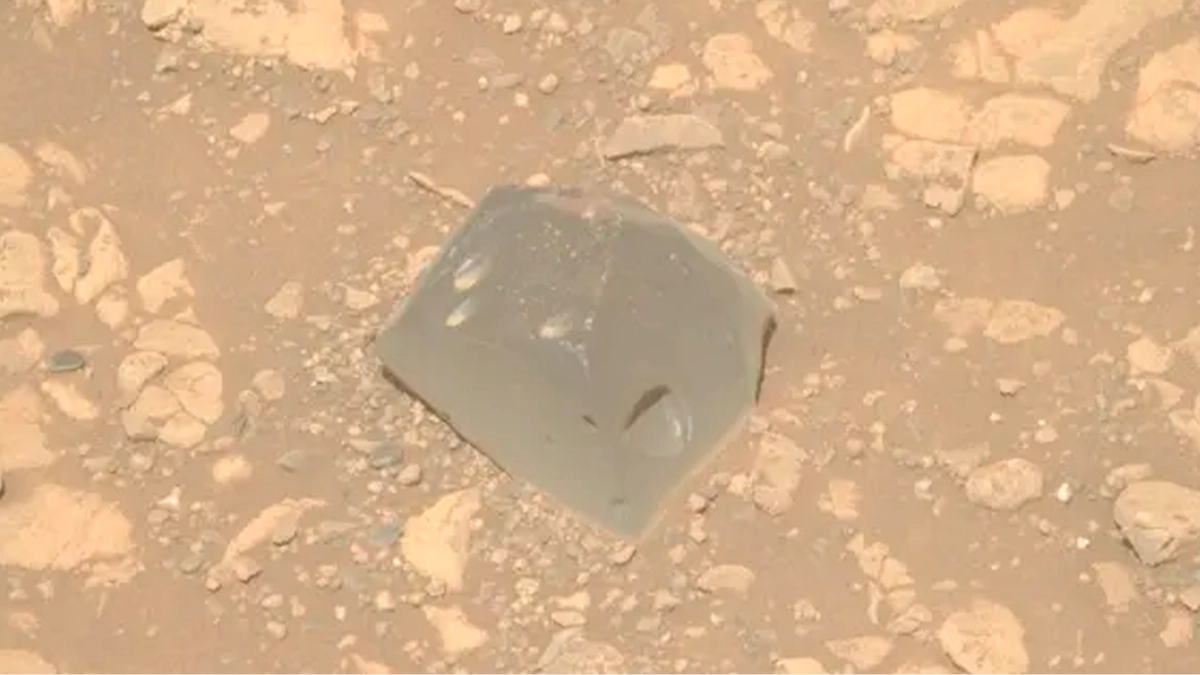
NASA make shocking discovery after finding mysterious skull-shaped feature on Mars

NASA has made a very intriguing discovery after finding a skull-shaped feature on Mars.
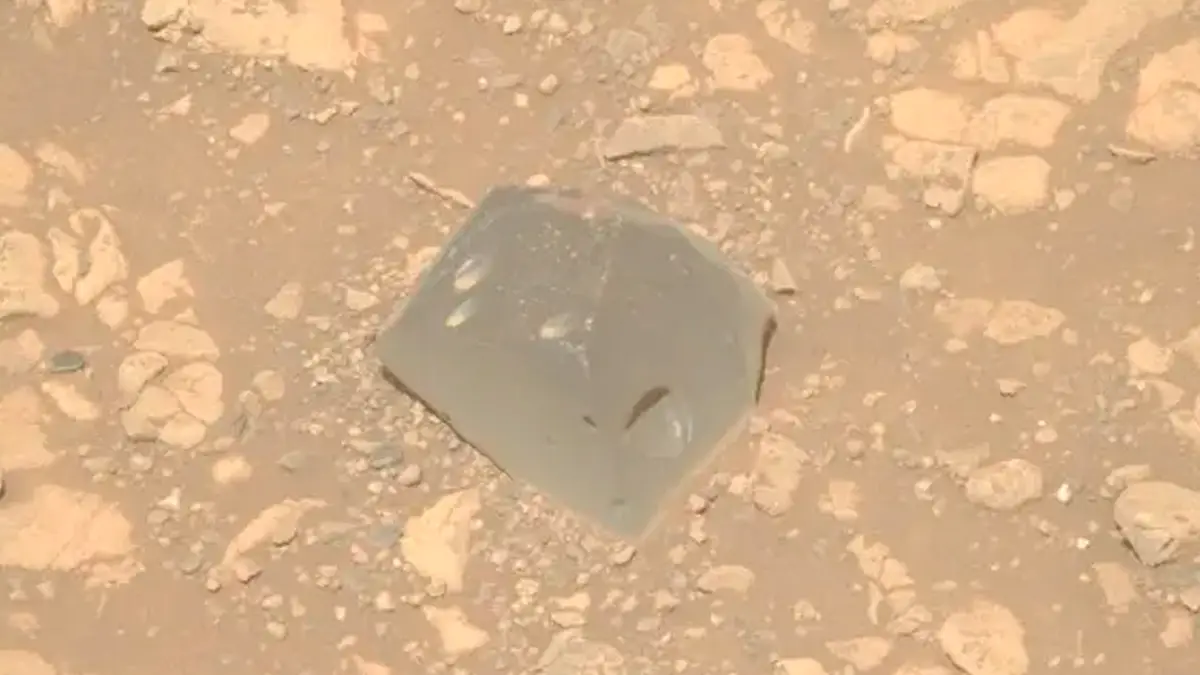
The mysterious elevation - which has been called 'Skull Hill' - was found earlier this month by the Perseverance rover while it was travelling down Witch Hazel Hill, a ridge that forms part of the Jezero Crater basin.
Scientists are particularly intrigued by it because it looks nothing like its surrounding environment.
In comparison to the rest of the terrain, which is dusty and light in colour, Skull Hill is dark and features several small pits.
Advert
Because of this, questions have arisen into whether the elevation originated on Witch Hazel Hill, or if it could have come from elsewhere.
It's now been suggested that it could have actually been moved from its original location by erosion or impact.

In a post on the NASA website, Margaret Deahn, Ph.D. Student at Purdue University, wrote: "This float rock uniquely contrasts the surrounding light-toned outcrop with its dark tone and angular surface, and it features a few pits in the rock.
"If you look closely, you might even spot spherules within the surrounding regolith! See "The pits on Skull Hill may have formed via the erosion of clasts from the rock or scouring by wind.
"We’ve found a few of these dark-toned floats in the Port Anson region, and the team is working to better understand where these rocks came from and how they got here."
There's also a suggestion that it could even be a meteorite, with Margaret adding: "Skull Hill’s dark color is reminiscent of meteorites found in Gale crater by the Curiosity rover... Chemical composition is an important factor in identifying a meteorite, and Gale’s meteorites contain significant amounts of iron and nickel.
"However, recent analysis of SuperCam data from nearby similar rocks suggests a composition inconsistent with a meteorite origin."
It seems the rock is now undergoing tests to further understand its origins, with Margaret explaining: "Luckily for us, the rover has instruments that can measure the chemical composition of rocks on Mars. Understanding the composition of these darker-toned floats will help the team to interpret the origin of this unique rock!"
It's been a pretty busy few weeks when it comes to exciting discoveries in space.
A new study has revealed the 'strongest hints yet of biological activity' outside our own solar system.
The planet K2-18b orbits a red dwarf star in the constellation Leo. It was discovered in 2015 by NASA’s Kepler Space Telescope and it's approximately 2.6 times the size of Earth.
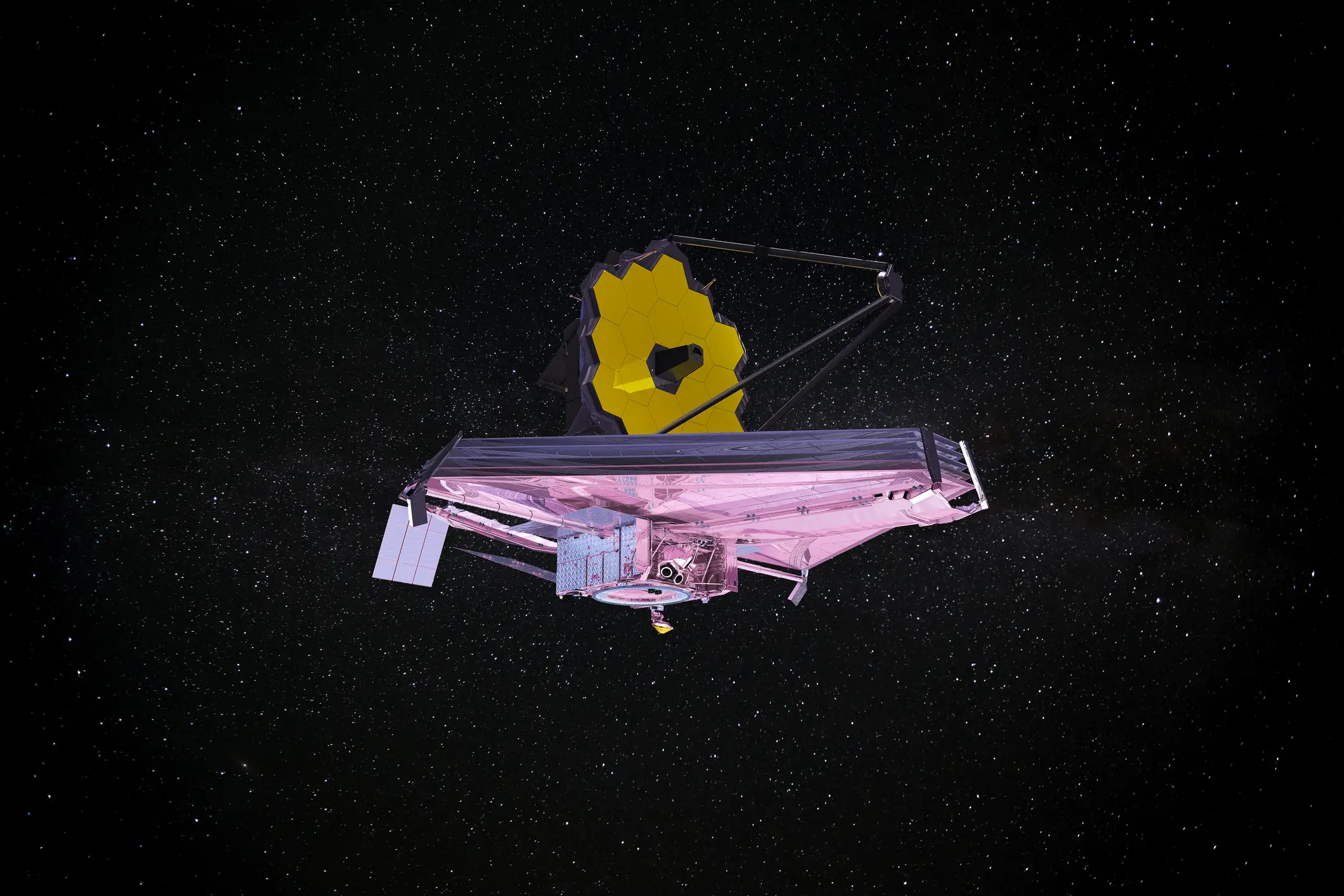
While experts have already detected water vapour in K2-18b's atmosphere, gases such as methane, carbon dioxide, and notably, dimethyl sulfide have now been discovered by the James Webb Space Telescope.
The presence of dimethyl sulfide on K2-18b suggests potential biological activity, with Professor Nikku Madhusudhan telling The Sun that 'there is no mechanism in the literature that can explain what we are seeing without life'.
"It’s a question humanity has been asking for thousands of years. It’s a shock to the system. It takes time to recover from the enormity of it," he said.
 Lucy Devine