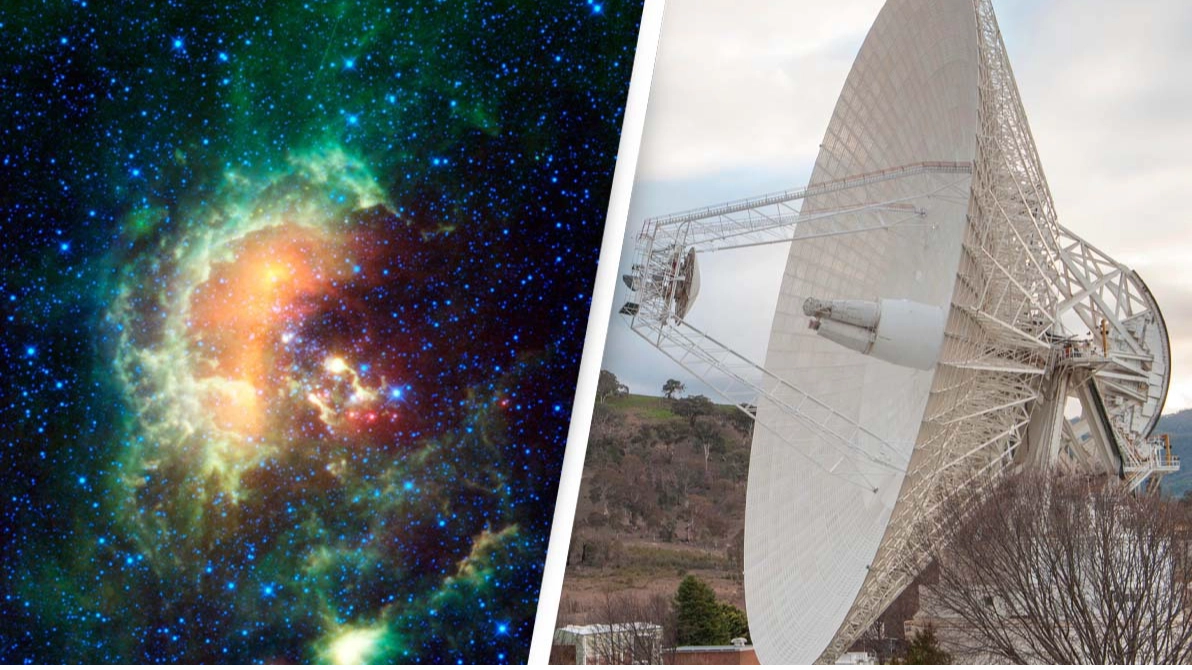
unilad homepage
unilad homepage
  • News
    • UK News
    • US News
    • World News
    • Crime
    • Health
    • Money
    • Sport
    • Travel
  • Music
  • Technology
  • Film and TV
    • News
    • DC Comics
    • Disney
    • Marvel
    • Netflix
  • Celebrity
  • Politics
  • Advertise
  • Terms
  • Privacy & Cookies
  • LADbible Group
  • LADbible
  • SPORTbible
  • GAMINGbible
  • Tyla
  • UNILAD Tech
  • FOODbible
  • License Our Content
  • About Us & Contact
  • Jobs
  • Latest
  • Archive
  • Topics A-Z
  • Authors
Facebook
Instagram
X
Threads
TikTok
YouTube
Submit Your Content
Mysterious Intense Blast Detected 130 Million Light-Years From Earth
Home>News
Updated 11:39 12 Apr 2022 GMT+1Published 17:36 13 Mar 2022 GMT

Mysterious Intense Blast Detected 130 Million Light-Years From Earth

A never-before-seen blast of energy has been detected in outer space, leaving astronomers scrambling to find an explanation.

Hannah Smith

Hannah Smith

google discoverFollow us on Google Discover
Featured Image Credit: Alamy

Topics: Science, Space, NASA

Hannah Smith
Hannah Smith

Hannah is a London-based journalist covering news and features for UNILAD. She's especially interested in social and political activism and culture.

Advert

Advert

Advert

A never-before-seen blast of energy has been detected in outer space, leaving astronomers scrambling to find an explanation.

The cosmic blast was recorded by scientists at NASA's Chandra X-ray Observatory, and occurred more than 130 million light-years away from Earth, in the same part of space where a collision between two neutron stars caused a massive burst of energy recorded some three-and-a-half years ago.

'There's something else happening now,' Ed Berger, a Harvard professor who was part of the team that detected the new blast, told Mashable, with the energy generated compared to a sonic boom in its intensity.
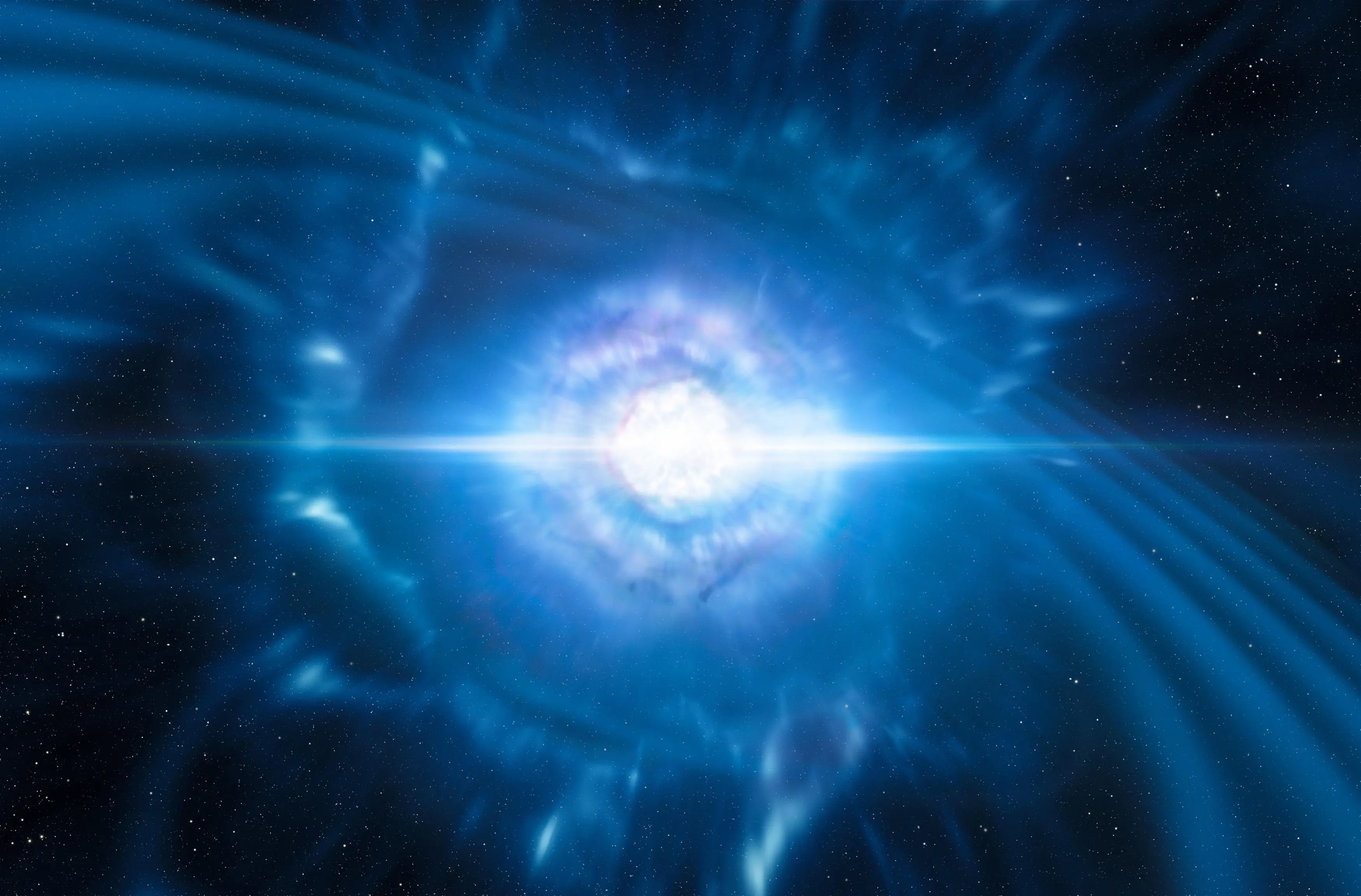
A Kilonova (Alamy)
A Kilonova (Alamy)

Advert

Astronomers have been working hard to try and put a reason behind this interesting new discovery, and in new research published in the journal Astronomical Letters, a team from the Department of Physics and Astronomy at Northwestern University has suggested two explanations.

Incredibly, neither of the explanations has ever been observed before, meaning whatever it is is likely to be a completely new phenomenon for astronomers to study.

According to the study's lead author, PhD student Aprajita Hajela, one of the possibilities is that the burst is what's called a 'kilonova glow' - that is, the afterglow of the explosion that is caused when two neutron stars collide (known as a kilonova explosion).

This afterglow is caused by shockwaves from the explosion which heat up gases and stardust, and can be detected from millions of light years away.

According to Mashable, this 'kilonova glow' is currently the leading explanation for the burst, however scientists are also considering the possibility that it could be down to something we're more familiar with.

There's a chance that when the neutron stars collided, they caused a black hole to develop, with matter from the collision now falling into the hole.
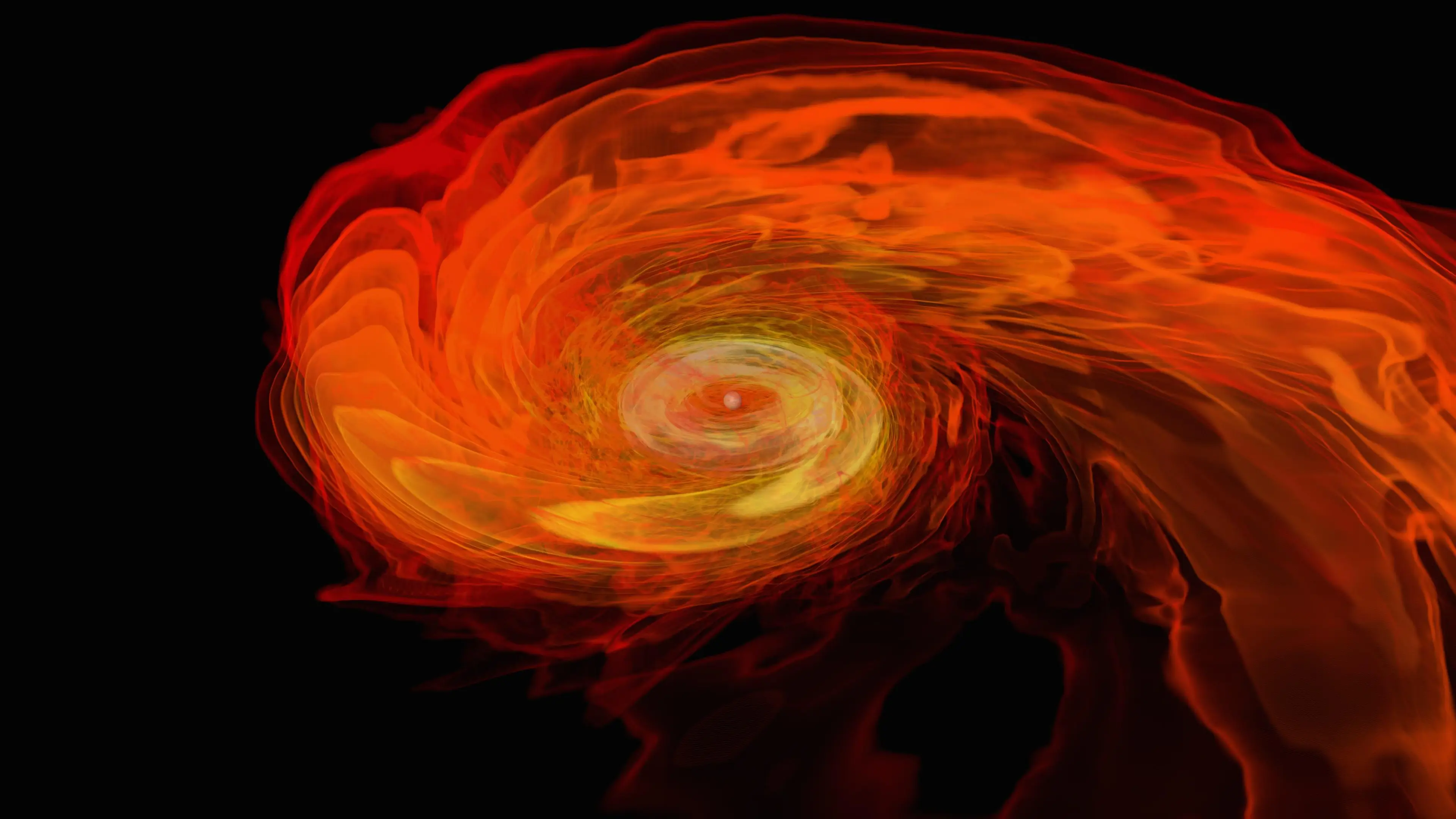
A render of neutron stars colliding to form a black hole (Alamy)

As debris falls into the hole, it releases energy, which could be an alternative explanation for the blast.

Scientists are continuing to observe the energy blast, and efforts are ongoing to see if they can distinguish which of the two possible causes is actually responsible.

This is done by observing the type of radiation emitted by the blast - if it's primarily radio emissions, it's more likely to be a kilonova glow, whereas X-ray emissions are typically associated with black holes.

Whatever the cause, though, it's an exciting new discovery for astronomers as they seek to learn more about the mysteries of our universe.

If you have a story you want to tell, send it to UNILAD via [email protected]

Choose your content:

12 hours ago
13 hours ago
  • Severe Weather Europe
    12 hours ago

    El Niño has officially begun, here's how it could affect the weather

    El Niño has a huge range of impacts on weather patterns

    News
  • Getty Stock Images
    12 hours ago

    When and how often you nap could increase your chances of dying, according to researchers

    The ideal nap lasts between 15 and 20 minutes, according to science

    News
  • Getty Stock
    12 hours ago

    Doctor issues warning against 'dirty soda' trend that could be a 'disaster' for the body

    The trend started off in Utah, gaining mainstream popularity with the help of social media

    News
  • Getty Stock Image
    13 hours ago

    Doctor explains what really happens to your body when you're in a coma

    The difference occurs after just 24 hours in a coma

    News
  • Harvard scientist says mysterious object aiming at Earth is 'not natural' after pointing out one major issue
  • NASA reveal unexpected new results of mysterious object aiming at Earth that scientist claims is 'not natural’
  • Harvard scientist has 15 point plan to tackle alien threat amid mysterious object aiming at Earth
  • NASA explains stunning Earth phenomenon captured from ISS that looks like something from a movie