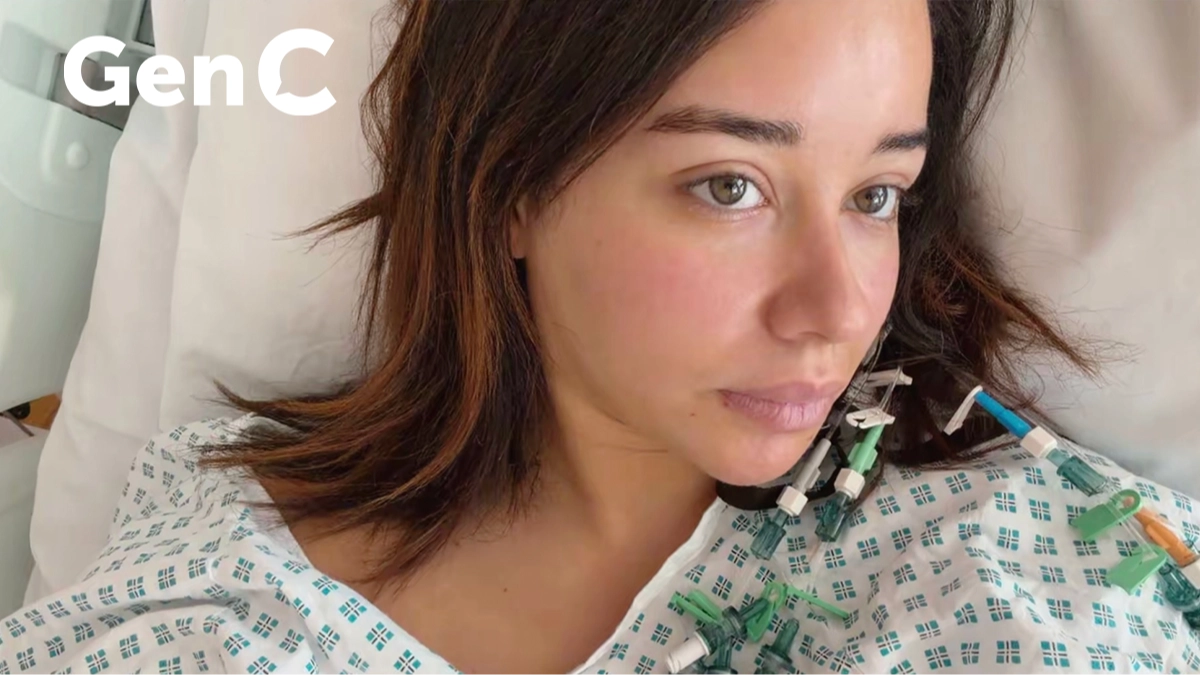
"Young people shouldn’t have to fight this hard" - Woman, 25, diagnosed with colon cancer says doctors dismissed concerns as IBS

Doctors told Jess Rock, from West London, UK, that she had a stomach bug. But when her symptoms didn’t subside, it was then suggested that the 25-year-old had irritable bowel syndrome (IBS) instead.
One of her symptoms was diarrhea, says Jess. Her stools would change consistency and color ‘from one day to the next’, something she found to be ‘genuinely alarming’ given how regular and normal her bowel movements had been previously.
She experienced abdominal pain too. Sometimes the pain was mild, while other times it could be ‘excruciating’.
As she continuously felt unwell, Jess kept pushing for more answers. “My GP was understanding at first, but as more tests came back clear, I started to feel like I was being treated as someone with health anxiety rather than someone with a real problem,” Jess tells UNILAD.
Advert
“At one point I was in A&E [the emergency room] weekly, just trying to get answers. Young people shouldn’t have to fight this hard to be taken seriously — there should be doctors advocating for them, not the other way round.”

'I knew it had to be something more serious than IBS'
Jess suspected that something more serious was going on with her health when she started following official advice on how to deal with IBS (such as cutting out dairy, gluten, and spices) to no avail.
“When none of it made a difference and the diarrhea, abdominal pain, and constipation kept going, I knew it had to be something more serious than IBS,” she says.
After a year and a half, Jess was found to have a neuroendocrine tumor of the colon in October 2025. The discovery of this type of tumor was shock to surgeons who said she was 'far too young' for this cancer as it's something people between the ages of 50 and 65 usually develop – not 25.
But Jess being told she was ‘too young’ predated her procedure.
She says that when she first went to the doctors to discuss her concerns about her health, the doctor was ‘passive’ about it because of her age and was in ‘no rush to dig deeper’.
Luckily the second doctor she saw ‘actually listened’ and went on to refer Jess to a specialist.
“Having developed a heightened anxiety around my health since the pandemic, I pushed hard and refused to accept no for an answer,” Jess recalls.
The comments about her being ‘too young’ then came back after surgeons discovered what kind of tumor she had. When it was found, the tumor was already grade 2 out of 3 so her surgery ‘had to be scheduled quickly’.
'You start questioning what your future looks like'
The procedure she had took over three hours to do and involved removing part of her right colon. There were fears that Jess would have to live with a stoma bag for the rest of her life, but thankfully the surgery went to plan and this didn't end up being the case.
While her surgery went well, it was far from the end of Jess’ cancer journey.
“The reality of going through something so invasive at this age is genuinely frightening,” says Jess, who is now 26 years old. “You start questioning what your future looks like, whether you’ll get to the milestones everyone else takes for granted.”
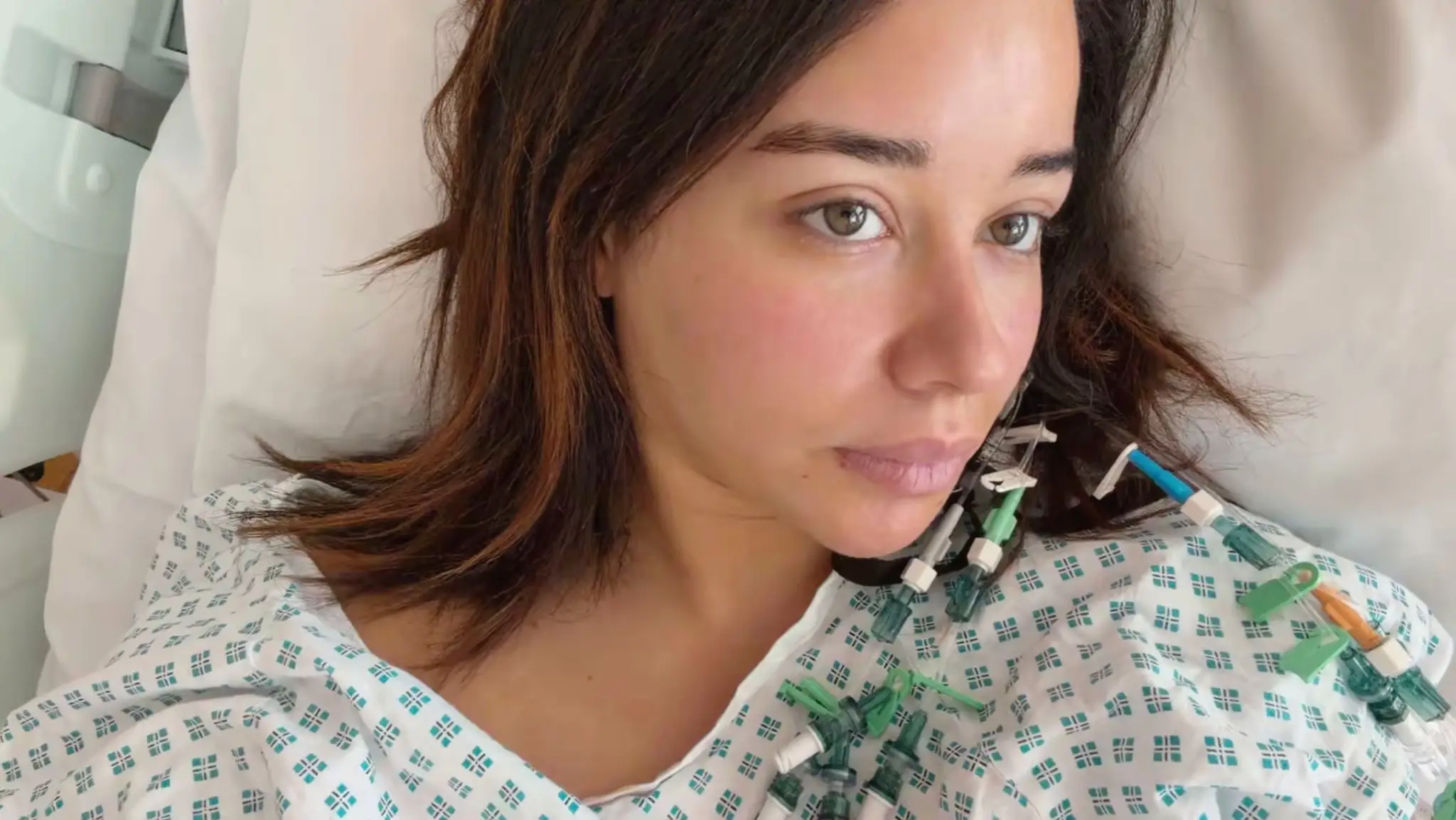
Because of the type of cancer Jess has, there’s always a risk of recurrence. This means that, even though doctors say her scans are clear of any disease, it doesn’t necessarily mean she’s in ‘remission’.
“As it stands today, I am clear, and I’ll be monitored with scans every six months for the next five years,” she explains.
“The fear of recurrence never really leaves you. While people my age are worrying about careers and travel, I’m carrying a much deeper, quieter fear about my health and what’s ahead.”
Jess is just one example of how cancer doesn’t discriminate and how it can impact people at any stage of life. But young people are still having to fight to get answers, something that Jess says can be extremely taxing.
“The process wears you down, physically and mentally, until you start to wonder whether you’ve imagined the whole thing yourself,” she tells UNILAD, “especially when even the people closest to you assume the doctors must be right.”
'Age isn’t a boundary for cancer'
Since her diagnosis, her doctor has admitted that nobody at the practice suspected she had such a rare disease, purely because of her age.
Jess goes on to say that she thinks younger people ‘fall through the cracks’ in many healthcare systems as elderly people are often prioritized after the pandemic; but now she’s taken more seriously.
“Now, when I raise a concern, I’m actually listened to,” Jess says. “Age isn’t a boundary for cancer — you can always be the exception to the rule.”
Gen C is a weekly series focusing on young adults with cancer sharing their experiences.
If you’ve been affected by any of these issues and want to speak to someone in confidence, contact the American Cancer Society on 1-800-227-2345 or via their live chat feature, available 24/7 every day of the year.
 Niamh Shackleton