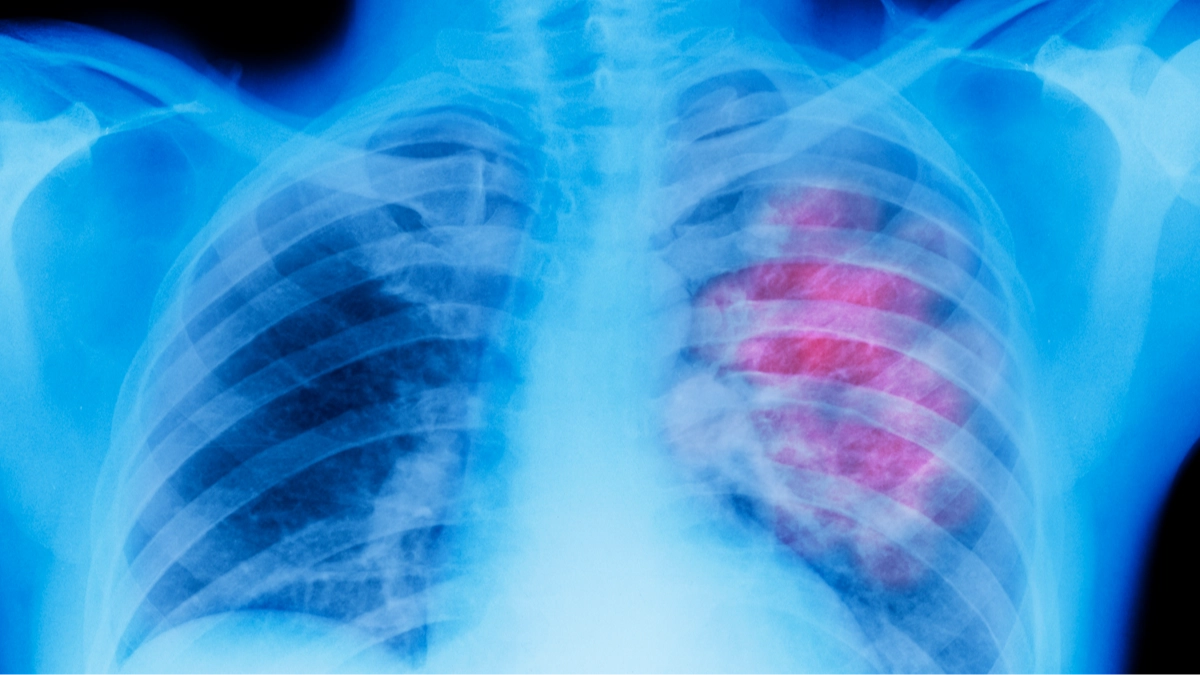
Can vaping cause popcorn lung as it increasingly affects young adults with urgent warning issued

A fresh warning has been issued about so-called 'popcorn lung' that has been historically linked to vaping.
The nasty and irreversible lung disease, known medically as bronchiolitis obliterans, derives its harrowing nickname from the fact that sufferers tend to get it from chemical exposures, like diacetyl found in microwave popcorn.
Patients diagnosed with the condition face inflamed and scarred lungs, leading to a permanent narrowing of the airways as well as a chronic cough and shortness of breath.
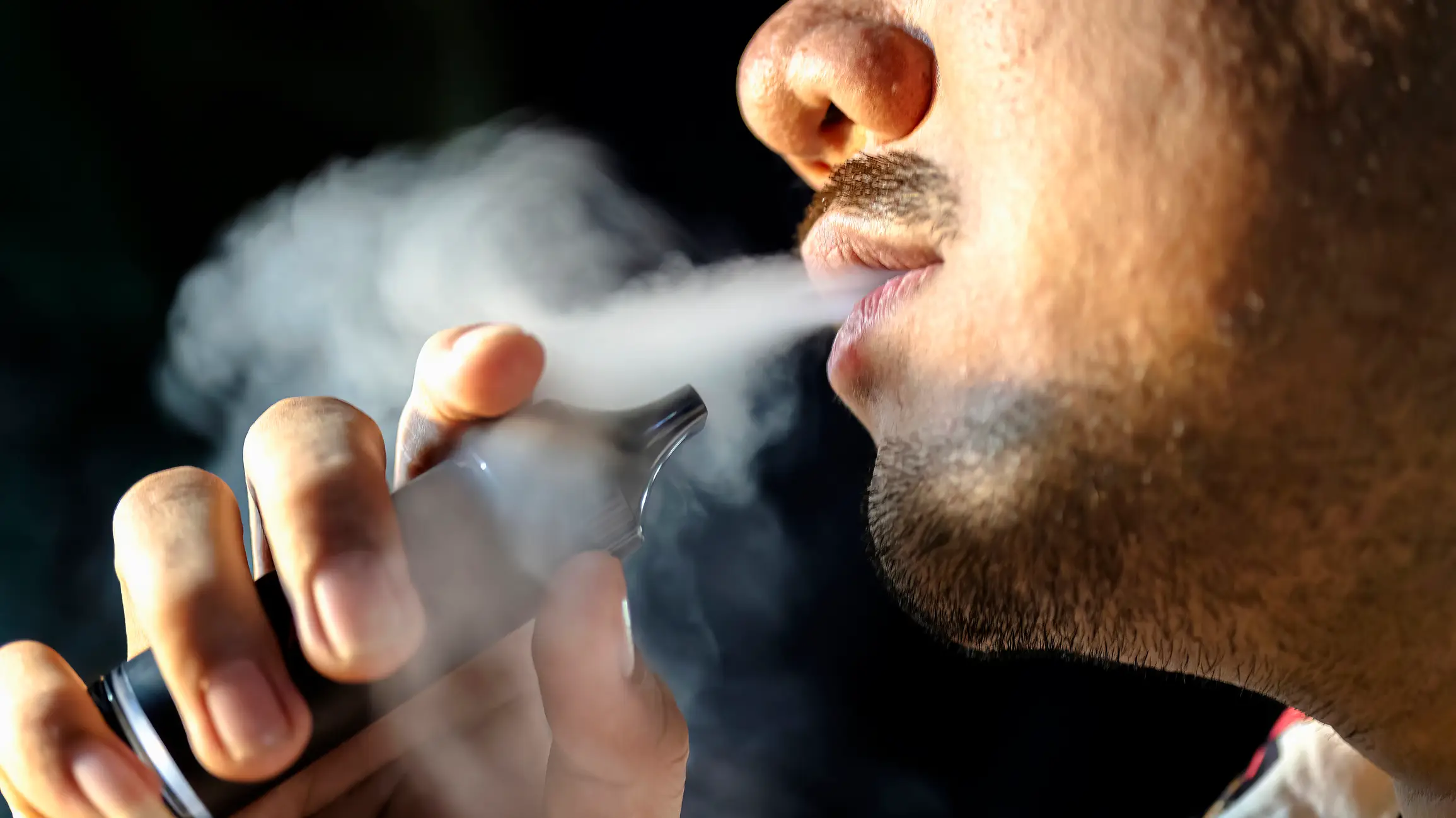
The problem has been closely associated with vaping and e-cigarettes, due to the chemicals inside - including diacetyl.
Advert
But does vaping actually cause popcorn lung?
According to Cancer Research, it was in the year 2000 that a group of popcorn factory workers in the US showed symptoms of having developed the condition, thus earning it the nickname 'popcorn lung.'
The Centers for Disease Control and Prevention (CDC) uncovered eight cases of lung disease in employees who had worked in the Missouri factory between 1992 and 2000, with an investigation finding that those with the worst lung damage had spent the most time mixing the flavoring chemical diecetyl with hot oil.
"Diacetyl was a flavouring in the popcorn, and so the workers breathed it in," the charity adds. "It was not related to the use of e-cigarettes."
In fact, the charity states there have been 'no confirmed cases of popcorn lung linked to e-cigarettes' though it is understood some vaping devices have liquids that contain diacetyl.
Since then, the UK banned the chemical from being used in all e-cigarettes and e-liquids under the EU Tobacco Products Directive (TPD) in 2016; however, in the US, Vaping360.com reports that diacetyl can be found in some e-liquids on the market.

"The source of diacetyl and AP in e-liquids is the flavorings used to make them," the site explains. "The most obvious ones are e-juices with buttery flavors, like custards and other sweet desserts. But some candy- and fruit-flavored e-liquids and even tobacco flavors can also contain diketones like diacetyl."
According to Vaping360, while there is little evidence to suggest vaping is a leading cause of popcorn lung across various studies, cigarette smoke contains 'at least 100 times as much diacetyl as the highest levels in any vaping product,' and despite this, smoking cigarettes is not associated with popcorn lung.
Patients may also be diagnosed with popcorn lung after suffering from various injuries, infections or complications from lung/stem cell transplants.
Donal O'Shea, Professor of Chemistry at RCSI University of Medicine and Health Sciences, said in an article in The Conversation that the disease is still pretty nasty if you've been diagnosed, as there is 'no cure.'
"Once the lungs are damaged, treatment is limited to managing symptoms.
"This can include bronchodilators, steroids, and in extreme cases, lung transplantation. For this reason, prevention – not treatment – is the best and only defence."
 Liv Bridge