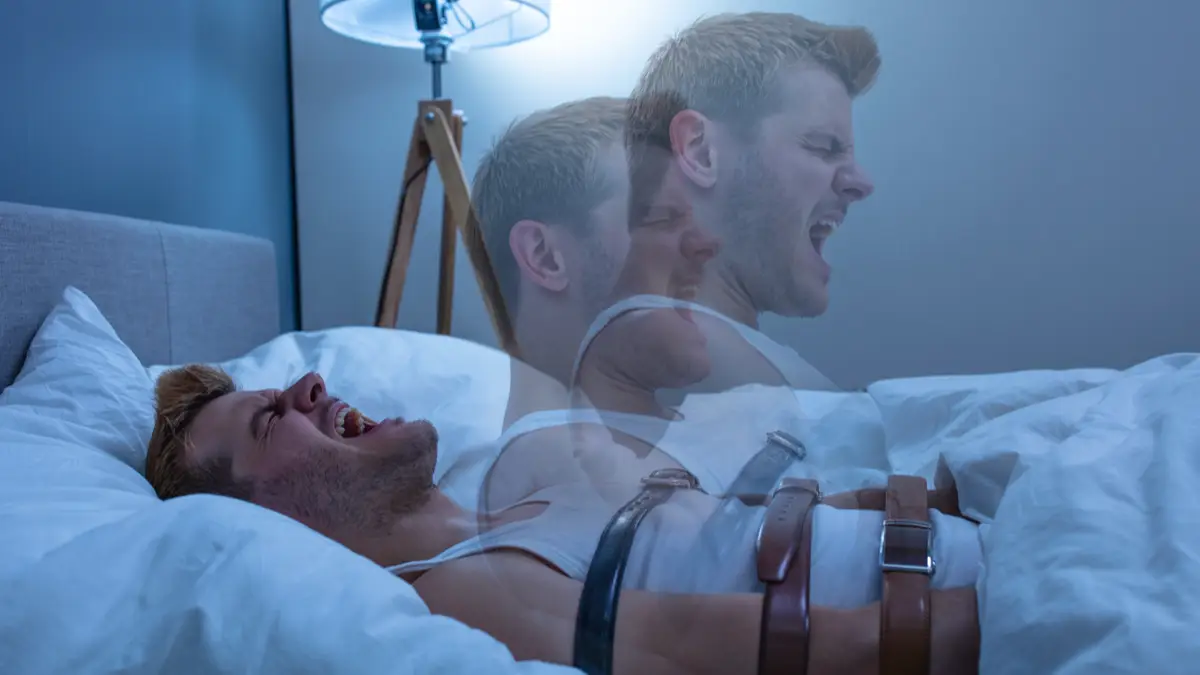
Terrifying simulation shows exactly what happens to your body during sleep paralysis

If you've never been unfortunate enough to experience sleep paralysis, it can be difficult to understand just how terrifying it really is.
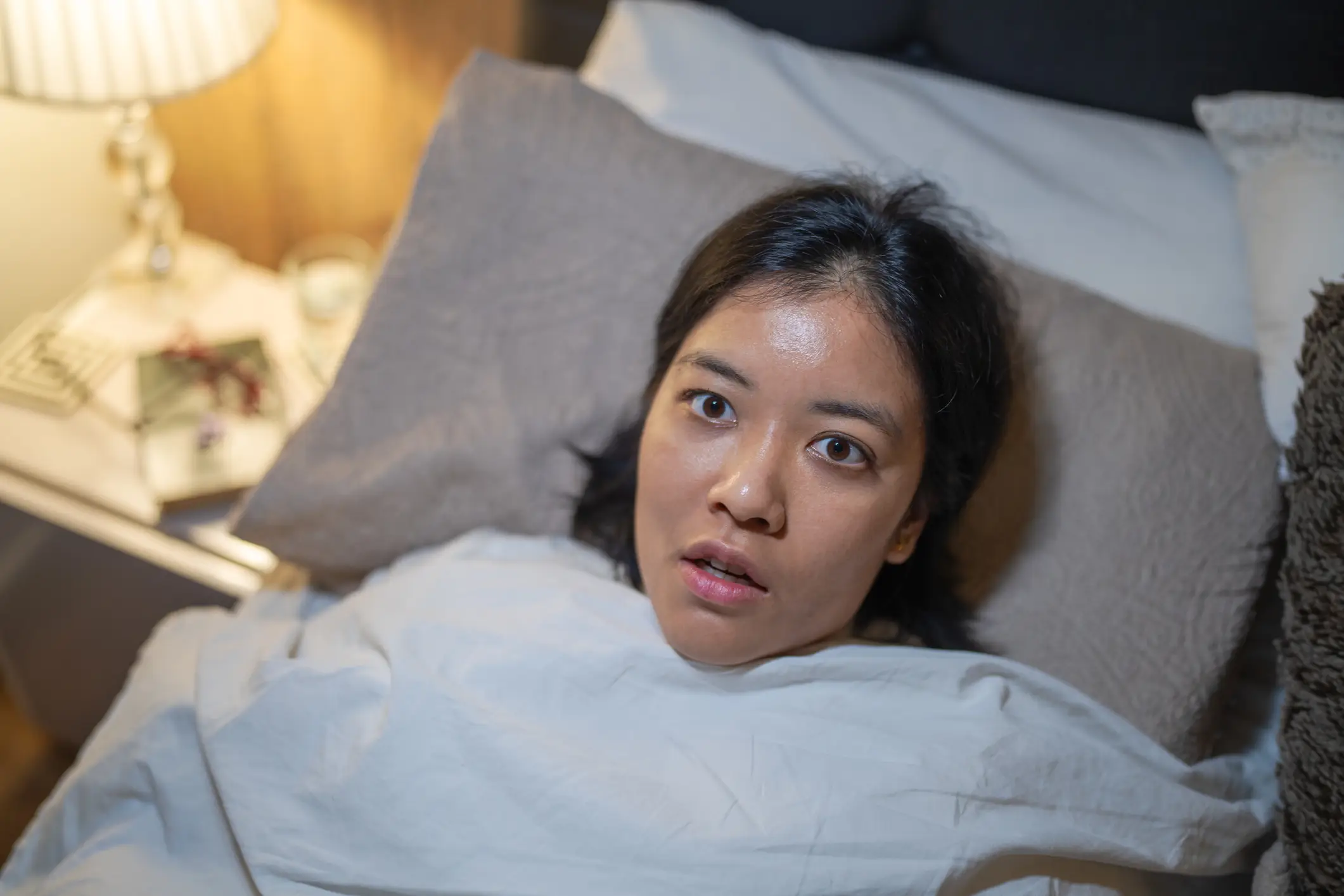
It leaves you unable to move or speak and gives you the feeling that something is in your bedroom or pushing you down onto your bed, which understandably leaves you shaken.
While it can be hard to describe the feeling, thankfully a TikTok clip has managed to perfectly capture the experience of sleep paralysis.
Shared by a user named notanexperttt, the simulation shows an animated man losing the feeling in his arms as he wakes up.
Advert
A scary-looking creature then appears in front of him and he feels as if the creature is on top of him, although we know this is a hallucination.
The video explained: "You'll feel like you're awake and you can still hear and see things but you can't move your body, because it's still asleep. This happens during REM sleep.
"Your brain sends signals to temporarily shut down muscle movement while you're dreaming, but sometimes you wake up before your body has a chance to turn this off, leaving you to experience frightening hallucinations while being unable to move."
TikTok users were quick to comment on the clip, with many sharing their own experiences of sleep paralysis or their hopes of never experiencing it.
"I had one and I couldn’t scream," one social media user wrote.
Someone else added: "I’ve never seen anything during sleep paralysis but I always feel like something is holding me or pressing against me."
A third person simply wrote: "I got one of these it was HORRIBLE."
Thankfully, most people only experience sleep paralysis once or twice in their lifetime, according to the NHS.
The cause of sleep paralysis has not been determined for certain, but there are a number of things it has been linked with.
These include insomnia, disrupted sleep patterns, PTSD, generalised anxiety disorder, panic disorder and a family history of sleep paralysis.
People suffering from narcolepsy - a long-term condition that causes a person to suddenly fall asleep - may also be more likely to experience sleep paralysis.
Changing your sleep habits may help to prevent sleep paralysis. It is recommended to aim for between seven and nine hours worth of sleep and is beneficial to wake up and go to sleep at the same times each night.
The NHS advises not to sleep on your back, as this makes sleep paralysis more likely, and to avoid eating large meals, smoking or drinking before bedtime.
Topics: Health, Sleep, TikTok, Psychology, Community
 Danni King