
Symptoms of Meningitis B as 'explosive' UK outbreak treated as 'national incident'

A worrying outbreak of meningitis in the UK, that has already killed two students, is now being treated as a 'national incident' as concerns that the deadly infection could spread to the wider community.
British health officials have launched a rapid vaccination program for thousands of students at the University of Kent after two students, one from a local high school and one from the higher education institution, died from the Meningitis B (MenB) strain.
More than a dozen people have now been identified as being infected with this rarer and more dangerous strain of the illness, which can be life-threatening 24 hours after symptoms first appear.
As of 5pm yesterday (17 March), 20 cases have been identified (nine confirmed in a lab, 11 under investigation), but the UK's Health Security Agency believes that this number will likely rise further as the incubation period for the condition is between two days and two weeks.
Advert
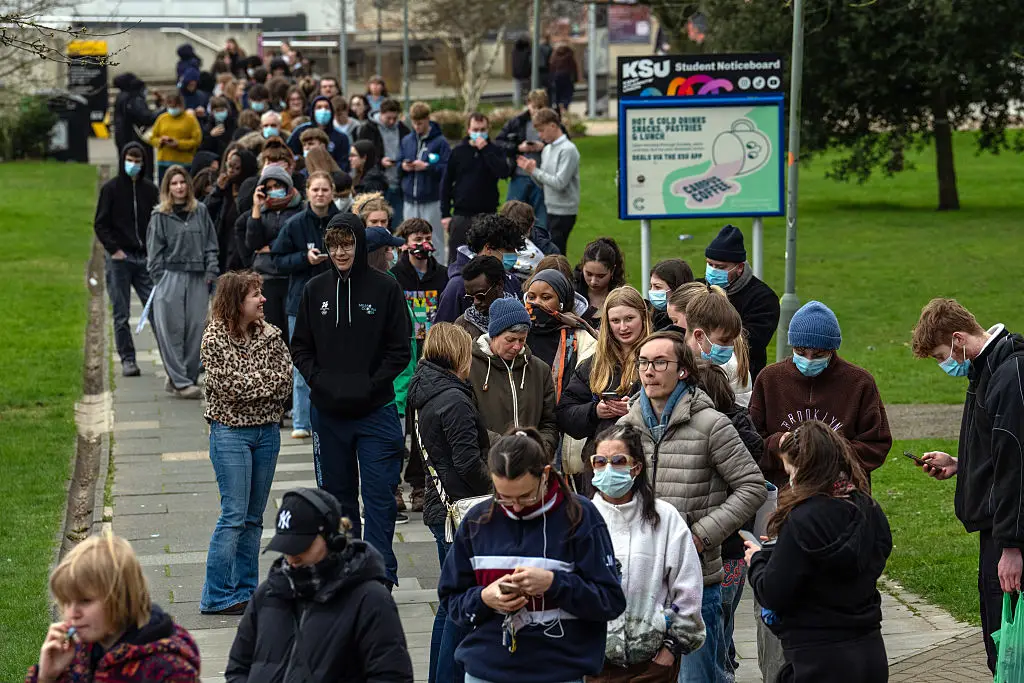
As a result, 5,000 students at the university are now being vaccinated, in the hopes of preventing further hospitalizations and MenB from spreading further within the UK. It is believed those initially infected came into contact with MenB at a local club.
UKHSA chief executive Susan Hopkins said the outbreak 'looks like a super-spreader event' with 'ongoing spread' through universities' halls of residence.
"There will have been some parties particularly around this, so there will have been lots of social mixing," she added. "I can't yet say where the initial infection came from, how it's got into this cohort, and why it's created such an explosive amount of infections.
"I can say that in my 35 years working in medicine, in healthcare and hospitals, this is the most cases I've seen in a single weekend with this type of infection.
"It's the explosive nature that is unprecedented here - the number of cases in such a short space of time.
"NHS were initially managing it as a major incident in the region but they have now increased that overlay to having a national-level oversight as well."
What is Meningitis B?

Meningitis is a potentially deadly infection that causes dangerous inflammation in the membranes (meninges) surrounding the brain and spinal cord. This inflammation triggers the condition's common symptoms: a stiff neck, headache, and fever.
Meningitis B is a form of the condition that is caused by the Neisseria meningitidis bacteria, more commonly called meningococcus, that typically progresses faster than other forms of meningitis - with fatal symptoms developing within 24 hours of the illness' onset.
While children and teenagers are often vaccinated against most forms of meningitis, A,C,W, and Y, fewer people are vaccinated against Meningitis B.
Babies only started to be offered the vaccine in 2015 - meaning most teenagers and young people haven't received a jab - and it does not provide lifelong immunity, offering several years protection at best.
It's estimated that one in four teenagers carry meningitis-causing bacteria in the back of their throats, often without falling sick themselves.
What are the symptoms of meningitis?
According to the Mayo Clinic, early meningitis symptoms can be similar to the flu and might come on over several hours or a few days.
In those aged two years old and up, a meningitis infection could appear as:
- Sudden high fever
- Stiff neck
- Bad headache
- Nausea or vomiting
- Confusion or trouble concentrating
- Seizures
- Sleepiness or trouble waking
- Sensitivity to light
- No desire to eat or drink
- Skin rash sometimes, such as in meningococcal meningitis
A timeline of the Kent meningitis outbreak
Thursday 5 to Saturday 7 March
The outbreak has been linked to nightclub Club Chemistry in Canterbury, UK. The club has closed voluntarily until further notice.
Friday 13 March
The first case of meningitis, a University of Kent student, is reported to the UK Health and Security Agency.

Saturday 14 March
A second case is identified in France, this time someone who attended the University of Kent. Back in the UK, hospitals report a number of young people presenting with meningitis symptoms. Contact tracing begins.
Sunday 16 March
It is confirmed two people have died after being infected with meningitis - one a student at the University of Kent and the other a sixth former in year 13. A public health alert is issued. The total number of cases is 13.
Monday 17 March
UK health secretary Wes Streeting addresses parliament, calling the meningitis outbreak 'unprecedented'.

He announces a targeted vaccination programme for students living in halls at the University of Kent. Preventative antibiotics are issued to University of Kent students; those who attended Club Chemistry between 5 and 7 March; and close contacts of people who have fallen ill.
The total number of cases is 15.
Wednesday 18 March
In the latest update from UKHSA, the total number of cases is 20.
Topics: Health
 William Morgan