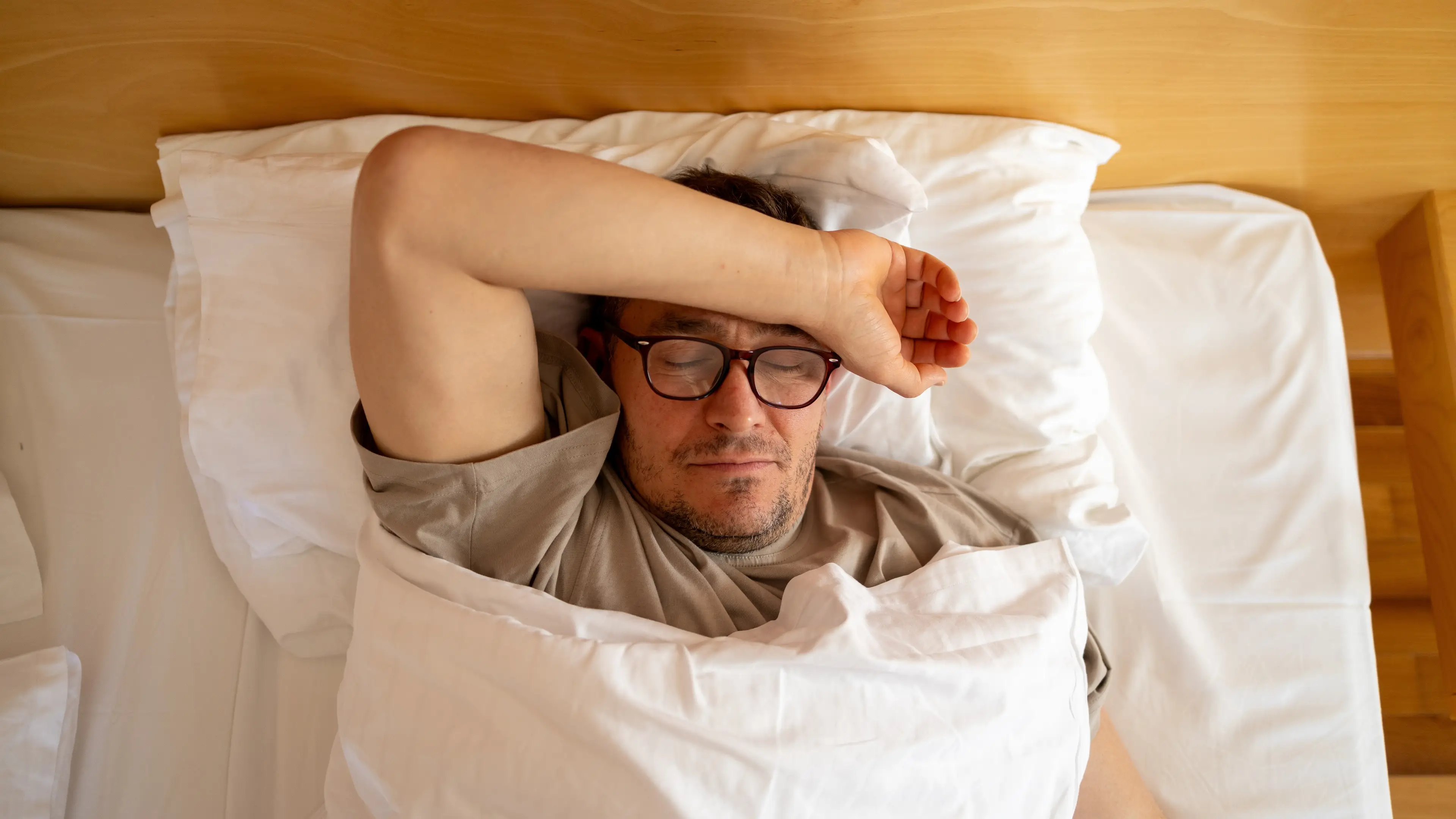
Expert reveals real reason why you’re still tired after a full 8 hours of sleep

An expert has shared why you might still be feeling tired despite getting the recommended eight hours of sleep.
Getting the right amount of sleep is one of those health habits which, while not as flashy as others, is hugely important for maintaining our wellbeing.
While the amount of sleep that we need at different times of our life varies, with different times needing more or less shut eye, in general eight hours is seen as the amount to aim for.
But sometimes you might find that even though you've been hitting that sweet spot of eight hours' of kip, you still feel groggy and tired in the morning, with low energy levels.
Advert
Dr. Wendy Troxel is a licensed clinical psychologist and senior behavioral scientist at RAND, and explained that there's a very good reason for this, and that it involves a 'really important distinction'.
Dr Troxel, who is based in Utah, said that this is the difference between quantity of sleep, and quality of sleep.
Speaking to Fox News Digital, Dr Troxel said: “Many people will say, ‘Man, I’m sleeping enough, I got seven to eight hours of sleep, but I still wake up feeling groggy and not refreshed.'
“About one in three adults has non-restorative sleep quality.”
So what is it that means that you're not getting a good quality of sleep?
Dr Troxel said: “There are many factors that can contribute to poor sleep quality, regardless of how many hours you slept."
She noted that there is also a disparity between men and women, saying: “What we absolutely know is that women’s sleep quality often suffers more than men’s.
“They may be getting more non-restorative sleep quality, therefore needing slightly more sleep.”
Things like when and how much we eat, caffeine, screen time, and alcohol have all been linked to our sleep quality.
Dr Troxel recommended avoiding foods which might cause indigestion in the evening especially, as well as not eating right before going going to bed.
“You don’t want to be starving at bedtime, but you also don’t want to be trying to fall asleep on a full stomach while your body’s still actively digesting,” she said.
Another potential factor is exercise.
You might assume that getting yourself tired out before bed would be a good thing, but Dr Troxel advised otherwise.
“Exercise is very stimulating, particularly if it’s in a social environment, and that can disrupt sleep,” she said, adding: “Exercising earlier in the day is better.”
So it turns out that it's not just how much sleep you're getting that's important, but how good the sleep is.
Topics: News, Health, World News, Sleep
 Kit Roberts