
Where on your head you lose your hair could be sign of different diseases, scientists say

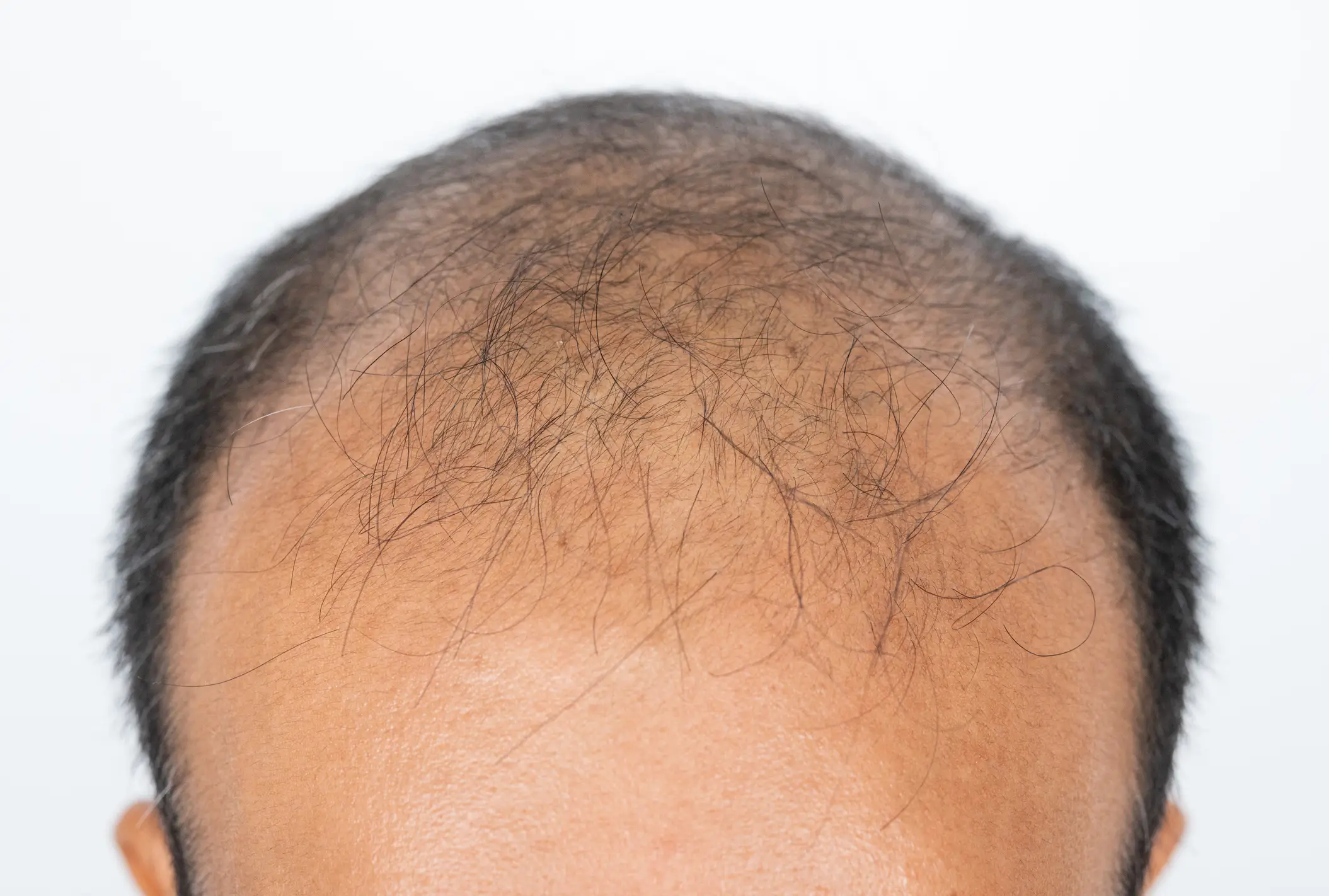
Losing your hair at the crown could be doing more than changing how you look in photos - scientists believe it might be flagging a heightened risk of heart disease, diabetes and even aggressive prostate cancer.
That's according to a body of research stretching back over a decade, which has repeatedly found a pattern linking male pattern baldness to conditions that have nothing to do with the scalp.
Crucially, not all hair loss is treated equally by the data. A 2013 analysis published in BMJ Open, which looked at six studies covering 37,000 men, found that thinning at the crown was tied to a greater chance of coronary heart disease - but a receding hairline at the front carried no such link.
Advert
According to the data, the severity of balding could be an indicator of how susceptible men may be to heart disease.
Men with mild hair loss at the crown had an 18 per cent higher risk of coronary heart disease, rising to 36 per cent for those with moderate balding. Severe cases carried a 48 per cent increased risk.
The findings don't mean losing your hair guarantees heart trouble - researchers are careful to stress it's an association rather than a cause.
One theory is that thinning hair could be a visible side effect of poorer blood flow, since reduced circulation to the follicles may stunt hair growth just as it strains the cardiovascular system elsewhere.
A follow-up analysis in 2014, led by epidemiologist Dr Guy Eslick and covering more than 29,000 people with hair loss, reached a similar conclusion, again pointing to a raised risk of coronary heart disease among balding men.
Eslick told BBC Science Focus that baldness may 'predispose you to increased risks' of heart disease, high cholesterol, high blood pressure and prediabetes.

Is there a link between hair loss and cancer risk?
A more recent review, published in 2026 and covering 20 separate studies, found that male hair loss was also connected to a higher risk of aggressive prostate cancer and benign prostate enlargement - with the strongest link again seen in men balding at the crown and back of the head.
Not every study agrees, though: at least one has found only a weak association between pattern baldness and heart disease risk factors, meaning the overall picture remains mixed.
Male pattern baldness - medically known as androgenic alopecia - is thought to affect up to 80 per cent of men at some point in their life, according to the National Institute for Health and Care Excellence (NICE).
It's driven by a hormone called dihydrotestosterone (DHT), which gradually shrinks hair follicles until they stop producing hair altogether.
Because DHT acts on tissue throughout the body and not just the scalp, some experts argue that balding likely isn't causing these diseases directly. Instead, both may simply be downstream symptoms of the same underlying hormonal shifts.
Genetics play a large role in whether someone loses their hair, meaning there's little that can be done to prevent it outright. But lifestyle changes such as cutting back on saturated fat and getting more regular exercise are still recommended for anyone concerned about their heart health.
 Thomas Bamford