
Scientist explains why healthy people taking GLP-1s are actually 'part of the experiment'

A scientist has explained why 'healthy people' who are taking GLP-1 drugs are actually 'part of the experiment' as the drug becomes more mainstream.
While initially intended to treat people with diabetes, some GLP-1 drugs are being used for weight loss purposes, with Mounjaro, for example, approved to try and shed the pounds.
For those unaware of the drug, it's typically a weekly injection which helps lower blood sugar levels in your body by assisting the pancreas in producing more insulin.
There's no doubt been a bit of a media frenzy with GLP-1's, leading to scientists and experts bringing educated insights to that frenzy of news.
Advert
Colleen Cutcliffe, a doctor of biochemistry and microbiology, sat down on the Armchair Expert with Dax Shepard podcast to discuss whether you should take GLP-1 drugs.
She explained: "I'm not anti GLP-1 and if it's helping you then great. I do think personally that I would be nervous to be on a drug for decades and decades and decades. I'd want to use all the tools in my tool box.
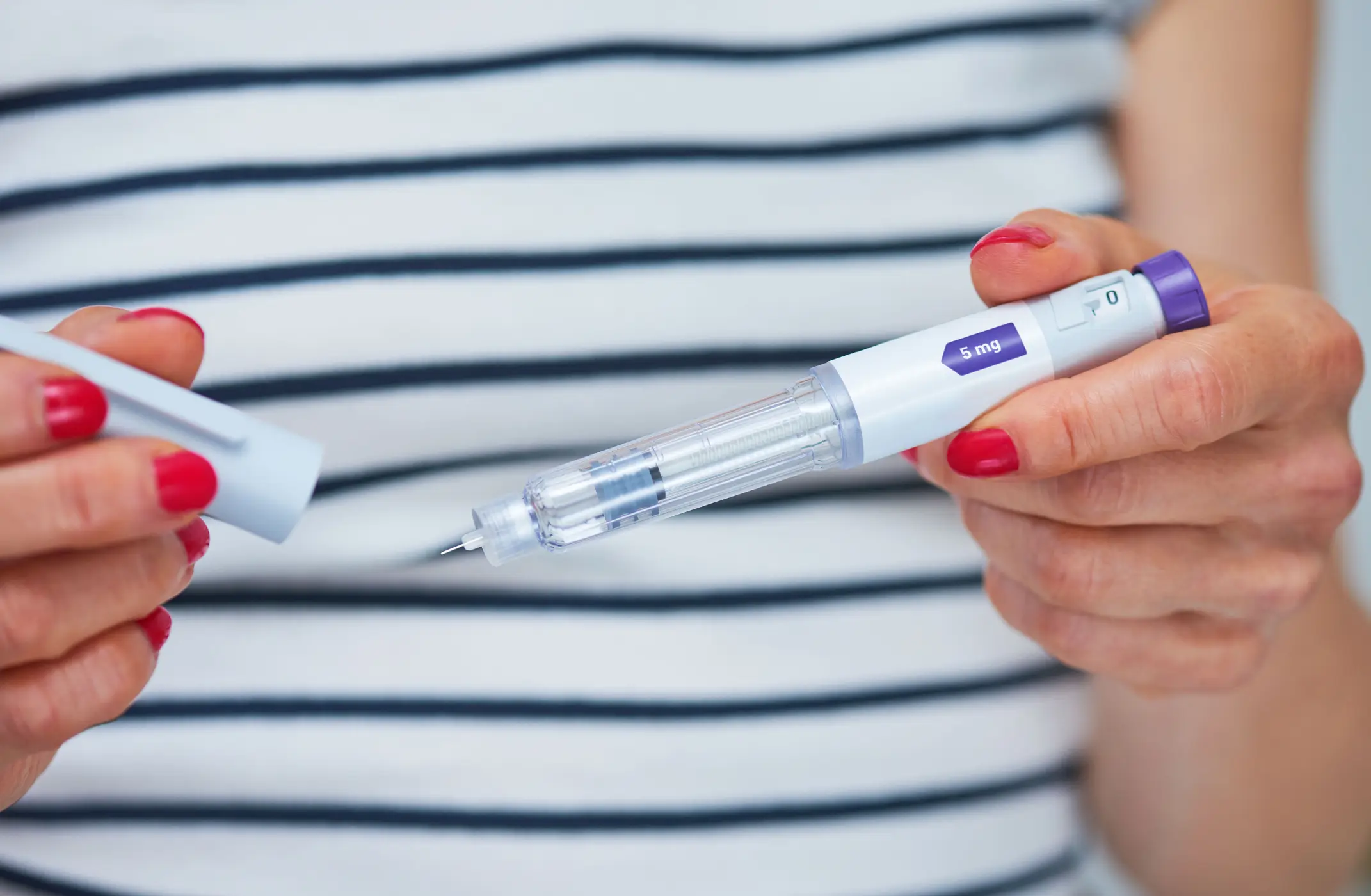
"I'm definitely not against GLP-1's, but the studies that have been done are with people with type-2 diabetes." The expert went on to say that as a result, 'most of the healthy people' who are taking the drug right now are 'part of the experiment'.
Cutcliffe continued: "We don't really know the long-term repercussions, that individual case-by-case basis is getting hammered out now."
It comes after a dietician explained the key differences between a GLP-1 diet and one for people who are trying to lose weight the more traditional way without jabs.
Zoe Griffiths, Registered Dietitian and VP of Behavioural Medicine at Numan, advises those taking a GLP-1 drug to avoid large meals as they can easily cause problems such as nausea and bloating.
Instead, it's advised people taking the medications consume smaller and more frequent meals.

Griffiths said: "Nutrient deficiencies can also become a real risk whilst using weight loss medication because appetite is significantly reduced. That’s why people on GLP-1 based treatments need to be more intentional about hitting protein and micronutrient targets.
"Higher protein intake is important during weight loss because without it, the risk of losing excessive muscle mass increases. This has downstream impacts on health, strength and long term weight loss maintenance."
Discussing both diets, the health expert continued: "The basic principles apply to both people using weight loss medication and those relying on diet and exercise alone. These are eating a balanced diet (whole foods, high in protein and fibre, and limited processed food), eating regular meals, staying hydrated, and strength training to preserve lean muscle. However, using GLP-1s is different enough for a more tailored approach."
Topics: Weight loss, Mounjaro, Health, Science
 Callum Jones