
Doctor reveals mistake people make microwaving food that increases health risk

A doctor has explained the mistake many people are making in the kitchen that may just be posing a threat to your health.
Microwave users, listen up.
Research is ongoing into the impact that microplastics are having on the body, with previous studies finding they could cause potential inflammation, cellular damage, and even dementia.
Much more information on the damage it can cause for the human body is expected in the months and years, so doctors are airing on the side of caution when it comes to possible microplastic contamination.
Advert
Dr Amir Khan, who you'd have likely seen on ITV shows such as Good Morning Britain, Lorraine and This Morning in the UK, talked on his podcast No Appointments Necessary about one kitchen habit he's stopped conducting because of the risk that surrounds microplastics.

The healthcare professional and TV doctor said: "Now that I know what I know about the dementia study and the carotid artery study - it's something that I do not do anymore.
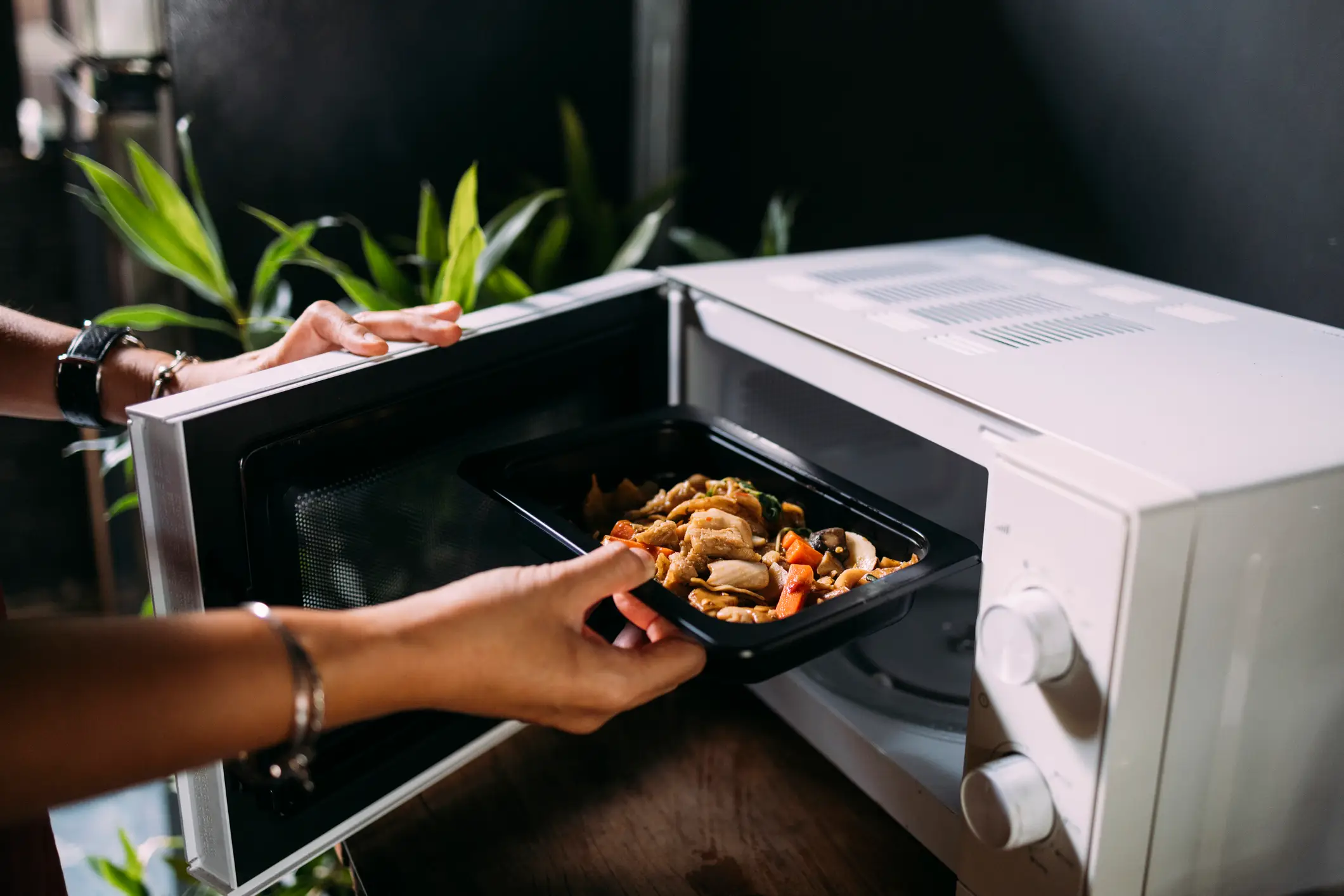
"Not because it's definite, but because it might be possible. When you store food in plastic containers, it increases the risk of that food absorbing some of the microplastics within those containers.
"If you then put it in the microwave, the heat really ramps up that risk.
"The plastic becomes a little bit more unstable, and it gives off these microplastics into your food."
Dr Khan noted how some people are worried about how best to heat up ready meals that are often in plastic packaging, and your best bet is to empty the contents onto a microwaveable plate or bowl for the heating process.
How to reduce microplastics in your diet
Due to the fact that we physically can't see these minuscule microplastics that make their way into our homes and, ultimately, our bodies, there's only so much we can do to avoid ingesting them.
A study in Australia found that people were typically consuming three-four mg of plastic per serving of home-cooked rice, and up to 13 mg per serving of pre-cooked rice. Researchers were able to find that rinsing the rice reduced the microplastics served up by 20-40 percent.
Washing meat and fish before cooking can also reduce microplastics - but this won't totally eliminate them.
Of course, rinsing all food simply isn't possible - such as salt, which often contains microplastics due to contamination at mining and processing points, Science Reports states.
But switching to fresh, whole foods or avoiding ultra-processed foods whenever possible can help lower the chance of microplastics being consumed.
Topics: Health
 Callum Jones