unilad homepage
unilad homepage
  • News
    • UK News
    • US News
    • World News
    • Crime
    • Health
    • Money
    • Sport
    • Travel
  • Music
  • Technology
  • Film and TV
    • News
    • DC Comics
    • Disney
    • Marvel
    • Netflix
  • Celebrity
  • Politics
  • Advertise
  • Terms
  • Privacy & Cookies
  • LADbible Group
  • LADbible
  • SPORTbible
  • GAMINGbible
  • Tyla
  • UNILAD Tech
  • FOODbible
  • License Our Content
  • About Us & Contact
  • Jobs
  • Latest
  • Archive
  • Topics A-Z
  • Authors
Facebook
Instagram
X
Threads
TikTok
YouTube
Submit Your Content
Doctors share major health warning over common kitchen error that could cause dementia
Home>News>Health
Published 16:24 11 Mar 2025 GMT

Doctors share major health warning over common kitchen error that could cause dementia

You might want to reassess how you behave in the kitchen

Gerrard Kaonga

Gerrard Kaonga

google discoverFollow us on Google Discover
Featured Image Credit: Getty Stock Images

Topics: Health, News, Science, Food and Drink

Gerrard Kaonga
Gerrard Kaonga

Gerrard is a Journalist at UNILAD and has dived headfirst into covering everything from breaking global stories to trending entertainment news. He has a bachelors in English Literature from Brunel University and has written across a number of different national and international publications. Most notably the Financial Times, Daily Express, Evening Standard and Newsweek.

Advert

Advert

Advert

Doctors have warned against doing this simple task that many people often do ahead of eating their food.

There are some things people are doing that isn’t exactly great for their health, according to experts.

And we are not talking about what you are eating, (although that is something to always be mindful of for your health), but rather how it is being prepared, or re-prepared should we say.

A new study has found a simple activity in the kitchen could be contributing to the amount of microplastics in a person’s body.

Advert

More specifically, how many microplastics are accumulating in the human brain.

Doctors have issued warnings about microplastics getting into people's bodies

The study found that tablespoon worth of microplastics and nanoplastics (MNPs) were discovered in the brain and levels were three to five times higher in people diagnosed with dementia.

Doctors have also warned that using plastic containers in microwaves to reheat food could be increasing people’s exposure to microplastics, ultimately increasing their risk of dementia.

Dr Nicholas Fabiano, from the University of Ottawa's Department of Psychiatry and lead author of the commentary said: “The dramatic increase in brain microplastic concentrations over just eight years, from 2016 to 2024, is particularly alarming.

“This rise mirrors the exponential increase we're seeing in environmental microplastic levels.”

Dr Brandon Luu, an Internal Medicine Resident at the University of Toronto, explained people should consider switching away from plastic when warming up their food.

He said: “Heating food in plastic containers—especially in the microwave can release substantial amounts of microplastics and nanoplastics.

“Avoiding plastic food storage and using glass or stainless steel alternatives is a small but meaningful step in limiting exposure.”
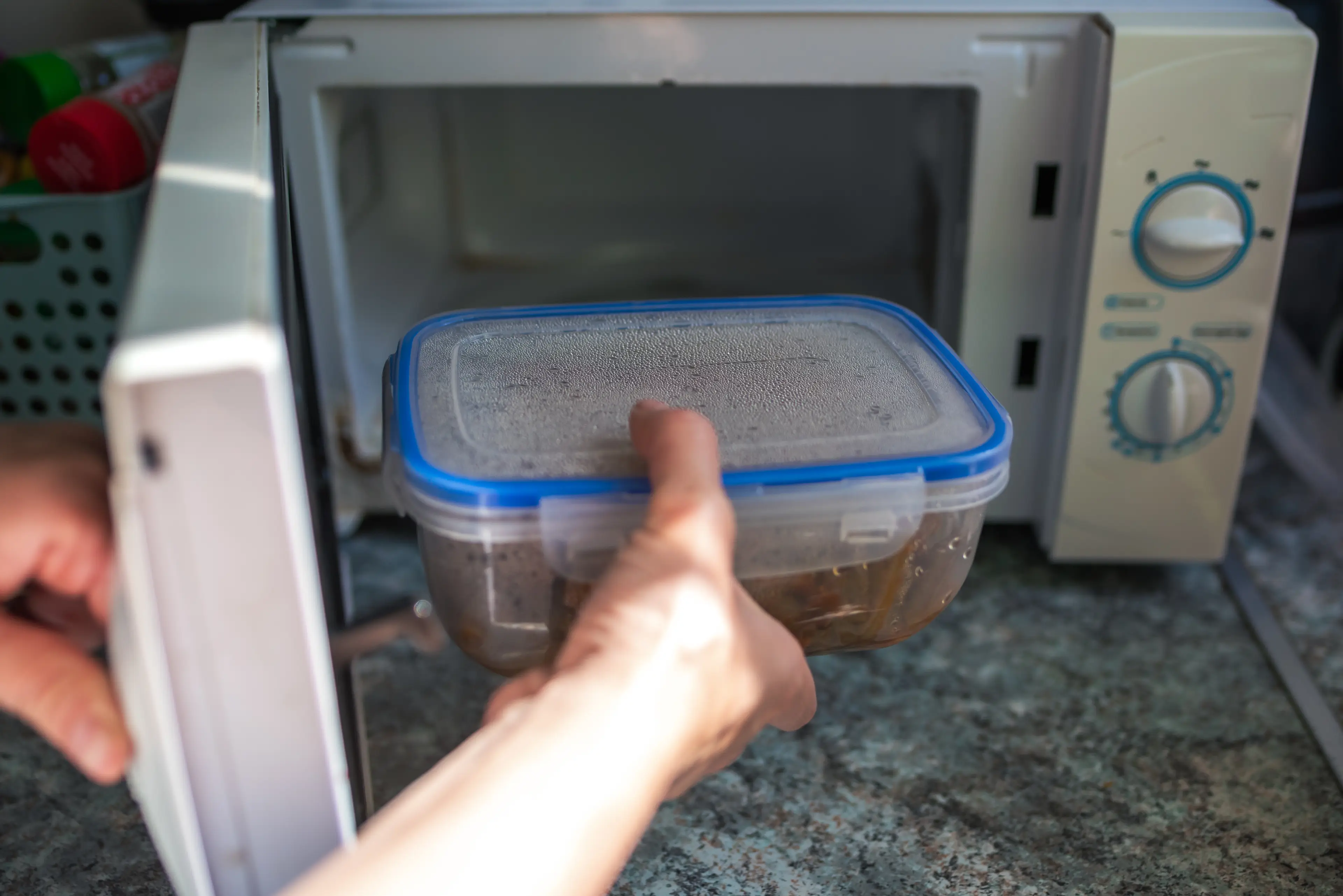
How often do you microwave your food when its in a plastic container(Getty Stock Image)

In a separate study from 2023, University of Nebraska researchers found that microwaving plastic containers releases billions of nanoplastics and millions of microplastics per every square centimeter of a plastic container.

BPA, short for bisphenol A and phthalates, are chemicals that are sometimes added to plastics in order to make them more durable as part of the manufacturing process.

Dr Luu has also added that switching from bottled to filtered tap water can also help reduce the amount of microplastics and individual consumes.

He said: “Bottled water alone can expose people to nearly as many microplastic particles annually as all ingested and inhaled sources combined.

"Switching to tap water could reduce this exposure by almost 90 percent, making it one of the simplest ways to cut down on microplastic intake."

Choose your content:

5 hours ago
  • Getty Stock
    5 hours ago

    Expert says quietly slipping out of a party is actually good for your mental health

    Making a so-called 'Irish exit' and slipping out of a party might seem rude, but it could improve your mental health

    News
  • Getty Stock Images
    5 hours ago

    Psychologist reveals unexpected reason why men date women who look like exes

    Jermaine Jenas was spotted with a look-alike after his marriage to Ellie Penfold ended

    News
  • Getty Stock Images
    5 hours ago

    Scientists reveal significant impact GLP-1 jabs can have on other medications

    A UK watchdog alerted the public after cases of medication failure occurred after using GLP-1 drugs

    News
  • KingsleyFootballClub/Facebook
    5 hours ago

    Father-of-two named as victim of Rottnest Island shark attack as wife pays heartbreaking tribute

    His wife said their daughters had lost an 'incredible father far too soon'

    News
  • Neurologists reveal three popular foods that are 'worst for brain health' and could cause dementia in the future
  • Doctor warns eating too much protein could cause painful condition suffered by 1 in 10 Americans
  • Shocking new study explains how one milkshake could cause serious harm to your health
  • Doctor warns common drink could cause hair loss and how to prevent it from happening