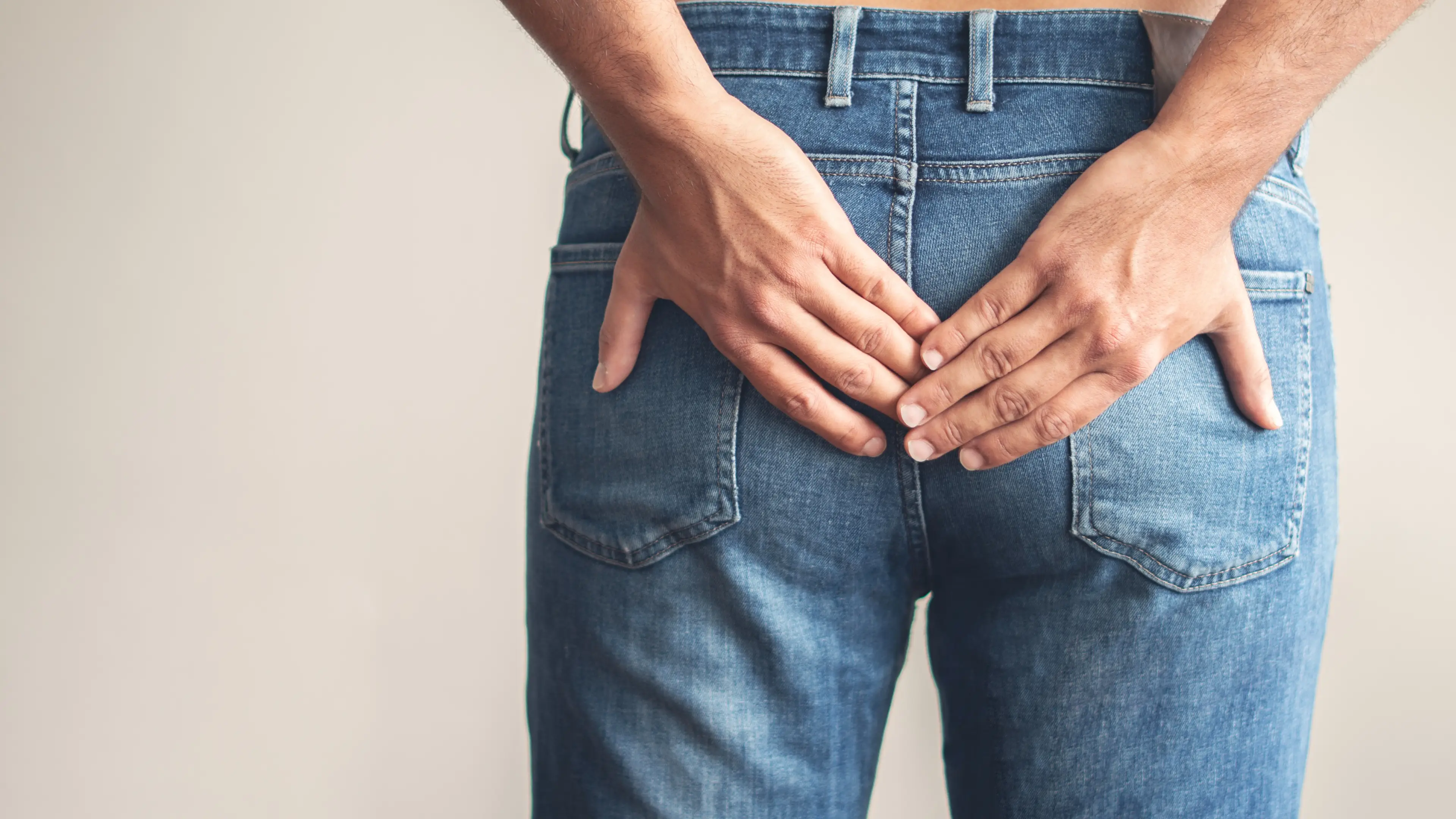
Doctor explains what to do if you have 'Pruritus ani' as 61% of men experience issue

There are medical terms for just about every biological function or symptom a human being can go through, even for when you experience an uncomfortable sensation in the most private of places.
At least 61 percent of men have experienced 'pruritus ani' at some point and it would not be recommended to deal with this problem in public, though it is extremely common, especially among certain age demographics.
For those out there without a medical degree or an understanding of Latin, colorectal surgeon Shahab Siddiqi, MD, explains that this common health issue comes from 'pruritus, meaning “itch” and ani, meaning “of the anus”'.
While for most people this can be a brief if unpleasant sensation, for some individuals this 'pruritus ani' can be so intense, severe, and prolonged that it can have a serious impact on their ability to go about their daily lives.
Advert
Experiencing a continued itching or burning sensation around your anus, the definition of pruritus ani, can cause soreness, redness and irritated skin in the affected area, which can cause wider discomfort.
Dr Siddiqi explained that this condition is most common in men aged 40 to 60, with it generally occuring more often in men than women by up to four times. "There is no obvious reason why this should be the case, and more research is needed to look into this," he added.
Pruritus ani can be both a primary and secondary medical issue, with more than 100 health issues associated with it, but some people simply develop a prolonged itch with no known other cause.
The colorectal surgeon explained: "If a condition is found in the lower bowel, anus, or on the skin surrounding the anus that is suspected to lead to anal itching, pruritus ani is classified as secondary to that condition.
"If no abnormality can be found in these areas, then the pruritus ani is considered to be primary (or idiopathic, meaning 'no known cause')."
While you might think that having a good wash could get rid of the issue, or that improper cleaning could cause pruritus ani by itself, Dr Siddiqi explained that this is not the case.

He added: "In a small minority of people, bad hygiene can undoubtedly lead to pruritus ani. However, as a general rule, people with pruritus ani are rigorous with their personal hygiene, which can actually make their anal itching worse."
What to do if you have 'pruritus ani'
Dr Siddiqi advised that most people can resolve this issue with a number of small and easy steps, but that anyone experiencing discomfort due to this issue should not avoid a visit to their physician out of embarrassment, as it can be a sign that something else is going wrong.
As is a good first step with any skin condition, eliminating anything that might be an irritant from your environment could cause the dreaded itch to go away. The doctor explained: "The first step is to stop using any chemicals, including creams, soaps, bubble baths, and toilet paper, around the anal area and only use water for cleansing.
"Hypoallergenic laundry products are also recommended."
An itchy bum can also be caused by a person's diet, with many sufferers reporting the symptom after eating certain foods. These potentially include: coffee, tea, cola, energy drinks, chocolate, citrus fruit, tomatoes, spicy foods, beer, dairy products and nuts.
Other than that, keeping the area clean with water and not too much scrubbing in a squat position, patting dry with a flannel, is what the doctor orders. For anything further, speak to your physician.
Topics: Health
 William Morgan