
Doctor explains dangers of 'black tumor' cancer as William Shatner, 95, reveals he beat Stage 4 diagnosis

 Thomas Bamford
Star Trek legend William Shatner has spoken out about his experience battling stage four cancer, following the dreadful news revealed this week that his daughter was also battling the disease.
Shatner, 94, told People that he had been diagnosed with a melanoma on a chance visit to the doctors, that had now spread to his brain and lungs.
In the same interview, his daughter, Melanie Shatner Gretsch also told readers that she had begun treatment for metastatic breast cancer.
Shatner revealed that had he not gone in for a checkup when he did, he might well now been dead.
Advert

Melanie said that she had noticed a lump on her father's cheek while undergoing her own treatment, and advised him to go and see a doctor as soon as possible.
Doctors initially told the Star Trek legend that the lump as 'a blocked salivary gland', but as the lump continued to expand in size, a plastic surgeon friend told him it was vital he went to get it checked out.
Following both of them getting treatment, they are now both cancer free.
They are turning the traumatic experience of battling the disease into a 'health and longevity' podcast, which will be called No Time But Now. The podcast comes out on July 29.
Despite the troubles they have both been through, Shatner was quick to praise his family for the 'togetherness' they had shown through the ordeal, saying: We’re bonded by all kinds of difficulties that we’ve overcome.”

The news of Shatner’s melanoma diagnosis comes amid a string of high-profile Hollywood cases involving the devastating disease, which literally translates to 'black tumor.'
Melanoma is one of the most dangerous forms of skin cancer, which causes the deaths of nearly 9,000 Americans each year, according to the CDC.
Dr. Adarsh Vijay Mudgil, a dermatologist, told the New York Post that: Melanoma is considered the most dangerous type of skin cancer because it has a high potential to spread (metastasize) to other parts of the body if not detected and treated early."
He explained that melanoma cells are different to other skin cancer cells, because they spread quickly via the bloodstream and lymphatic system, affecting organs and tissues rapidly.
“Melanomas can appear as a new mole, a changing mole or a spot with an irregular shape, border or color, often with shades of brown, black, or even pink, red or white,” Mudgil said.
“Things to look for are the ‘ABCDE’s’ of melanoma: asymmetry, border irregularity, color variability, diameter greater than 6 mm (which is the size of a pencil eraser), and last, evolution of an existing mole to exhibit any of the aforementioned qualities,” he added.
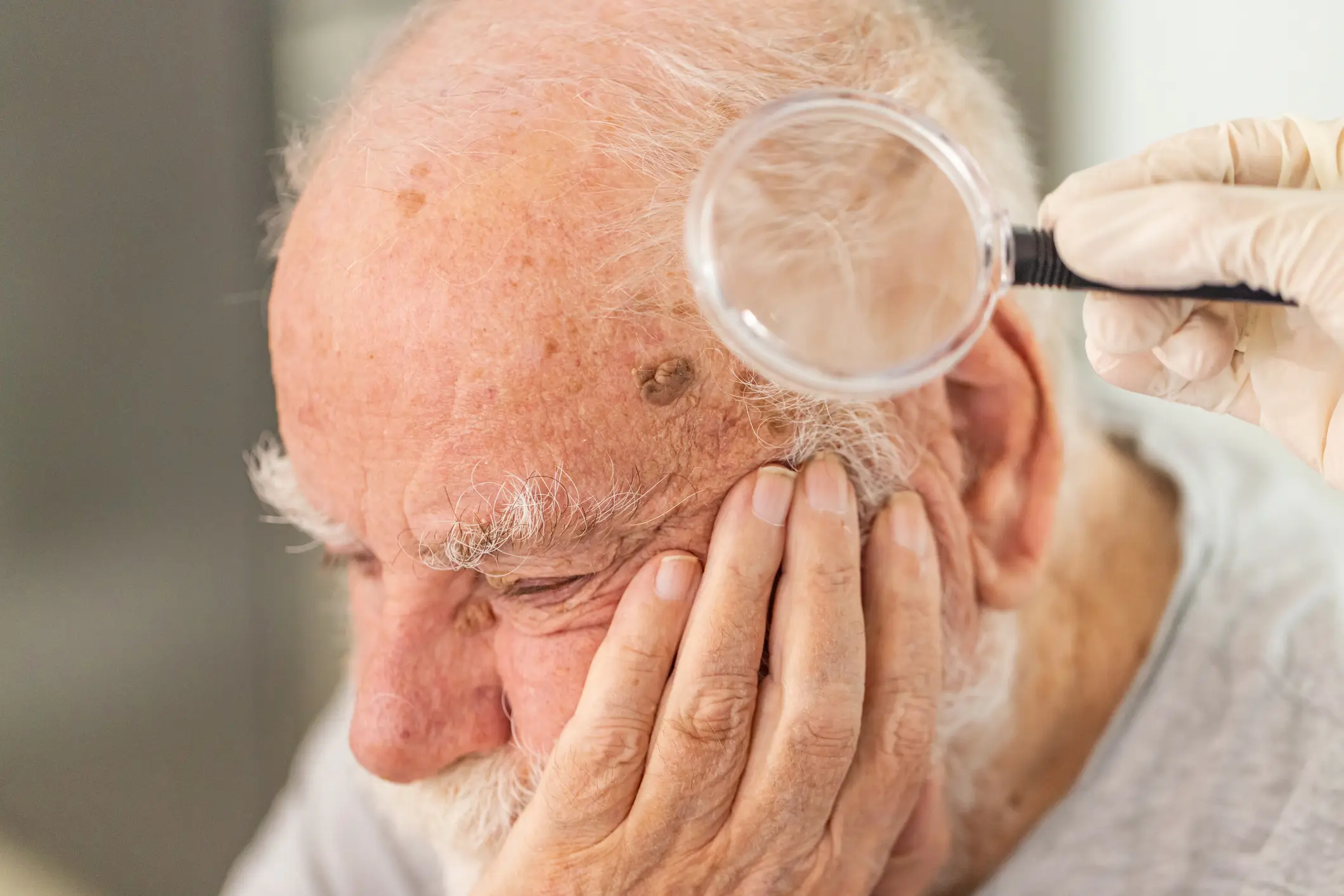
Melanoma can affect all people from all races and skin colours, however people with lighter skin have a significantly higher risk of developing the disease.
Talking odds, people with white skin have a 1 in 33 change of developing melanoma, while black people have a 1 in 1000 chance, according to the American Cancer Society.
Age is also a significant factor.
The average age of melanoma diagnosis in the US is 66, however younger people aren't safe from getting it either. It's one of the most common cancers in young people under the age of 30, and it's specifically prevalent in young women.
Other high risk factors include: having several moles, a family history of the disease, being male and a history of blistering sunburns, especially when during childhood.