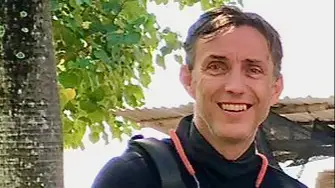
Friend of scuba diver found stabbed under water opens up about facing 40 years in prison for his death

When Dan Frolec went on a diving holiday to Croatia with his friends, he had no idea he'd end up in a foreign prison facing 40 years behind bars for murder
It started with a hand-drawn circle on a nautical chart.
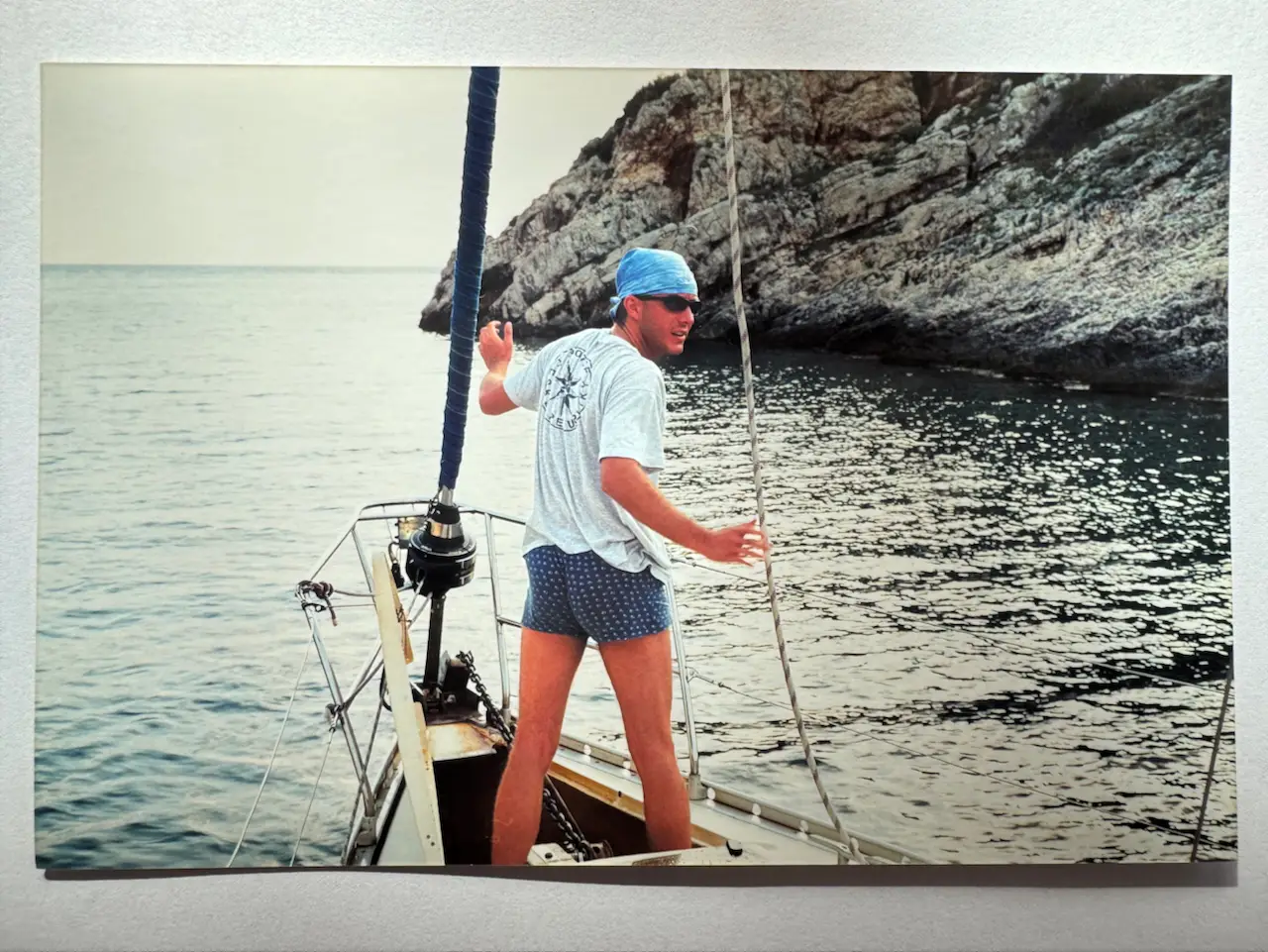
Dan Frolec was on a sailing and diving trip around Croatia in 2002 with a group of friends from his Prague diving club, when their boat captain pointed out a mysterious marking on the map, a pencilled ring around a remote, uninhabited bay called Poganica.
He'd spotted a hole in the seabed there a few weeks earlier, maybe two by three metres, just sitting there at ten metres depth. Nobody knew what it was.
Advert
"We got all excited," Dan told UNILAD.. "So we sailed there, had a meal, and then decided to go for an afternoon dive."
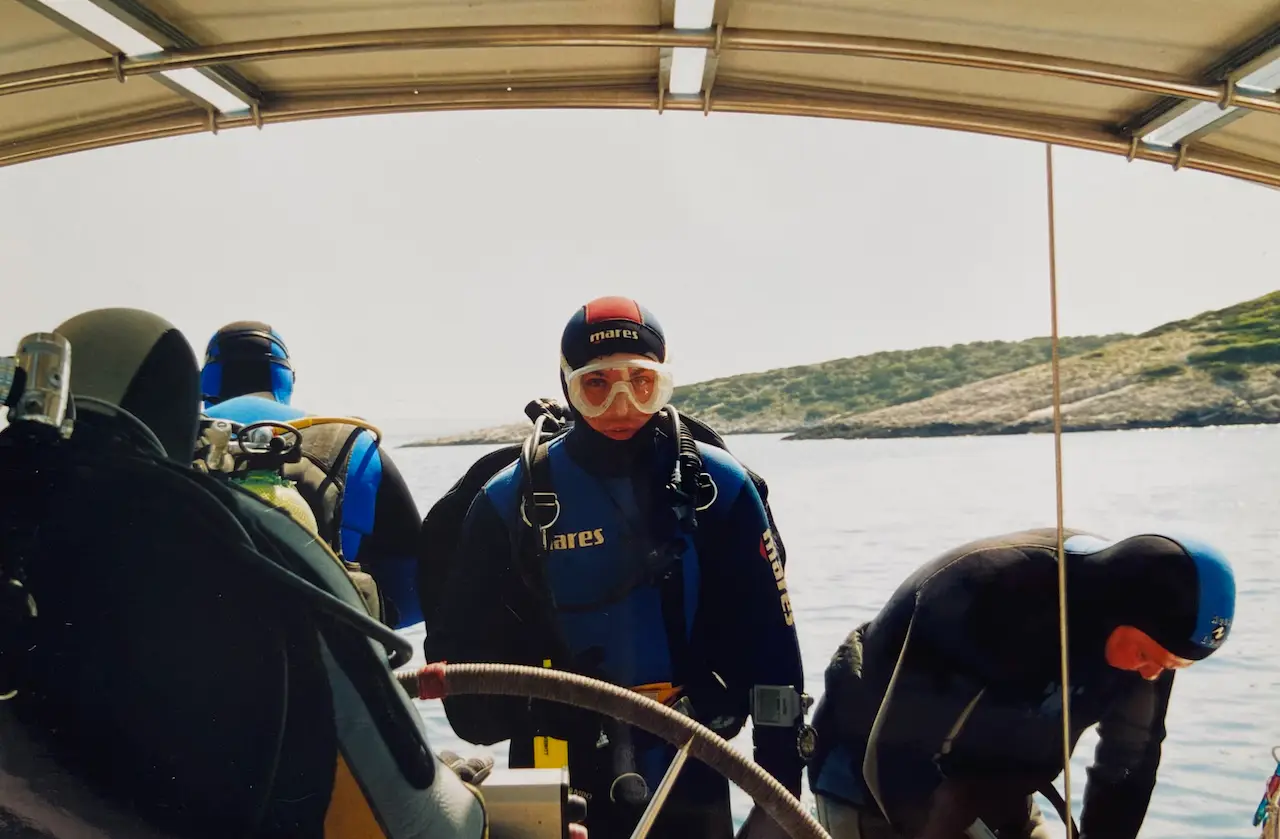
Four of the group suited up and descended to investigate. Their friend Michael, a quiet guy with a dry sense of humor, according to Dan, went along on the surface, snorkelling. Ten minutes later, Michael came back buzzing. It was a cave. The others were still down there. He grabbed his torch and air tank, jumped back in, and went to join them.
Nobody on the boat thought twice about it. Why would they?
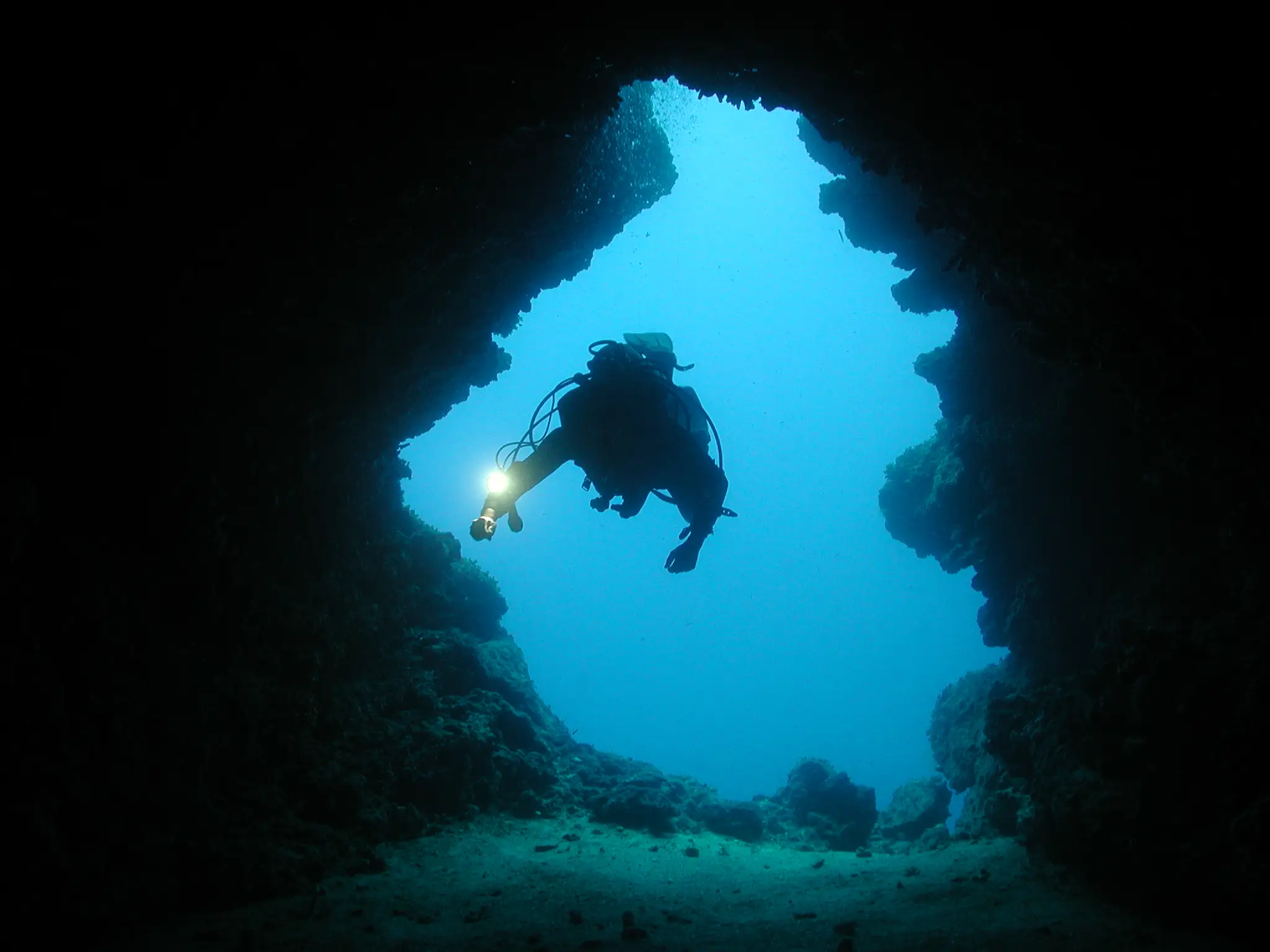
The problem was timing. When the four divers came back up around 40 minutes later, they explained the cave was far too complex and dangerous – a vertical chimney dropping to 22 metres, then branching into two giant domes reaching depths of over 50 metres.
Tom, the group's cave diving instructor, had turned everyone around immediately. It was no place to be without specialist gear.
"Where's Michael?"
Dan was the one who asked about Michael's whereabouts, but they hadn't seen him.
What the group pieced together later was devastating in its simplicity: Michael had missed them by just four minutes at the cave entrance. By the time he swam down, they were already on their way out. He must have assumed they were still inside and kept going, alone, without a guide rope, with a basic torch and around an hour's worth of air.
Dan and Tom suited up and went back in.
Dan waited at the entrance in the darkness, 'the longest 40 minutes of my life,' he says, watching nothing but the faint glow from the surface while Tom searched below. Tom came back alone.
Dan called it: "If there is any divinity, Michael needs your help." There was no answer.
The coastguard said they couldn't reach them until morning. The group spent a sleepless night anchored in the bay.
When the Croatian authorities arrived the next day, a commander, a captain, and two navy divers, Tom immediately warned them that their standard scuba gear was completely wrong for a cave environment. Cave diving is a totally different discipline. You need double tanks, double computers, specialist torches, and a guide rope so you can find your way back. Without one, you're blind in the silt.
The commander dismissed the concerns. His men went in anyway. Only one resurfaced.
"It was so sad," Dan says. "The Croatian diver had two kids. Completely avoidable." A second man was now lost in the cave, and this time, it was a navy diver.
The group was told to sail to Split and report to the police station to give their statements. Routine stuff, Dan thought. They were witnesses to a tragic accident. Of course the police would want to know what happened. He had absolutely no idea what was coming.
After one night sleeping on the floor of the police station, officers took Dan and his friend Ivo aside. The mood had shifted. They were wired up to a polygraph machine.
The questions started normally enough, then suddenly changed. Do you know how Michael died? Did you know he was stabbed with a knife? Was it your knife? Did you kill him?
"We were like, what the hell is going on?" Dan says. It was the first confirmation Michael's body had even been found – and suddenly they were being accused of putting a knife in his chest.
Blood was taken. Fingernails were clipped. Then a state prosecutor told Dan and Ivo they were suspects in Michael's murder. Dan failed the polygraph; he was, understandably, a nervous wreck. They were handcuffed and brought before a judge, who sent them to jail pending investigation. In Croatia, you can be held for up to six months without charge.
"I faced 40 years in prison," Dan says. "It was a very strange and frightening feeling. I had to convince myself that this option was not on the cards."
His girlfriend Jarka, who he'd only recently got together with, received a call from the Czech consul telling her that her new boyfriend had been arrested for murder. She went straight round to tell his parents, who she'd never met before. She was still ringing their doorbell when their son's face appeared on the evening news.
Back in the cell, the next day's newspaper arrived. Dan and Ivo were on the front page, named in full, accused of murder. The story the Croatian press ran? That the diving group had been in a gay love triangle, and the killing was the result of a romantic dispute.
"We were not gay. I mean, there's nothing wrong with that. But we were not gay," Dan says. "And also, that was the only motive they came up with. Why would we? We were just a group of friends."
Dan believes the accusation was partly about protecting the authorities from scrutiny over their own diver's death. "If there was somebody accused of murder, that kind of turns the situation," he says. "Otherwise it's a tragic accident and what else can be done?"
His saving grace came through meticulous evidence. A new lawyer assembled proof that the killing simply couldn't have happened the way police claimed. Crucially, Michael's eardrums were intact. If someone had taken a body to depth after death, the pressure would have burst them; a dead person can't equalize their ears. The dive computers told their own story too, tracking Michael's movements as he swam through the cave alive, searching for an exit, for around 40 minutes before his air ran out. The conclusion the judge eventually reached was that Michael had used his own knife in his final moments of panic and suffocation.
After five weeks in custody, Dan and Ivo were released. The Croatian government apologized. The case never went to trial.
Dan Frolec now lives in Bali with Jarka, who he went on to marry, and their two children. He still dives. His daughter is a diver. His son is a diver. He even went to Florida after the whole ordeal to get his cave diving certification, because he couldn't stand the feeling of helplessness waiting outside that cave entrance while Tom searched inside.
But he draws the line at actually diving caves now. He has kids.
He's written a book about the whole experience, having kept a journal throughout his time in custody, a kid's notebook with Cinderella on the cover. For two decades, the story lived only in that notebook and around dinner tables where friends would tell him, mate, that's a movie.

"I found out that we cannot always influence what happens to us," he says. "But how we manage our mind, how we deal with our emotions, that is actually under our control. I couldn't leave the cell. I was facing 40 years. But I could still look outside and see the blue sky and be happy about it."
Michael was an only child. His mother lost everything. Dan still thinks about that. "For all of us, life moved on," he says. "But for her, life changed forever."
Dan Frolec's book about the ordeal is available now by clicking here.
If you have a story to tell, send it to [email protected]
Topics: Sport, World News
 Thomas Bamford