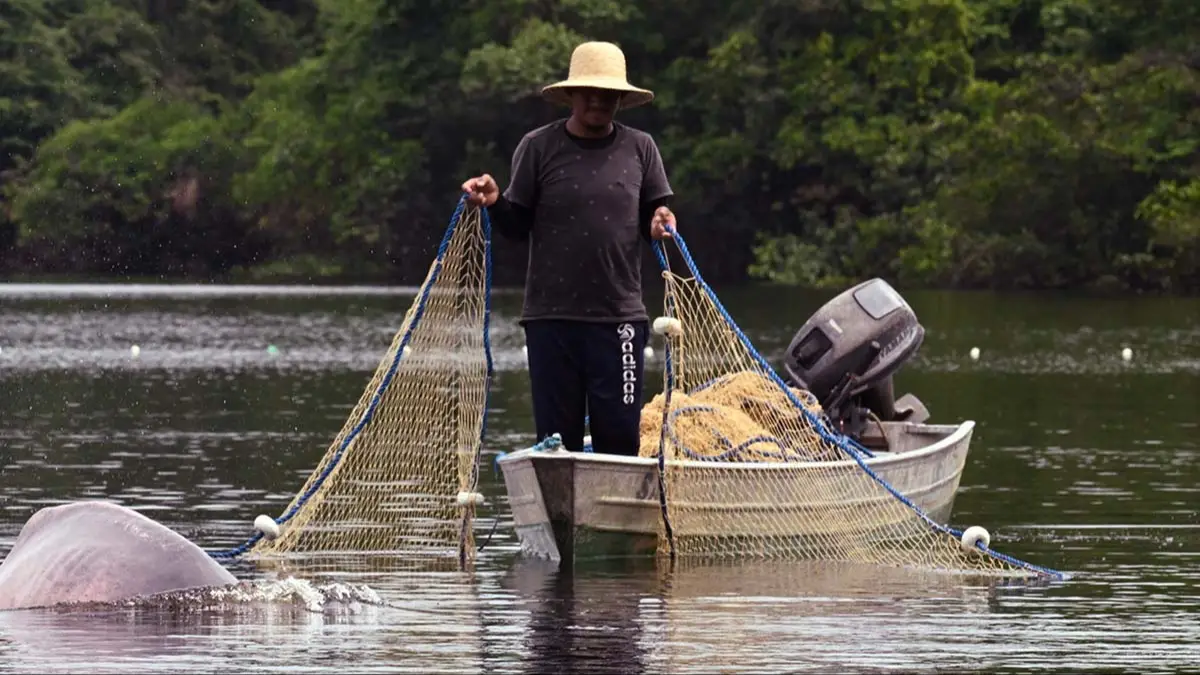
Hundreds of dolphins found dead in lake as water became hotter than a jacuzzi

Hundreds of dolphins have been found dead at a lake in Brazil after the waters reached 105.8°F.
New research, which was published on Thursday (November 6) in the journal Science, has examined the impact of global warming on certain regions around the world and the devastating effect this can have on ecosystems and aquatic life.
Hydrologist Ayan Fleischmann is a hydrologist who was sent to investigate an unusual occurrence in which at least 150 dolphins sadly died on Lake Tefe in Brazil a couple of years ago.
Fleischmann and his team discovered that a combination of extreme heat and a drought in September 2023 had transformed the lake into a body of steaming water so hot that the research team couldn't even touch it with their bare hands.
Advert
"You couldn't put your finger in the water," Fleischmann, of western Brazil's Mamiraua Institute for Sustainable Development, told AFP.
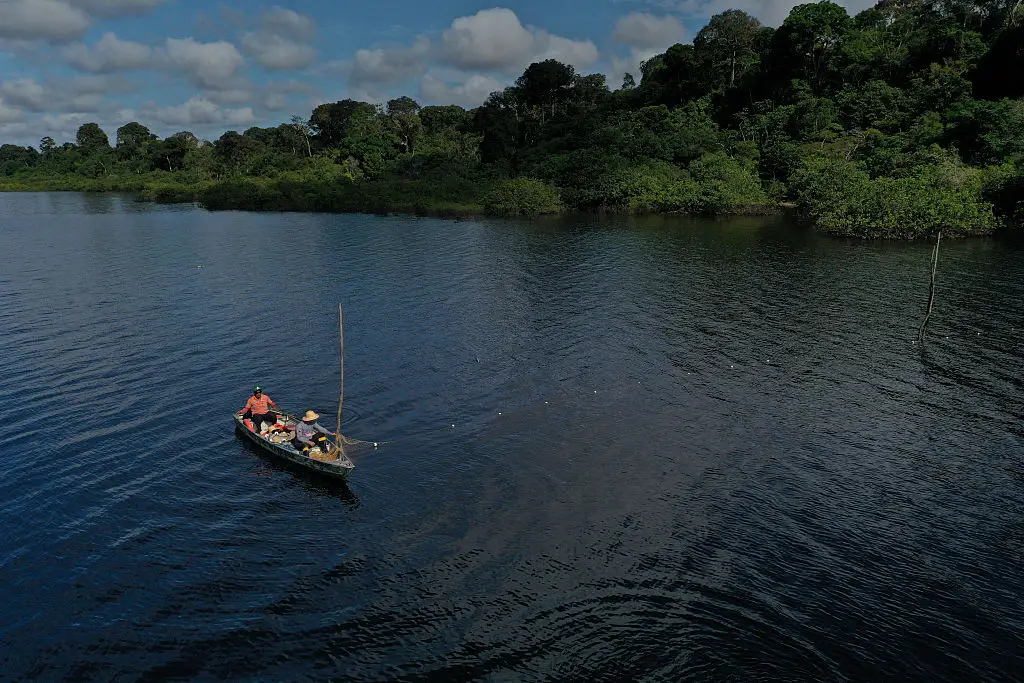
Fleischmann also added that the issue was an 'overlooked problem' in tropical regions and stressed the 'psychological impact' that witnessing the dolphins' deaths in the lake had on the team.
The paper explained: "Modeling showed that high solar radiation, reduced water depth and wind speed, and turbid waters were the main drivers of the high temperatures.
"This extreme heating of Amazon waters follows a long-term increase of 0.6°C/decade revealed by satellite estimates across the region’s lakes between 1990 and 2023.
"With ongoing climate change, temperatures that approach or exceed thermal tolerances for aquatic life are likely to become more common in tropical marine systems.
"The temperature of aquatic ecosystems is a fundamental variable that influences biogeochemical and ecological processes and directly and indirectly affects aquatic life."

The research team visited a total of 10 Amazonian lakes and found that five were experiencing excessively high daytime temperatures.
And the high temperatures weren't just found at the surface of the water; Fleischmann explained that they were also present throughout the two-meter-deep water column.
"The climate emergency is here, there is no doubt about it," he added.
Research published in a separate study, in the journal Hydrological Processes, also emphasised that ongoing droughts have severe impacts on river water temperatures, which in turn is having a detrimental effect on wildlife.
Study co-author David Hannah warned: "Rising river water temperatures can have significant and often detrimental implications for aquatic life, impacting both individual species and entire ecosystems.
"Drought conditions often coincide with high atmospheric temperatures and such trends will become more intense and frequent with climate change."
Topics: World News, Environment, Science, News, Animals
 Lucy Devine