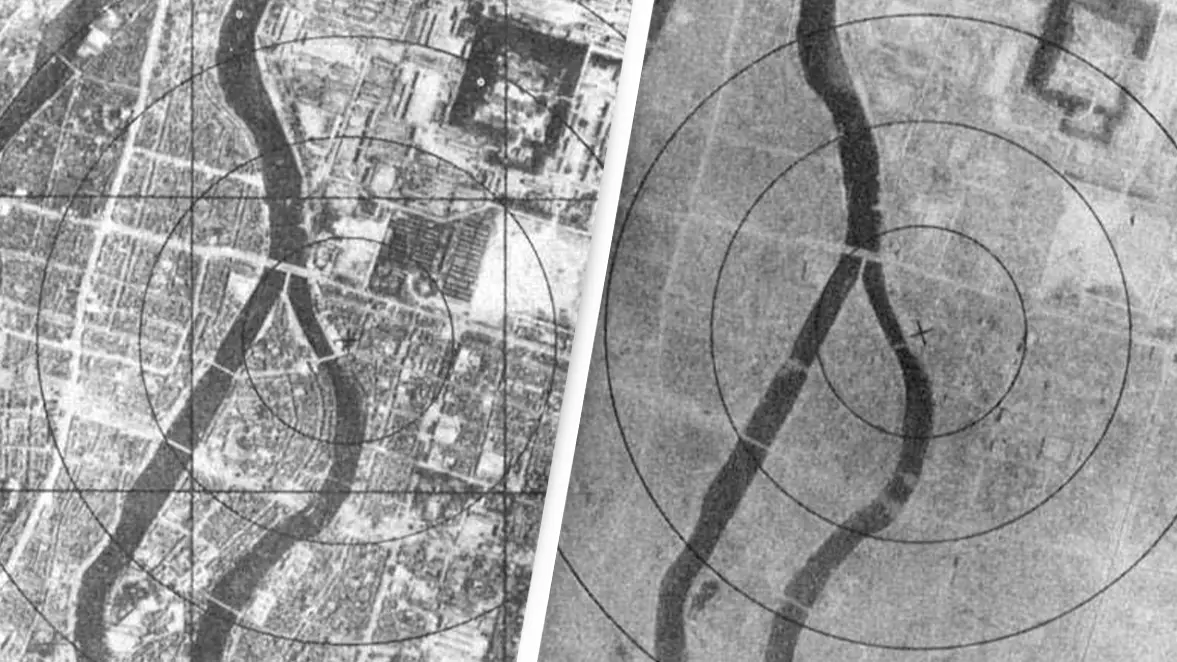
Aerial Photographs Show Hiroshima Before And After The Atomic Bomb In 1945

Topics: News
 Joe Harker
Topics: News
Grim aerial photographs taken of Hiroshima before and after the 'Little Boy' atomic bomb was dropped in 1945 paint a stark picture.
At around 8:15 in the morning on 6 August, 1945, a modified B-29 bomber named 'Enola Gay' after the mother of its pilot dropped the 'Little Boy' atomic bomb 2,000 feet above the Japanese city of Hiroshima.
The city was chosen as the first target of the atomic bomb as it had military and industrial significance to Japan's war effort.
According to NPR, Hiroshima's compact design also played a factor in its selection as historian Alex Wellerstein said dropping the bomb there would mean 'destroying almost the entirety of the city'.
Advert
He explains that the Allies wanted to demonstrate the power of the atom bomb to force Japan to surrender while showing the world the horrible impact they would cause to dissuade others from dropping them.
The bomb blast destroyed five square miles of the city, instantly killing tens of thousands of people with thousands more who were not killed in the nuclear blast going on to die of radiation exposure.
Aerial pictures taken of the city before and after the bomb was dropped gives some indication of how total the devastation was.
An image of a city full of buildings is replaced by one depicting a desolate, barren wasteland where faint and wispy patterns in the ground indicate where roads and buildings once stood.
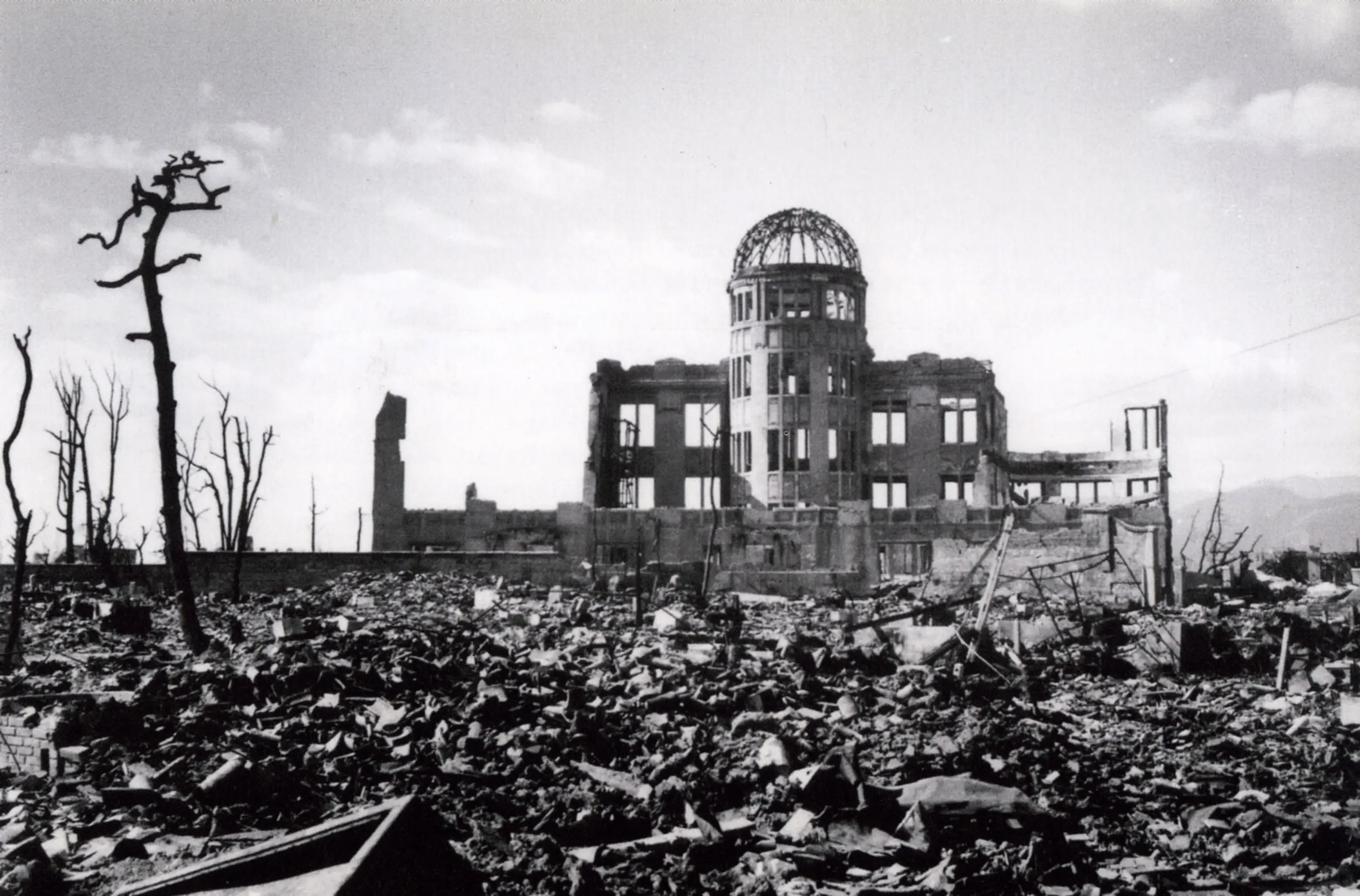
The only structure left standing in the blast radius was the Genbaku Dome, and the skeleton of that building only survived as it was almost directly beneath the bomb blast.
It has since been kept in a state of disrepair and stands as a memorial to the destructive power of the atomic bomb.
Per the Imperial War Museum, the Allies made the decision to drop the atomic bomb after plans for a naval invasion of Japan in November 1945 to force their surrender estimated it would take millions of casualties.
The successful test of an atomic bomb in the New Mexico desert on 16 July, 1945 led the Allies to threaten Japan with 'prompt and utter destruction' unless there was an unconditional surrender and drop the atomic bomb on them if they refused.
The first atomic bomb dropped did not have the effect the Allies desired as the Japanese refused to surrender.
Three days after the Hiroshima bombing the US dropped a second atomic bomb, the 'Fat Man', onto Nagasaki where the explosion killed thousands more people.
The following day the Japanese government signalled to the Allies that it was ready to accept a conditional surrender, four days after that they accepted the Allied demand for unconditional surrender.
On 15 August the Japanese Emperor Hirohito announced the surrender on the radio, while a formal agreement was signed on 2 September aboard the USS Missouri.
Untold thousands of people died in the atomic bombings of Hiroshima and Nagasaki, while the bomb itself set the stage for the Cold War and the possibility that humanity could truly end the world.
Since Hiroshima, the power of nuclear weapons has only grown and simulations of what a nuke could do to a modern city paint a sobering picture of the death tolls from the blast and radiation.
If you have a story you want to tell, send it to UNILAD via [email protected]