What the lyrics to 'Circle of Life' from The Lion King really mean

It might be one of the most instantly recognizable songs from any movie's soundtrack, but most people have no idea what the jubilant 'Circle of Life' that opens 1994 smash hit The Lion King actually means.
This is despite the Disney animation grossing close to $1 billion at the box office and the song itself, composed by legends Sir Elton John and Hans Zimmer, charting around the world and even receiving Oscar and Grammy nominations.
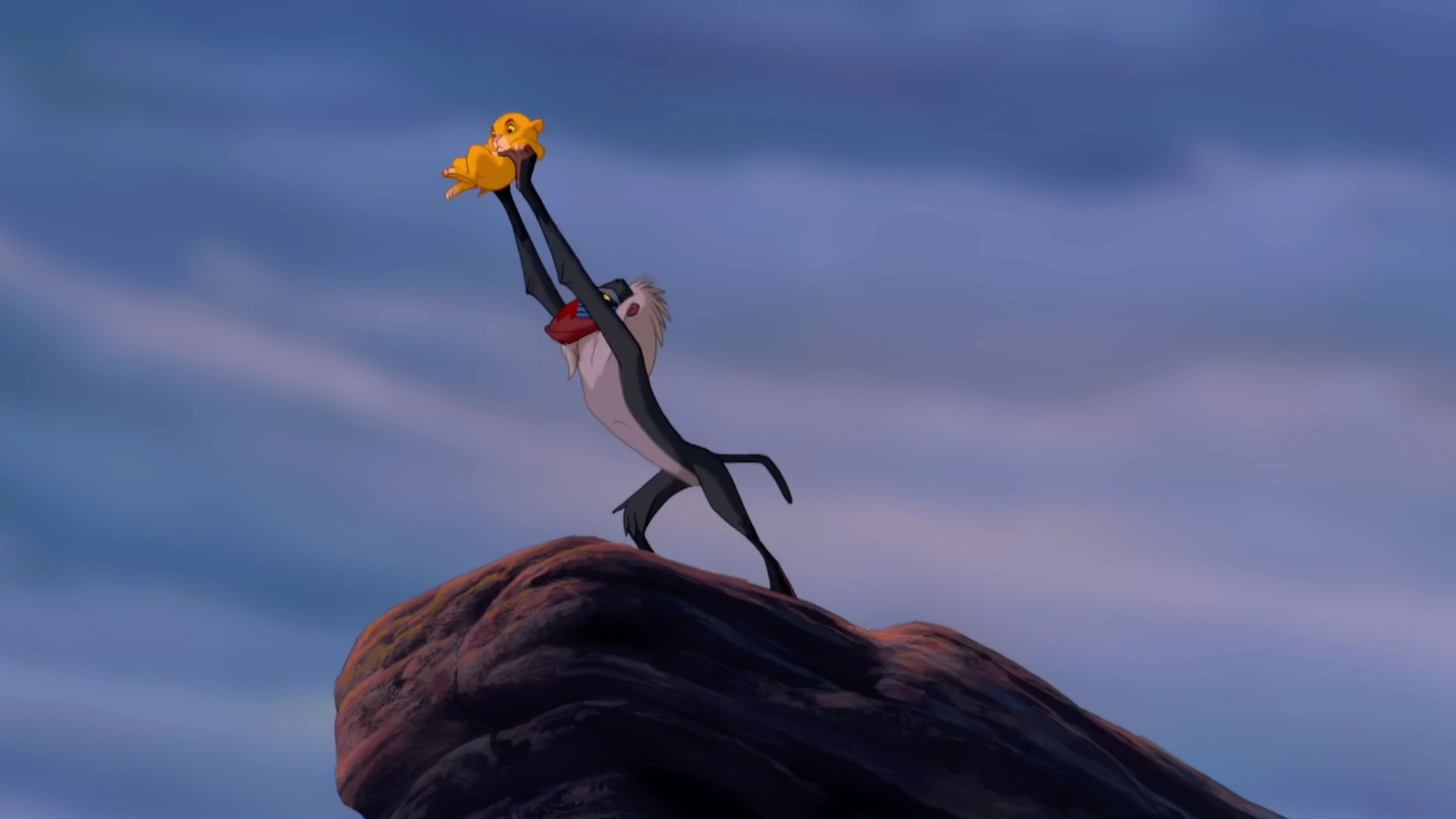
For those who've been hiding under Pride Rock, 'Circle of Life' establishes the feline-based savannah hierarchy that sets the scene for the rest of the film, with lead lion Mufasa presenting his cub, Simba, to the rest of the animal kingdom.
In a groundbreaking move for a Disney picture, the soaring score of the song begins entirely in Zulu, a language most commonly spoken in parts of southern Africa. But their meaning when translated into English can be quite jarring.
Advert
This was the recent subject of a podcast that celebrates the language, culture, and heritage of all 54 African nations, One54, where hosts Akbar Gbajabiamila and comedian Godfrey were joined by fellow funny man Learnmore Jonasi.
Despite all being familiar with The Lion King and its famous opening song, the trio found themselves howling with laughter when they learned the real meaning behind the majestic and emotion-packed African verse that kicks off the track.
Though sweetly sung, the lines 'Sithi uhm ingonyama/Nants ingonyama bagithi baba' actually translates to 'Oh yes it’s a lion/Here comes a lion, father'. Somewhat less majestic than imagined.
With all three on the podcast breaking down into fits of laughter, Godfrey joked: "This whole time, I thought it was this beautiful, majestic spiritual s***. They have made billions off that."
Some African viewers added additional context below the video, the Mirror reports, with one pointing out: "The translation is wrong about that song.
"Though I understand Zulu is not his home language. I'm Zulu and that basically translates to 'here's our lion' and what it really means in our culture is 'Here's our King!' It's like a chanting in a way."
Another added: "Translation is overly simplified. In Nguni languages a lion can be referred to ibhubesi (general speak) or ingonyama which refers to the majesty of the creature and as a reference to the king.
"The opening words "nansi ingonyama bakithi" means 'look, here is his majesty'. Very strong statement."
The Circle of Life's Zulu lyrics
Nants ingonyama bagithi Baba
Sithi uhm ingonyama
Nants ingonyama bagithi baba
Sithi uhhmm ingonyama
Ingonyama
Siyo Nqoba
Ingonyama
Ingonyama nengw' enamabala
In English, this roughly translates to:
Here comes a lion, father
Oh yes it’s a lion
Here comes a lion, father
Oh yes it’s a lion
A lion
We’re going to conquer
A lion
A lion and a leopard come to this open place
 William Morgan