
Why it's illegal to abandon ship as Shipwrecked: Nightmare at Sea captain remains in prison

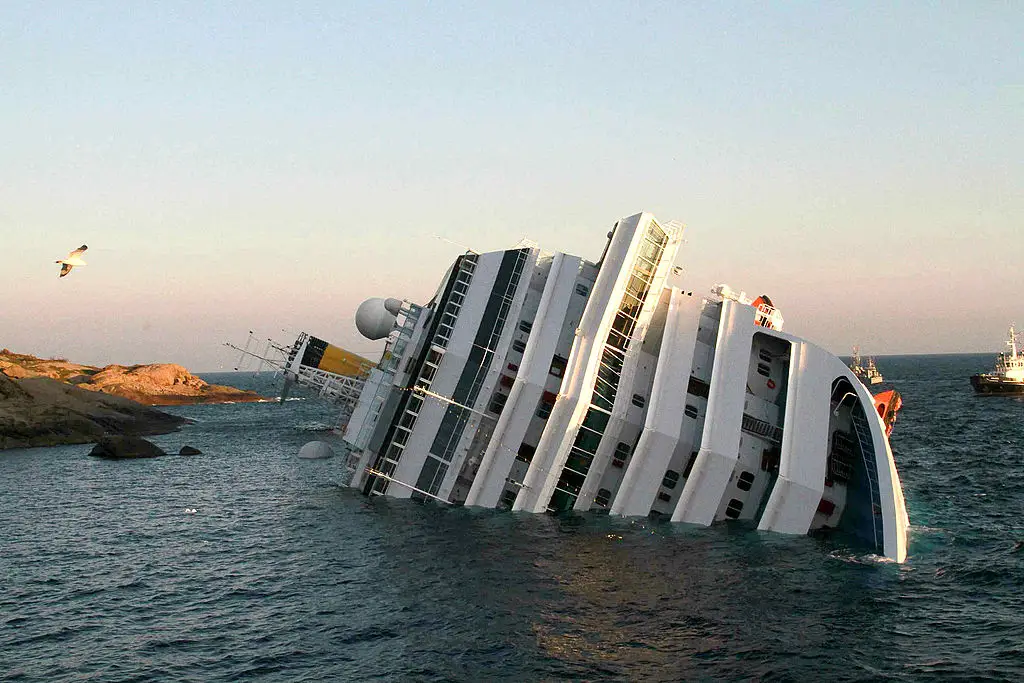
The captain of the Costa Concordia, Francesco Schettino, was sentenced to 16 years in prison after abandoning the sinking cruise ship on January 13, 2012.
The tragedy, in which 32 people lost their lives when the ship capsized after hitting rocks off the coast of Giglio Island, Italy, is the focus of the new Netflix documentary, Shipwrecked: Nightmare at Sea
Captain Schettino had ordered the cruise ship steered close to the island of Giglio before disaster struck, after which he abandoned the ship and stepped into a lifeboat, while hundreds of passengers were stranded onboard.
Advert
The Costa Concordia captain was later convicted with a number of offences, which included manslaughter, causing the shipwreck, and deserting his post before evacuation was complete.
But why is it illegal for a captain to abandon ship?
"The legal expectations for a ship's captain (i.e., 'master') when a vessel begins to sink are both basic and extensive," James Walker of Walker & O'Neill P.A. Maritime Lawyers, tells UNILAD.
"They arise from international conventions, company procedures, and the captain's general duty of care under centuries of maritime law," he continues.
However, this doesn't mean the captain has to 'die with the vessel,' the expert states, despite pop culture saying that a captain is legally required to 'go down with the ship'.
"Instead, the law requires the captain to do everything reasonably possible to protect human life," Walker states.
The 'principal legal duties' a captain must follow
Protecting the lives of the passengers and crew
"This is the captain's highest legal obligation," Walker says.
Under the International Convention for the Safety of Life at Sea (SOLAS), the 'master', or the captain, 'is responsible for implementing emergency procedures and maximizing survival'.
During a disaster, the captain is obliged to assess the emergency, while notifying passengers and crew on what is happening, as well as organizing and overseeing the safe evacuation of the ship.
As depicted in the Netflix documentary, the passengers on the Costa Concordia were left in the dark, with an announcement saying the ship was experiencing 'electrical problems'.
They were also told to 'go back to their cabins', which delayed crucial evacuation.
Exercising reasonable professional judgement
When these cases go to court, Walker says there are a number of factors they evaluate and take into consideration.
These include: "Whether distress calls were timely, whether evacuation was delayed unnecessarily, whether emergency procedures were followed, whether navigation decisions contributed to the casualty, and whether negligence played a role in the casualty."
Maintaining command until emergency ends
As we know, Captain Schettino completely went against this particular obligation, as he abandoned his ship around 23:30 local time on January 13, 2012, which captains 'cannot simply do', as they are expected to coordinate rescue efforts and oversee the evacuation. They must also 'maintain contact with the bridge team and shore authorities', as per Walker.
Once all these commands have been fulfilled, a captain is legally obligated to leave the ship.
Leave the ship only after reasonable efforts to save others
The expert says that this 'is not an absolute legal rule in most jurisdictions,' although courts and maritime investigators do expect a captain to 'ensure passengers have evacuated, verify that crew responsibilities are complete, and leave the vessel only when remaining aboard no longer serves a useful safety purpose or presents an unreasonable risk'.
As we know, Captain Schettino hopped on a lifeboat while a number of crew members and passengers were still on board, which is 'powerful evidence of negligence or misconduct'.

Render assistance
Following on from this, Walker says that the captain 'has a longstanding legal duty under both customary maritime law and treaties such as the International Convention on Maritime Search and Rescue' to assist any one in distress. This is, so long as doing so does not endanger his ship.
Dancer Rose Metcalf, who was onboard the ship at the time, detailed how she and a number of other crew members helped safely evacuate passengers as the ship began to tip, before trying to get out themselves.
However, Rose became trapped, causing her 'fight' to kick in. She realized she had a flashlight, which she flashed to catch the attention of rescuers in a helicopter, and thankfully they came down to save herself and her fellow crew members.
Why was Captain Francesco Schettino held criminally liable?
Captain Schettino, who was named 'Captain Coward' by the public after the disaster, abandoned the Costa Concordia while thousands of passengers were still in huge danger.
According to Walker: "A captain may face criminal charges if the sinking ship results from gross negligence or if the captain's conduct during the emergency is unlawful."
This can include 'abandoning the ship before passengers without justification, reckless navigation, and ignoring known hazards'.
He was sentenced to over 16 years in prison, and responsible for the deaths of five crew members and 27 passengers.
He is not due for full release until 2033.
Shipwrecked: Nightmare At Sea is available to stream on Netflix now.
Topics: Netflix, True crime, Crime, Cruise ship
 Kiesha Dosanjh