
Lizzie Borden's menstrual cycle became an unexpected focus of her parents' murder investigation

Ryan Murphy's latest instalment of Monster focuses on its first, alleged female perpetrator with Lizzie Borden, a 19th-century Massachusetts woman whose menstrual cycle was significantly part of the investigation into the double murder of her father and stepmother.
Starring Ella Beatty in the titular role, Netflix series Monster: The Lizzie Borden Story zeroes in on the events leading to the 1892 axe murders of Lizzie's father Andrew and stepmother Abby, played by Charlie Hunnam and Rebecca Hall. The eight-episode series follows Lizzie in the lead-up to the killings as well as depicting the murder trial.
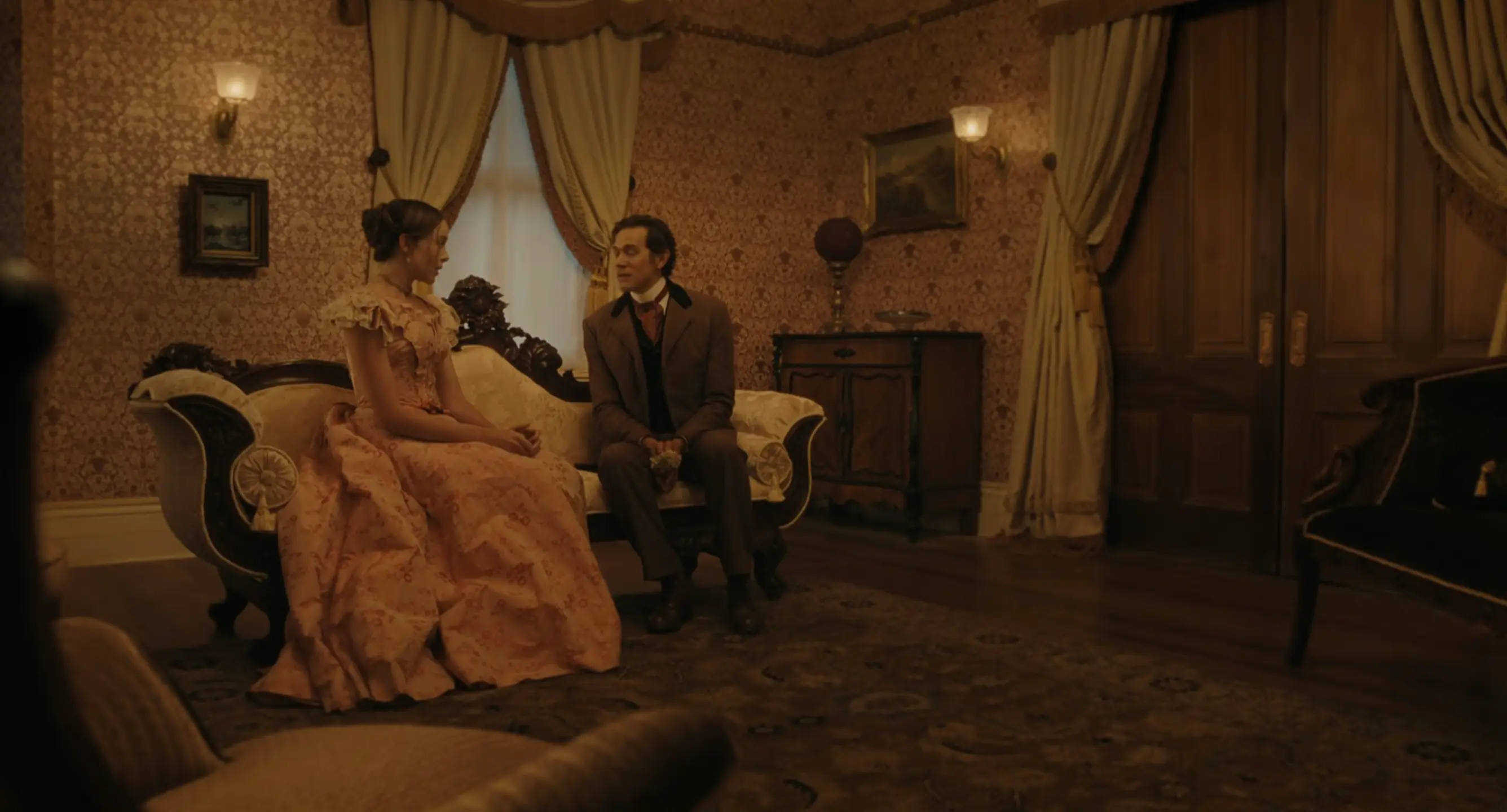
The first episode includes a mention of Lizzie's menstrual cycle when she's speaking with a suitor.
The scenes see Lizzie experiencing bad period cramps while chatting to a potential future husband, as she also accidentally stains her stepmother’s expensive couch with period blood. Enter new maid Bridget Sullivan, portrayed by Vicky Krieps, who swiftly manages to clean the couch and lands the job right away.
Advert
As it is entirely possible that a similar period incident happened to Lizzie during her life, it appears that records of her menstruation do not hint at any particular condition associated with her monthly cycle.
While periods were still considered taboo in the Victorian era, Lizzie's menstruation became a prominent part of the investigation into the double murders, with her period compared to 'an illness' in her defence.
While searching Borden’s home in 1892, police was stumped by the lack of blood connecting Lizzie to the murders. The only found a pail of bloody cloths in the basement and a spot of blood on her underskirt. When the officers questioned Lizzie about it, she said she was menstruating, which was confirmed by the family doctor. The police didn’t investigate the bloody cloths any further.
During the 1893 trial, Lizzie’s defence team said she had a 'monthly illness' around the time of the murders, which was how Victorians commonly referred to menstruation.
The team claimed her period ended on 3rd August, the day before the murders, and even used this as a defence for the killings. Her defence lawyer, George Robinson, said Lizzie was 'unbalanced' as her 'illness was continuing'.

Historical records also speak about Lizzie having 'peculiar spells' during her monthly cycle, as revealed in the book The Curse: A Cultural History of Menstruation. It is entirely possible, and way more likely, that she was just experiencing a normal change in hormones during her period.
Borden was later acquitted for the murders in June 1893.
Monster: The Lizzie Borden Story is streaming on Netflix.
Topics: Ryan Murphy, Netflix, True crime
 Stefania Sarrubba