• News
  • Film and TV
  • Music
  • Tech
  • Features
  • Celebrity
  • Politics
  • Weird
  • Community
  • Advertise
  • Terms
  • Privacy & Cookies
  • LADbible Group
  • LADbible
  • SPORTbible
  • GAMINGbible
  • Tyla
  • UNILAD Tech
  • FOODbible
  • License Our Content
  • About Us & Contact
  • Jobs
  • Latest
  • Topics A-Z
  • Authors
Facebook
Instagram
X
Threads
TikTok
YouTube
Submit Your Content
NASA has spotted a rogue object moving at 1 million miles per hour in space

Home> Technology> Space

Updated 07:10 20 Aug 2024 GMT+1Published 00:46 20 Aug 2024 GMT+1

NASA has spotted a rogue object moving at 1 million miles per hour in space

Scientists are still determining what the object actually is

Yasmeen Hamadeh

Yasmeen Hamadeh

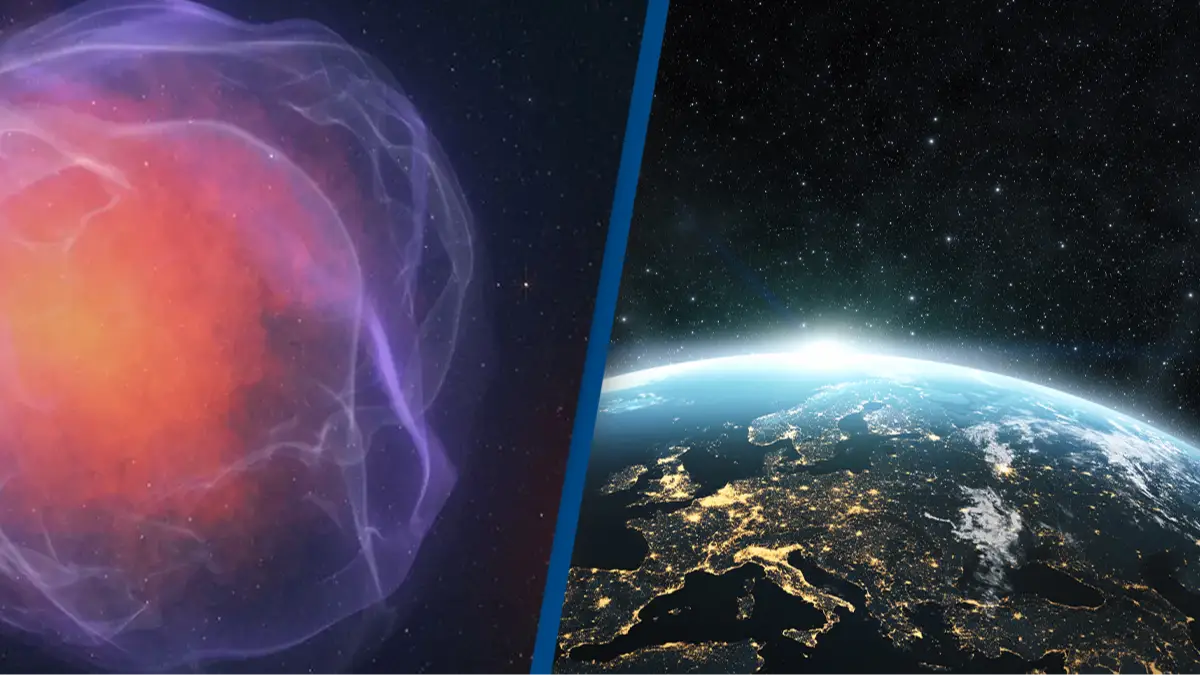
NASA citizen scientists have spotted a mysterious object moving at a hyper-speed rate through space that's left them baffled.

The object, which is estimated to be over 27,306 times the size of Earth, is apparently moving so fast through our galaxy that it could break out of the Milky Way.

The mysterious star-like object was spotted moving at a whopping million miles per hour more than 400 light years away from Earth.

Advert

It was first identified by citizen scientists part of NASA's Backyard Worlds: Planet 9 project.

While the identity of the object is yet to be determined, experts are speculating that it is a brown dwarf star which is typically larger than a planet but lacks the mass to sustain long-term nuclear fusion in its core like the Earth's sun.

If the mysterious object is in fact a brown dwarf star, it would be the first-ever documented case of a hyper-speed orbit capable of breaking from our galaxy.
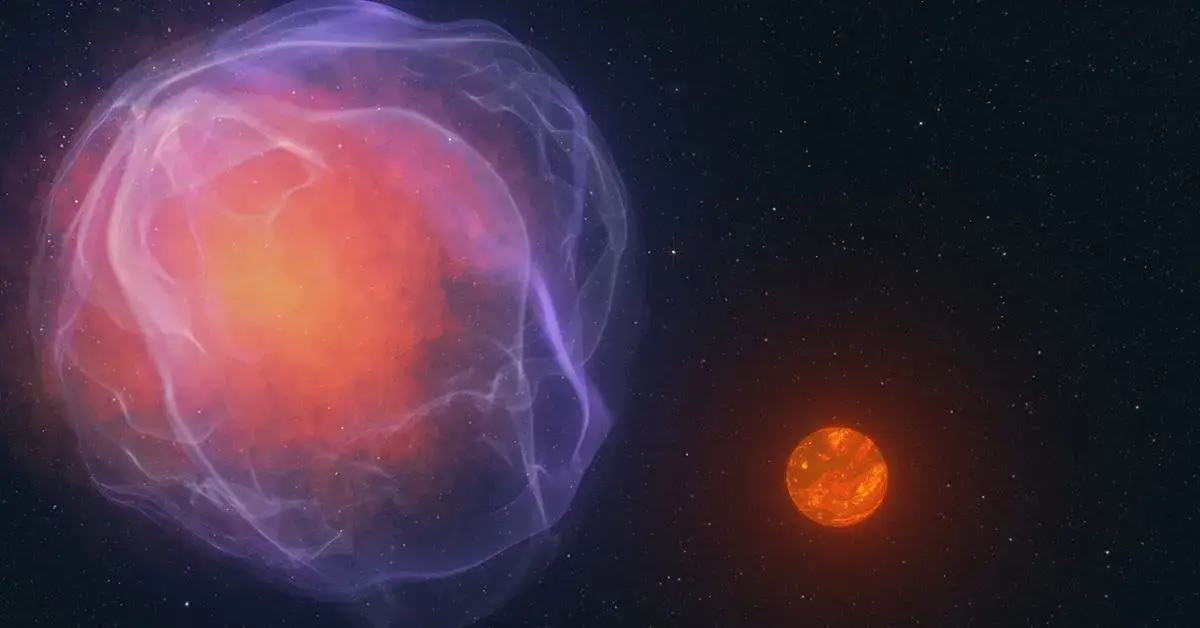
The mysterious object has left experts baffled. (W.M. Keck Observatory/Adam Makarenko)

"I can't describe the level of excitement," said Martin Kabatnick, a citizen scientist and long-time member of NASA's Backyard Worlds project in a statement.

"When I first saw how fast it was moving, I was convinced it must have been reported already," he added.

Kabatnik was joined by fellow citizen-scientists Thomas P. Bickle and Dan Caselden in the discovery. They've coined the object CWISE J124909.08+362116.0, or CWISE J1249 for short.
The object is moving so fast it could break out of the Milky Way. (John Moore/Getty Images)

According to an astronomer who collaborated with them on understanding the potential brown dwarf, Dr. Kyle Kremer, there are several theories that could explain how CWISE J1249 is moving so fast.

One is that it catapulted out of a two star or binary star system after its white dwarf sister star collapsed in a nuclear fusion reaction known as a supernova.

Another theory sees that CWISE J1249 may have originated from a tight cluster of stars, called a globular cluster, where it broke free from the pull of a black hole.
The object is bigger than Earth. (NASA/Newsmakers)

"When a star encounters a black hole binary, the complex dynamics of this three-body interaction can toss that star right out of the globular cluster," explained Dr. Kremer in a statement.

Members of NASA's Goddard Space Flight Center, academics, and government scientists are now drafting up a report on these observations that's still awaiting peer review from Cornell's arXiv site.

Across all boards, it so far seems that this object may be the first of its kind.

Featured Image Credit: W.M. Keck Observatory/Adam Makarenko/ Getty Stock Photo

Topics: Space, NASA, Earth

Yasmeen Hamadeh
Yasmeen Hamadeh

Advert

Advert

Advert

Choose your content:

a day ago
3 days ago
6 days ago
7 days ago
  • Getty Stock Images
    a day ago

    Experts reveals terrifying reason why astronauts should be banned from making 'space babies'

    The fertility and space experts came together to explore whether in-space pregnancy is safe

    Technology
  • Jim WATSON / AFP via Getty Images
    3 days ago

    NASA postpones Artemis II launch after practice run identifies major issue

    Other NASA missions have faced similar issues in the past

    Technology
  • Ramsey Cardy/Getty
    6 days ago

    ‘Godfather of AI’ reveals the jobs that will be replaced first as it takes over workplaces

    Geoffrey Hinton always has thoughts on the rise of AI

    Technology
  • Joe Raedle/Getty Images
    7 days ago

    Why NASA astronauts face ‘significant challenge’ in −410F temperatures as they prepare to fly farther into space than ever before

    It comes as extreme weather has pushed the initial Artemis II launch date back

    Technology
  • Startling body effects NASA astronauts may suffer from once they return to Earth after 9 months in space
  • NASA has officially upgraded chances of 'city-destroying' asteroid hitting Earth seven years from now
  • Bizarre reason scientist who believes mysterious space object is ‘not natural’ has invited Kim Kardashian to help research
  • NASA astronaut reveals whether sex in space is actually possible