Mysterious space object Harvard scientist claims is 'not natural' has just broken a terrifying record

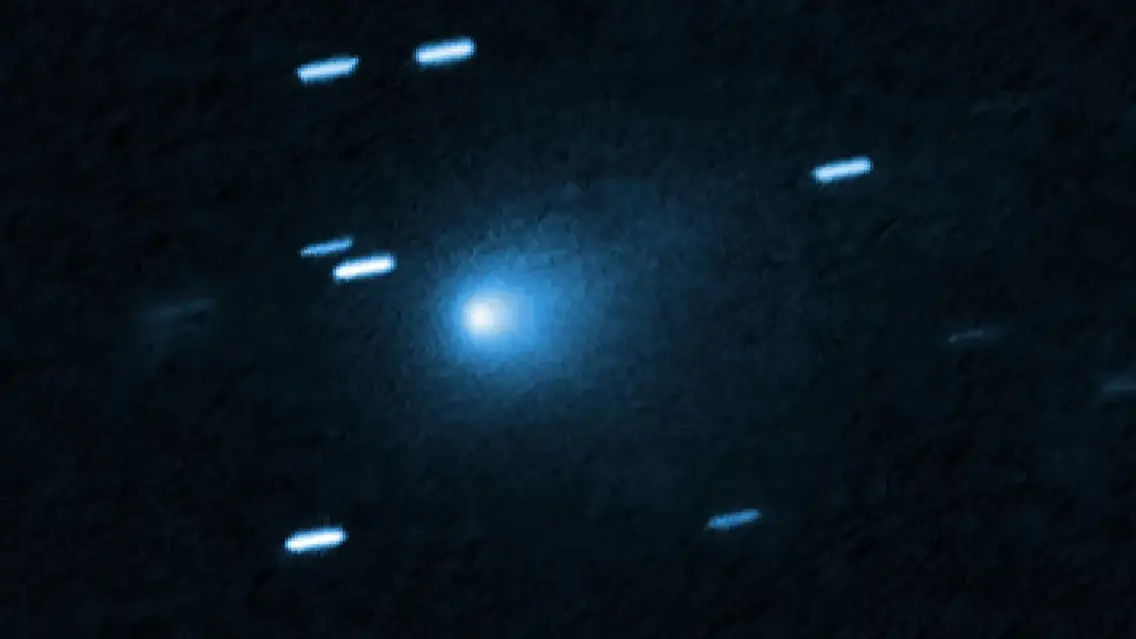
The fastest-ever foreign object to whizz through our solar system was recently documented by scientists using the Hubble Space Telescope.
Known as 'Comet 3I/ATLAS', this sizeable entity was first spotted on July 1 by the Asteroid Terrestrial-impact Last Alert System (ATLAS) and is the third interstellar traveller to reach us in the last eight years.
"Oumuamua and Comet 2I/Borisov predate it, but the newcomer reportedly recorded speeds twice as fast as both of them, and appeared a great deal bigger as well.
"This latest interstellar tourist is one of a previously undetected population of objects bursting onto the scene that will gradually emerge," commented the University of California's David Jewitt, science team leader for the Hubble observations.
Advert
"This is now possible because we have powerful sky survey capabilities that we didn't have before. We've crossed a threshold."
Jewitt went on to caveat: "No one knows where the comet came from. It's like glimpsing a rifle bullet for a thousandth of a second. You can't project that back with any accuracy to figure out where it started on its path."
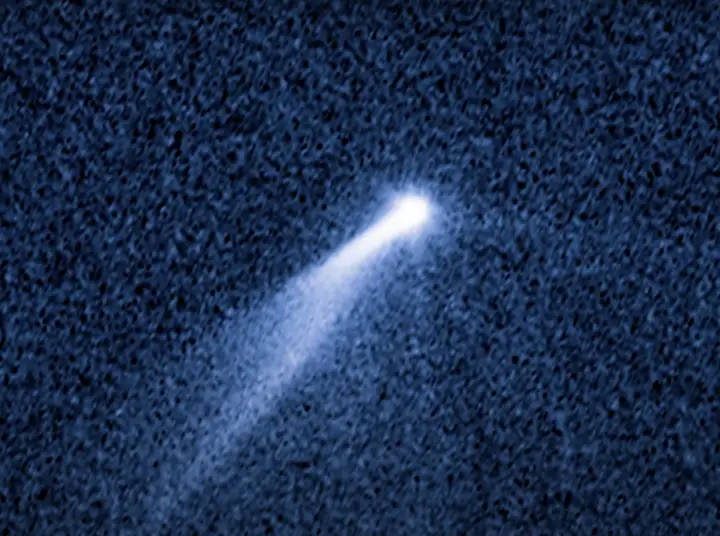
Although Comet 3I/ATLAS measured in some ridiculous velocity, the likes of 1680 and 1843's Great Comets were probably 10 times quicker considering their distance covered towards the Sun, per IFLScience.
Meanwhile, the Hubble Telescope was also able to sense how much the comet is outgassing - the release of gasses due to heat - although this element of the investigation made it hard for researchers to determine the size of its nucleus.
Estimations now place it between 5.6km to 320m, which is equivalent to 3.5 miles and 1,000 feet, whereas Oumuamua's longest axis was between 100 and 1,000m, and Borisov's nucleus was less than half a kilometre.
As for which star system it originated from, scientists cannot be sure but theorised that the region may have been the thick disk of the Milky Way - above and below the galaxy where the spiral arms and the Sun reside.
To test this speculation, future observations via the James Webb Space Telescope and the Transiting Exoplanet Survey Satellite, plus Swift in space and various terrestrial locations, will check out the amount of water the comet harbours.
Comet 3I is believed to reach 210,000,000km from the Sun by October 30 this year, and will be visible from Earth until next month, before returning to view in December.
On the subject of Comet 3I's unnaturalness, Harvard physicist Avi Loeb has admitted to having concerns about the discovery in one of his papers published on Medium.
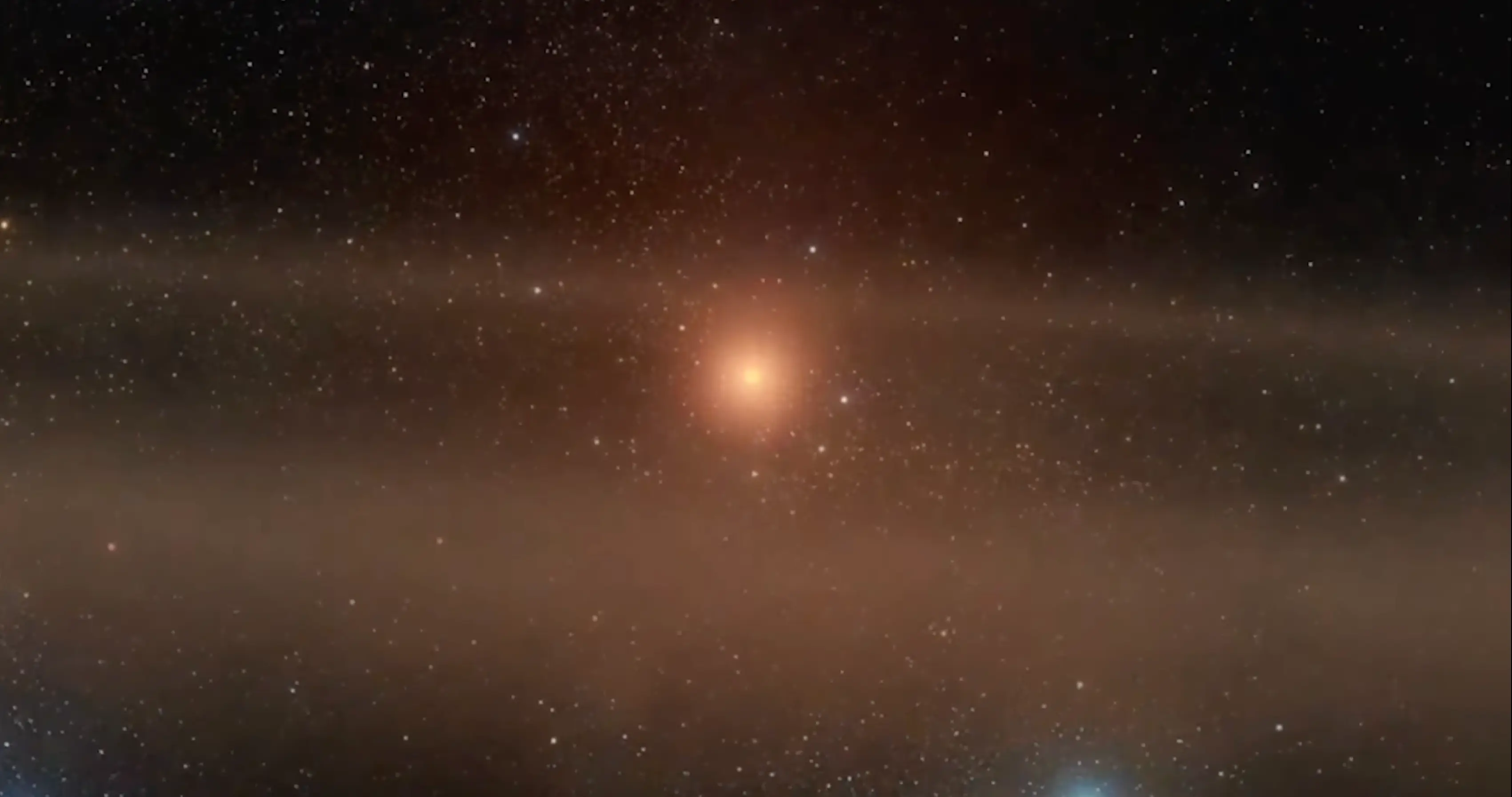
"There were claims of a tail," he wrote. "But since 3I/ATLAS is accelerating and its current size is not much larger than the angular resolution of Earth-based telescopes, it is not easy to avoid fictitious elongation of the image as a result of the object's motion."
He also questioned the supposed lack of gas emissions coming from the object and argued its trajectory aligns too well within the solar system. Using his own 'Loeb Scale' to evaluate whether something is natural or artificial, he ended up giving the object a six out of 10.
This score means that it’s more likely to have been engineered, leading to questions of alien activity.
Topics: Science, Space, Technology
 Dan Seddon