unilad homepage
unilad homepage
    • News
      • UK News
      • US News
      • World News
      • Crime
      • Health
      • Money
      • Sport
      • Travel
    • Music
    • Technology
    • Film and TV
      • News
      • DC Comics
      • Disney
      • Marvel
      • Netflix
    • Celebrity
    • Politics
    • Advertise
    • Terms
    • Privacy & Cookies
    • LADbible Group
    • LADbible
    • SPORTbible
    • GAMINGbible
    • Tyla
    • UNILAD Tech
    • FOODbible
    • License Our Content
    • About Us & Contact
    • Jobs
    • Latest
    • Archive
    • Topics A-Z
    • Authors
    Facebook
    Instagram
    X
    Threads
    TikTok
    YouTube
    Submit Your Content
    People shocked at how similar Mars is to Earth as new NASA footage goes viral
    Home>Technology>Space
    Updated 17:07 27 Feb 2024 GMTPublished 17:08 27 Feb 2024 GMT

    People shocked at how similar Mars is to Earth as new NASA footage goes viral

    It could easily be mistaken for a desert on Earth

    Niamh Shackleton

    Niamh Shackleton

    google discoverFollow us on Google Discover
    Featured Image Credit: NASA

    Topics: NASA, Science, Space, Mars, Social Media

    Niamh Shackleton
    Niamh Shackleton

    Niamh Shackleton is an experienced journalist for UNILAD, specialising in topics including mental health and showbiz, as well as anything Henry Cavill and cat related. She has previously worked for OK! Magazine, Caters and Kennedy.

    X

    @niamhshackleton

    Advert

    Advert

    Advert

    It turns out Mars and Earth have more in common than some might have expected.

    Earlier this month, NASA's Perseverance rover discovered 'potentially habitable conditions' on the Red Planet.

    Perseverance left Earth back in 2020 and landed on Mars in February the following year.

    Scientists have since been looking closely at the 28-mile-wide Jezero Crater.

    Advert

    "The delta deposits in Jezero crater contain sedimentary records of potentially habitable conditions on Mars," part of the recent study revealed.

    "From orbit we can see a bunch of different deposits, but we can't tell for sure if what we're seeing is their original state, or if we're seeing the conclusion of a long geological story," planetary scientist David Paige, from the University of California, Los Angeles, went on.

    Perseverance has been taking images and footage of Mars while exploring the planet and sending them back down to Earth.

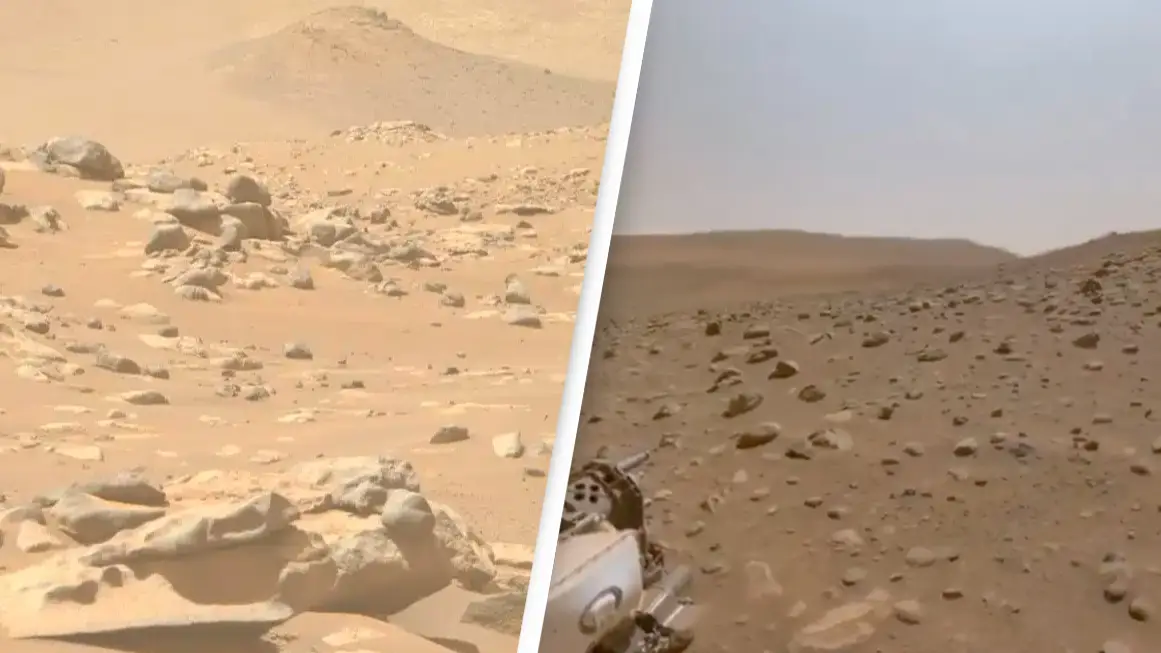
    In some images recently acquired by NASA and shared to its website, you'll notice that some parts of Mars don't actually look that different to Earth.

    There are over 70 deserts on our planet, some of which have uncanny resemblances to the Red Planet.
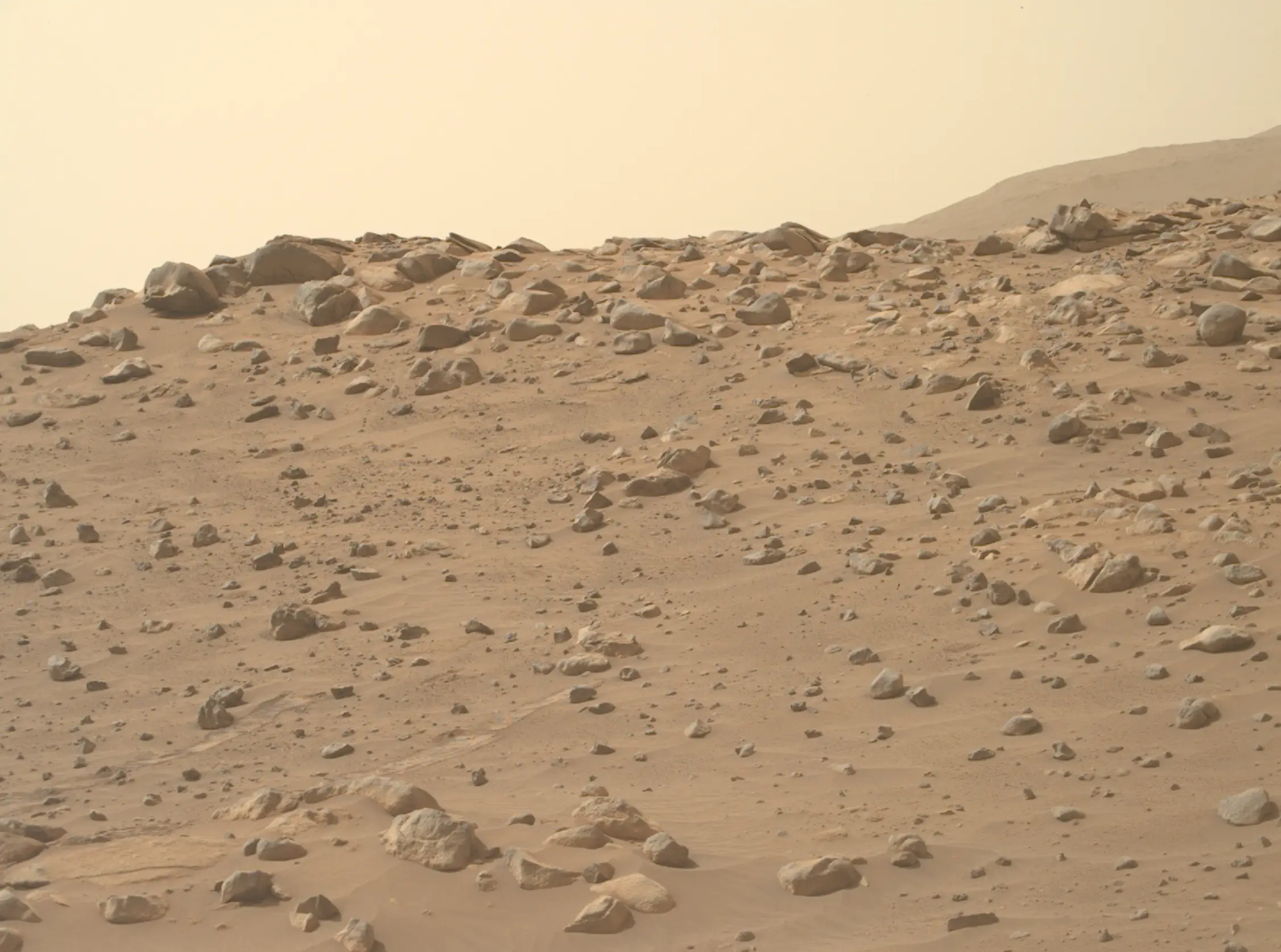
    NASA recently acquired this photo of Mars from its Perseverance rover.
    NASA

    Footage of Mars has been shared on social media of late, and some people voiced their thoughts on it looking similar to some parts of Earth.

    "NASA has a satellite in Mars and mars looks just like earth…..aliens in the mall in Miami…..only a matter of time and that’s all imma say [sic]," one person wrote last month.

    "Looks like Egypt," said another, while a different person compared it to Arizona.

    Someone else went on: "Looks very much like parts of planet Earth!"

    Well, Mars actually has quite a lot in common with Earth.

    Both planets have around a 24 hour day, season weather patterns, and the likes of volcanoes and canyons.

    Some people might hope that Perseverance is on Mars in a bid to find life on the planet, but it's actually there to find signs of any former life.

    "Scientists don't expect to find living things currently thriving on Mars," states NASA's website.

    "Instead, they're looking for signs of life that existed long ago, when Mars was warmer and covered with water."
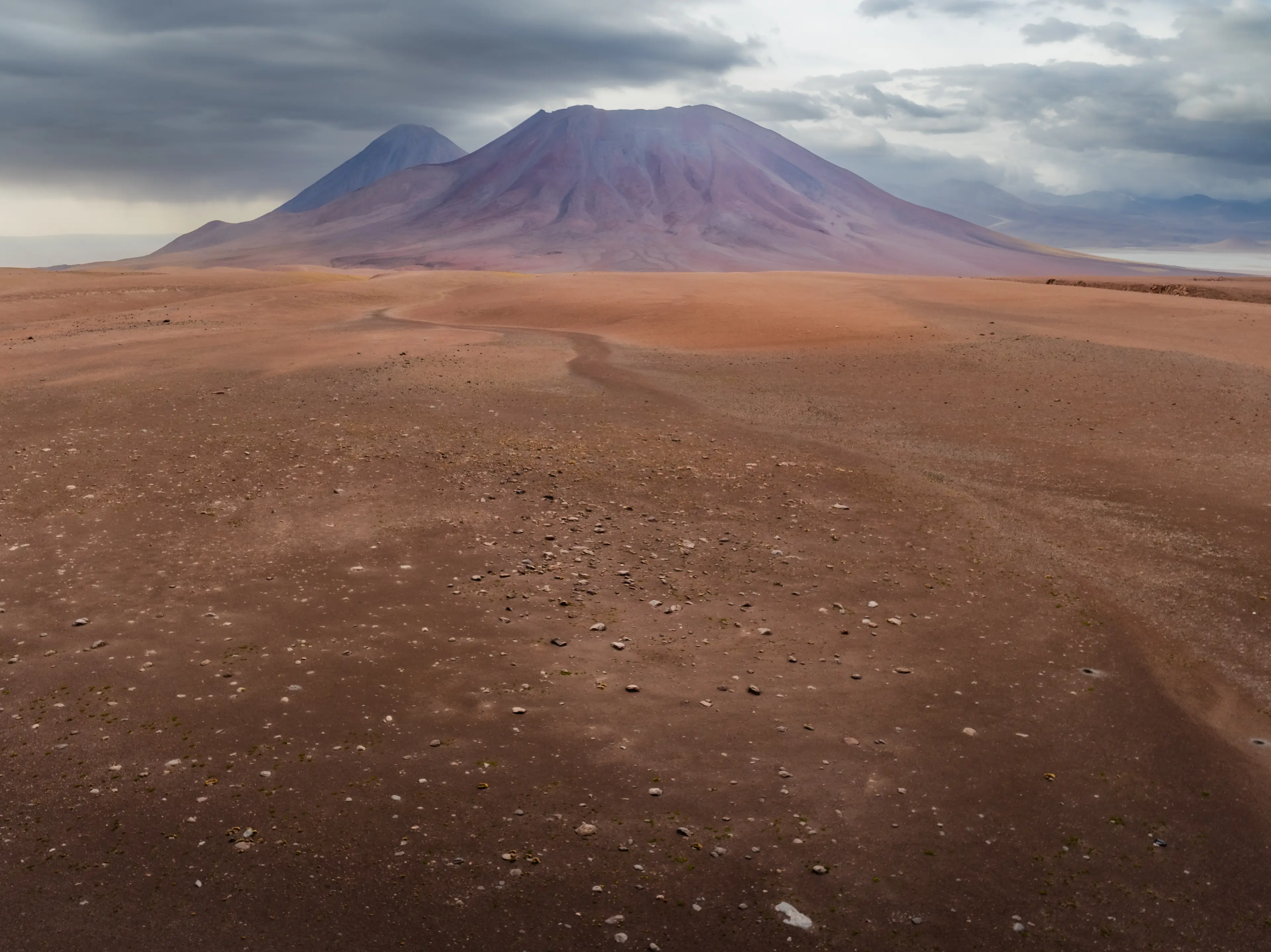
    Licancabur and the Juriques volcanoes at San Pedro de Atacama is one place that bears some resemblance to Mars' surface.
    Posnov/Getty Stock

    While we're not expecting to move over to Mars to set up shop anytime soon, some astronauts at NASA are currently living in a Mars simulation.

    The CHAPEA A (Crew Health and Performance Exploration Analog) crew - made up of four people - are doing the experiment in Texas, which began in June 2023.

    The team will be living in the simulation for a whole 378 days.

    In a statement released at the start of the experiment, NASA said: "We’re really looking at how the crew performance and health changes based on realistic Mars restrictions and lifestyle of the crew members.

    "So the lifestyle is what we’re trying to simulate by setting up a realistic environment and workload for the CHAPEA crew.”

    Choose your content:

    18 hours ago
    2 days ago
    • Pier Marco Tacca/Getty Images
      18 hours ago

      AI expert issues chilling warnings about deepfakes after Italian Prime Minister shares AI lingerie photo

      Even laws around deepfakes won't fix the problem, the expert claims

      Technology
    • NBC Bay Area
      18 hours ago

      Doctor had college students take 9-week digital detox and revealed 'scary' impact on the brain

      'After I removed this negative presence, I realized all the positive aspects of my life,' one student said

      Technology
    • (Photo by Emanuele Cremaschi/Getty Images)
      2 days ago

      Playstation users who bought games within four-year period eligible for Sony $7.85 million settlement

      Sony has been accused of monopolizing the market through its PlayStation Store

      Technology
    • Dhiraj Singh/Bloomberg via Getty Images
      2 days ago

      iPhone users can check if they’re eligible for Apple's $250m payout over AI accusations

      The payout applies to people who bought certain iPhones between June 2024 and March 2025

      Technology
    • NASA reveals truth behind 'stunning' Mars images showing night sky 250 million miles from Earth
    • Astonishing new picture taken on Mars leaves people shocked as they all point out surprising detail
    • NASA discovers potentially habitable planet 'remarkably similar to Earth'
    • NASA reveals significant new evidence that shows potential signs of previous life on Mars