unilad homepage
unilad homepage
    • News
      • UK News
      • US News
      • World News
      • Crime
      • Health
      • Money
      • Sport
      • Travel
    • Music
    • Technology
    • Film and TV
      • News
      • DC Comics
      • Disney
      • Marvel
      • Netflix
    • Celebrity
    • Politics
    • Advertise
    • Terms
    • Privacy & Cookies
    • LADbible Group
    • LADbible
    • SPORTbible
    • GAMINGbible
    • Tyla
    • UNILAD Tech
    • FOODbible
    • License Our Content
    • About Us & Contact
    • Jobs
    • Latest
    • Archive
    • Topics A-Z
    • Authors
    Facebook
    Instagram
    X
    Threads
    TikTok
    YouTube
    Submit Your Content
    NASA reveals truth behind asteroid hurtling past Earth at 46,908 mph next week

    Home> Technology> NASA

    Published 12:23 24 Jul 2025 GMT+1

    NASA reveals truth behind asteroid hurtling past Earth at 46,908 mph next week

    The plane-sized asteroid will pass closer to Earth than several other space rocks on NASA’s radar

    Ellie Kemp

    Ellie Kemp

    google discoverFollow us on Google Discover
    Featured Image Credit: Zhihao/Getty Images

    Topics: NASA, Space, Science

    Ellie Kemp
    Ellie Kemp

    Ellie joined UNILAD in 2024, specialising in SEO and trending content. She moved from Reach PLC where she worked as a senior journalist at the UK’s largest regional news title, the Manchester Evening News. She also covered TV and entertainment for national brands including the Mirror, Star and Express. In her spare time, Ellie enjoys watching true crime documentaries and curating the perfect Spotify playlist.

    X

    @EllieKempOnline

    Advert

    Advert

    Advert

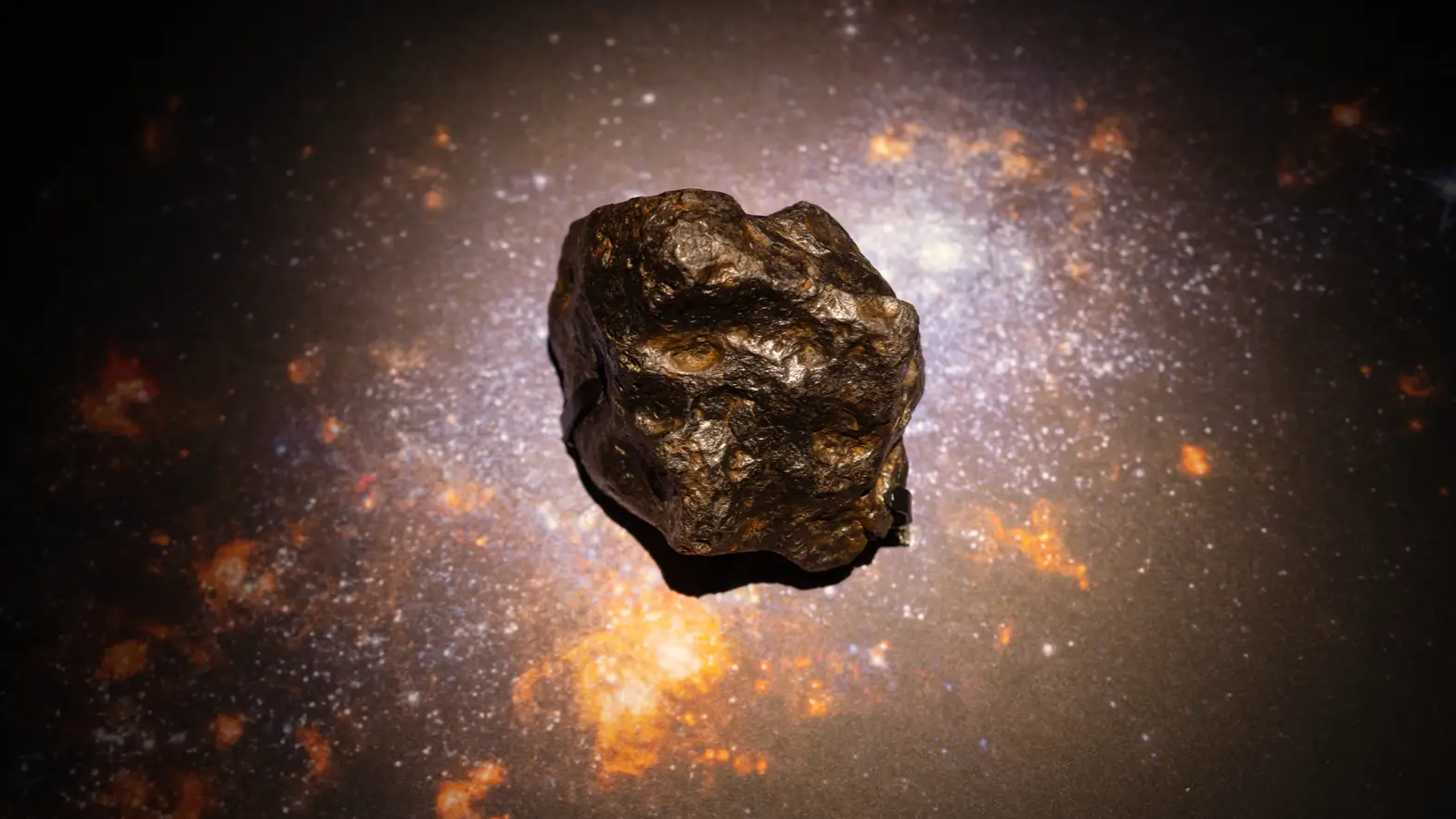
    NASA scientists have set out the truth about a 220-foot asteroid hurtling 'near' Earth early next week.

    Naturally, talk of space rocks on a near-Earth trajectory gets the imagination going.

    My mind instantly jumps to that potentially 'city-destroying' asteroid that might end up colliding with the Moon.

    And then you have 16 Psyche, a deep-space asteroid made up of such valuable metals, it could hypothetically make every single one of us billionaires.

    Advert

    The asteroid approaching Earth on Monday (July 28), however, is about the size of a plane, or slightly larger than the Statue of Liberty.

    It's also traveling near us at a break-neck speed of 46,908 miles per hour.

    Dubbed 2025 OW, the asteroid is set to pass our planet at a distance of around 393,000 miles.

    The 2025 OW asteroid is larger than the Statue of Liberty (Upthebanner/Getty Images)
    The 2025 OW asteroid is larger than the Statue of Liberty (Upthebanner/Getty Images)

    That's still significantly closer than any of the four other asteroids set to make their closest approaches to Earth this week.

    According to the Jet Propulsion Laboratory (JPL), two 'plane-sized' asteroids will pass by on Thursday July 24 and another two are due on Saturday July 26.

    None of the other asteroids will come as close to Earth as 2025 OW. The nearest of the four is the 100-foot-wide 2025 OK1, which will pass at a distance of around 1,360,000 miles today.

    In comparison, 2025 OW will swing by about 70 percent nearer to Earth.

    This all might sound alarming, but NASA explains that that distance is roughly 1.6 times the average distance to the moon.

    Hopefully, that puts your mind at rest - it sure has mine.
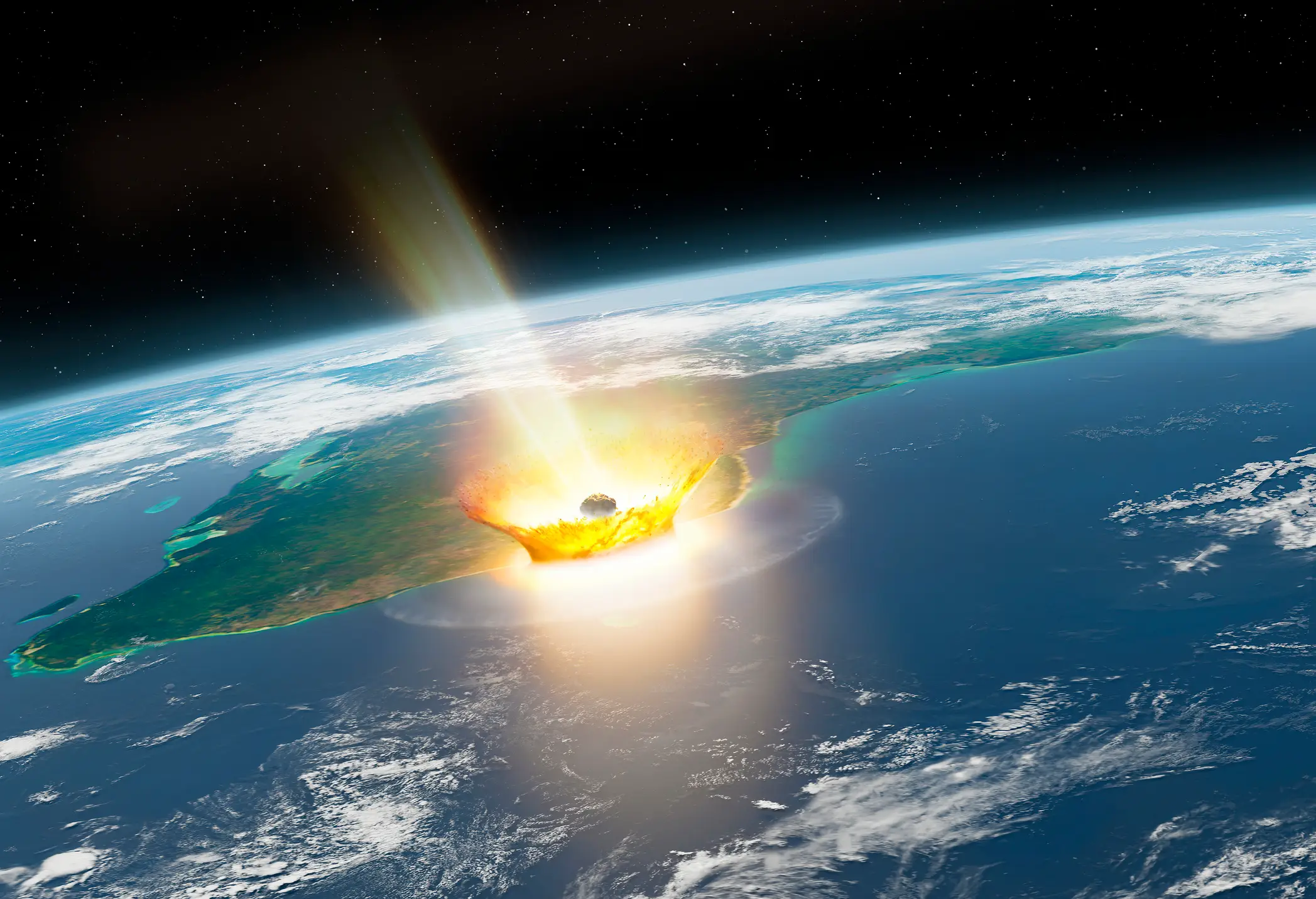
    We're a good while away from this happening... (Mark Garlick/Science Photo Library/Getty Images)
    We're a good while away from this happening... (Mark Garlick/Science Photo Library/Getty Images)

    And, according to the scientists, these space events are nothing out of the ordinary.

    Davide Farnocchia, an asteroid expert at NASA's Center for Near-Earth Object Studies (CNEOS) told ABC News: "Close approaches happen all the time - it's just part of the fabric of the solar system."

    And while 2025 OW’s considerable size is enough to grab scientists’ attention, it’s still not something we need to worry about.

    "We know exactly where it's going to be. We'll probably know where it's going to be for the next 100 years," Ian J. O'Neill, media relations specialist at NASA's JPL, said.

    He added of the asteroid's near-approach: "This is very routine. If there was a threat, you would hear from us. We would always put out alerts on our planetary defense blog."

    Asteroids that measure up at 3,000 feet - almost 13 times the size of 2025 OW - are the ones to worry about.

    NASA reports that rocks this large could cause 'global devastation and possibly the collapse of civilisation.'

    Fortunately, they only impact Earth every 700,000 years. So unless the universe is running ahead of schedule, we’re in the clear.

    Choose your content:

    3 days ago
    6 days ago
    8 days ago
    • Justin Sullivan/Getty Images
      3 days ago

      OpenAI names 22 industries at risk of job losses as it proposes four day week

      Two new reports suggest AI might be coming for your job - but you could also get a three day weekend

      Technology
    • Kayla Bartkowski/Bloomberg via Getty Images
      6 days ago

      Congressman Tim Burchett claims he has seen UFO footage that ‘defies logic’

      Tim Burchett says he has seen UFO footage that couldn't be man made - and he wants answers from the government

      Technology
    • NASA/JPL-Caltech/MSSS
      8 days ago

      NASA's Curiosity rover makes groundbreaking discovery that suggests Mars can support life

      An expert has claimed the new reveal 'increases the prospect that Mars offered a home for life in the ancient past'

      Technology
    • John Nacion/Variety via Getty Images
      8 days ago

      Bill Nye issues stern warning to Trump over concerns he could 'end NASA'

      Bill Nye the Science Guy revealed that Donald Trump's NASA proposal is a 'huge mistake'

      Technology
    • NASA reveals truth behind 'stunning' Mars images showing night sky 250 million miles from Earth
    • Bill Nye issues stern warning to Trump over concerns he could 'end NASA'
    • NASA finds unknown object in deep space that's sending mysterious signals to Earth every 44 minutes
    • NASA reveal unexpected new results of mysterious object aiming at Earth that scientist claims is 'not natural’