unilad homepage
unilad homepage
    • News
      • UK News
      • US News
      • World News
      • Crime
      • Health
      • Money
      • Sport
      • Travel
    • Music
    • Technology
    • Film and TV
      • News
      • DC Comics
      • Disney
      • Marvel
      • Netflix
    • Celebrity
    • Politics
    • Advertise
    • Terms
    • Privacy & Cookies
    • LADbible Group
    • LADbible
    • SPORTbible
    • GAMINGbible
    • Tyla
    • UNILAD Tech
    • FOODbible
    • License Our Content
    • About Us & Contact
    • Jobs
    • Latest
    • Archive
    • Topics A-Z
    • Authors
    Facebook
    Instagram
    X
    Threads
    TikTok
    YouTube
    Submit Your Content
    Asteroid from 4,500,000,000 years ago unlocks breakthrough about life on Mars

    Home> Technology> Space

    Published 13:41 23 Nov 2024 GMT

    Asteroid from 4,500,000,000 years ago unlocks breakthrough about life on Mars

    The discovery is believed to be the oldest direct evidence of potential habitable life

    Emma Rosemurgey

    Emma Rosemurgey

    google discoverFollow us on Google Discover
    Featured Image Credit: Space Frontiers/Getty/NASA

    Topics: NASA, Space, Mars

    Emma Rosemurgey
    Emma Rosemurgey

    Advert

    Advert

    Advert

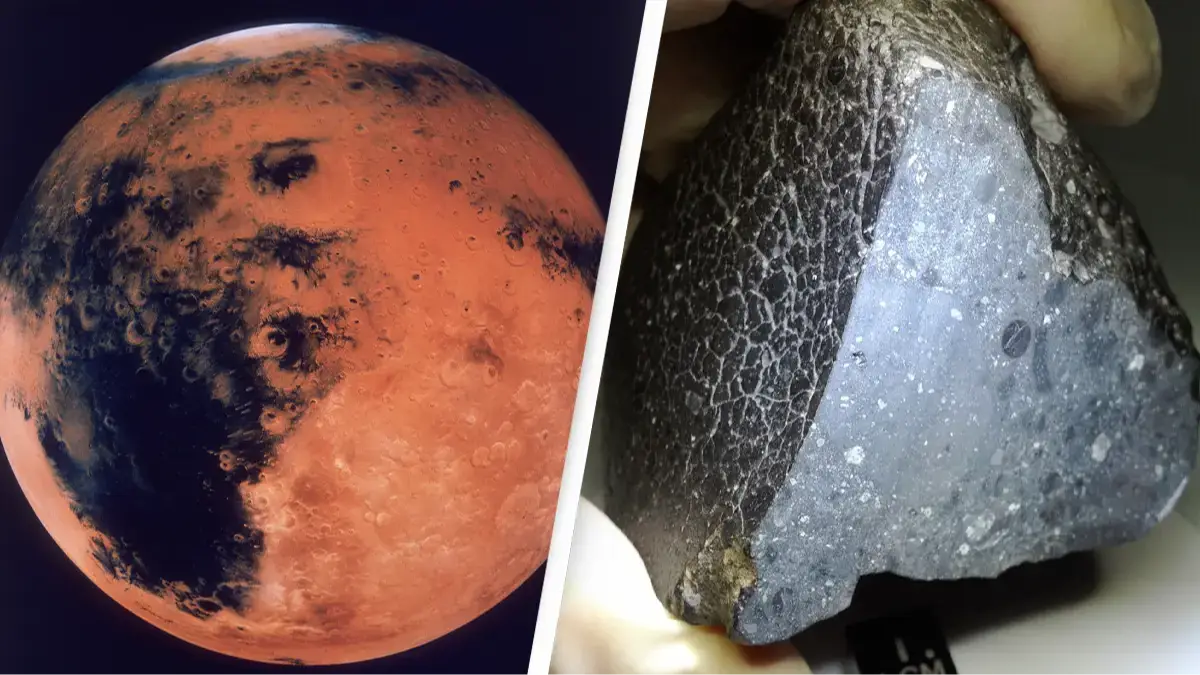
    Scientists have made a groundbreaking discovery which could be the proof needed to confirm the existence that life once occurred on Mars.

    With Mars being scouted for the next possible space mission, it'd be handy to know if humans could comfortably dwell there - even if that's looking like that's an impossible feat.

    However, experts have discovered what appears the oldest direct evidence of possible life on the Red Planet, dating back 4.45 billion years.

    And given that this 'key ingredient for habitable environments' was also essential for the formation of life of Earth, it could be a huge step in discovering how life previously thrived on Mars.

    Advert

    The evidence was found in the famous 'Black Beauty' Martian asteroid, which landed on Earth all the way back in 2011.
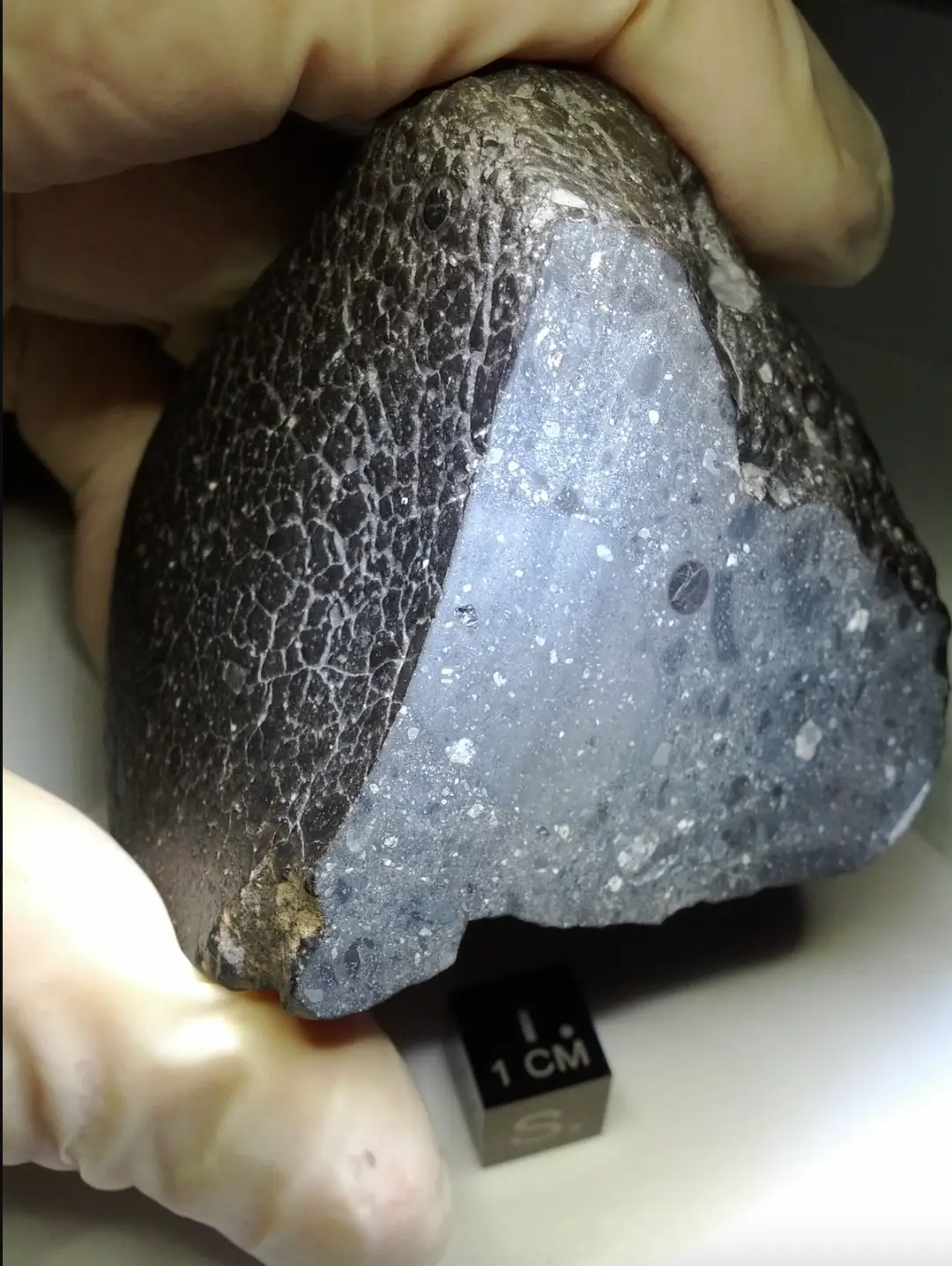
    The 'Black Beauty' asteroid landed on Earth in 2011 (NASA)
    The 'Black Beauty' asteroid landed on Earth in 2011 (NASA)

    The polished black rock is believed to be the second oldest Martian meteorite ever at around 2 billion years old, according to Space.com.

    However, scientists from Curtin University in a study published in Science Advances discovered something significantly older within the rock, which revealed evidence of hot water.

    And now, a 4.45-billion-year-old zircon grain filled with fluid-rich water could now lead to a whole new understanding of hydrothermal systems relating to volcanic magma activity on historic Mars.

    Aaron Cavosie, from Curtin's School of Earth and Planetary Sciences, said in a statement: "We used nano-scale geochemistry to detect elemental evidence of hot water on Mars 4.45 billion years ago.

    "Hydrothermal systems were essential for the development of life on Earth, and our findings suggest Mars also had water, a key ingredient for habitable environments, during the earliest history of crust formation."
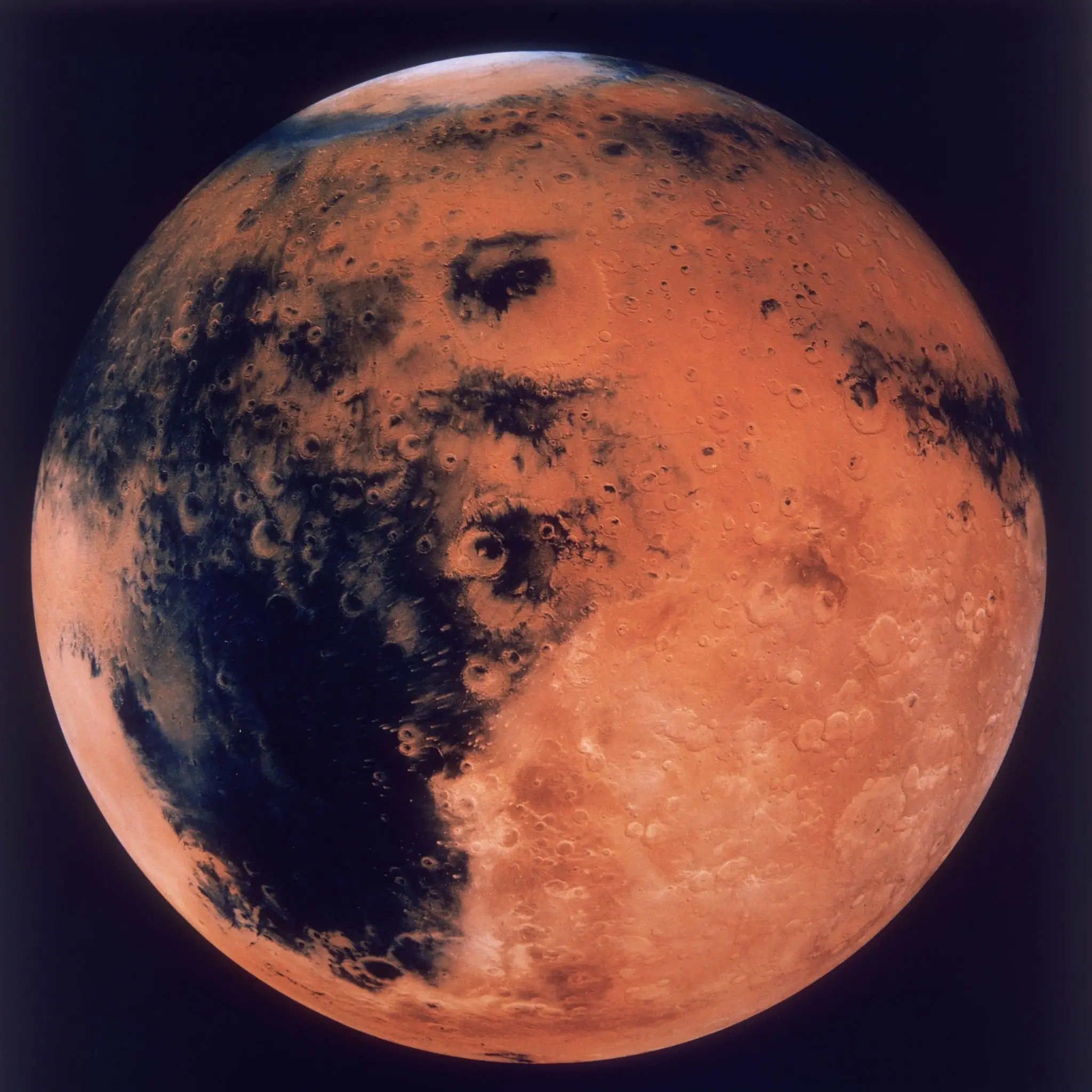
    Perhaps David Bowie was right when he asked if there is life on Mars? (Space Frontiers)
    Perhaps David Bowie was right when he asked if there is life on Mars? (Space Frontiers)

    Using nano-scale imaging and spectroscopy, the team discovered elements of iron, sodium, aluminum and yttrium, which Cavosie says were added when the zircon was formed 4.45 billion years ago, which suggests that 'water was present during early Martian magmatic activity'.

    This particular discovery is especially groundbreaking as scientists had previously came to the conclusion that Mars had been home to water in liquid form around 4.2 billion years ago, thanks to the discovery of evidence of waterways and ancient lakebeds.

    The Red Planet was later stripped of its water when the harsh solar radiation of the sun destroyed the Martian atmosphere, but it turns out the water may have been there significantly longer than previously believed, Space.com reports.

    "A 2022 Curtin study of the same zircon grain found it had been 'shocked' by a meteorite impact, marking it as the first and only known shocked zircon from Mars," Cavosie said.

    "This new study takes us a step further in understanding early Mars by identifying tell-tale signs of water-rich fluids from when the grain formed, providing geochemical markers of water in the oldest known Martian crust."

    Perhaps, there was 'Life on Mars' after all.

    Choose your content:

    2 hours ago
    5 days ago
    8 days ago
    10 days ago
    • Getty Stock Images
      2 hours ago

      Man who used AI to apply to 1,000 jobs while he was sleeping woke up to mind blowing results

      Work smart, not harder has taken on a whole new meaning

      Technology
    • Justin Sullivan/Getty Images
      5 days ago

      OpenAI names 22 industries at risk of job losses as it proposes four day week

      Two new reports suggest AI might be coming for your job - but you could also get a three day weekend

      Technology
    • Kayla Bartkowski/Bloomberg via Getty Images
      8 days ago

      Congressman Tim Burchett claims he has seen UFO footage that ‘defies logic’

      Tim Burchett says he has seen UFO footage that couldn't be man made - and he wants answers from the government

      Technology
    • NASA/JPL-Caltech/MSSS
      10 days ago

      NASA's Curiosity rover makes groundbreaking discovery that suggests Mars can support life

      An expert has claimed the new reveal 'increases the prospect that Mars offered a home for life in the ancient past'

      Technology
    • NASA's Curiosity rover makes groundbreaking discovery that suggests Mars can support life
    • NASA reveals truth behind 'stunning' Mars images showing night sky 250 million miles from Earth
    • NASA reveals significant new evidence that shows potential signs of previous life on Mars
    • NASA confirms signs of life on asteroid that could change what we know about space