unilad homepage
  • News
    • UK News
    • US News
    • World News
    • Crime
    • Health
    • Money
    • Sport
    • Travel
  • Film and TV
    • Netflix
  • Music
  • Tech
  • Features
  • Celebrity
  • Politics
  • Advertise
  • Terms
  • Privacy & Cookies
  • LADbible Group
  • LADbible
  • SPORTbible
  • GAMINGbible
  • Tyla
  • UNILAD Tech
  • FOODbible
  • License Our Content
  • About Us & Contact
  • Jobs
  • Latest
  • Archive
  • Topics A-Z
  • Authors
Facebook
Instagram
X
Threads
TikTok
YouTube
Submit Your Content
NASA's 'one-of-a-kind' Mars discovery could tell us about secrets from 4,100,000,000 years ago

Home> Technology> NASA

Published 12:15 12 Feb 2025 GMT

NASA's 'one-of-a-kind' Mars discovery could tell us about secrets from 4,100,000,000 years ago

Questions from the beginning of time could soon be answered

Ellie Kemp

Ellie Kemp

google discoverFollow us on Google Discover
Featured Image Credit: Dima_zel/Getty Images

Topics: Mars, NASA, Science, Space, Technology

Ellie Kemp
Ellie Kemp

Ellie joined UNILAD in 2024, specialising in SEO and trending content. She moved from Reach PLC where she worked as a senior journalist at the UK’s largest regional news title, the Manchester Evening News. She also covered TV and entertainment for national brands including the Mirror, Star and Express. In her spare time, Ellie enjoys watching true crime documentaries and curating the perfect Spotify playlist.

X

@EllieKempOnline

Advert

Advert

Advert

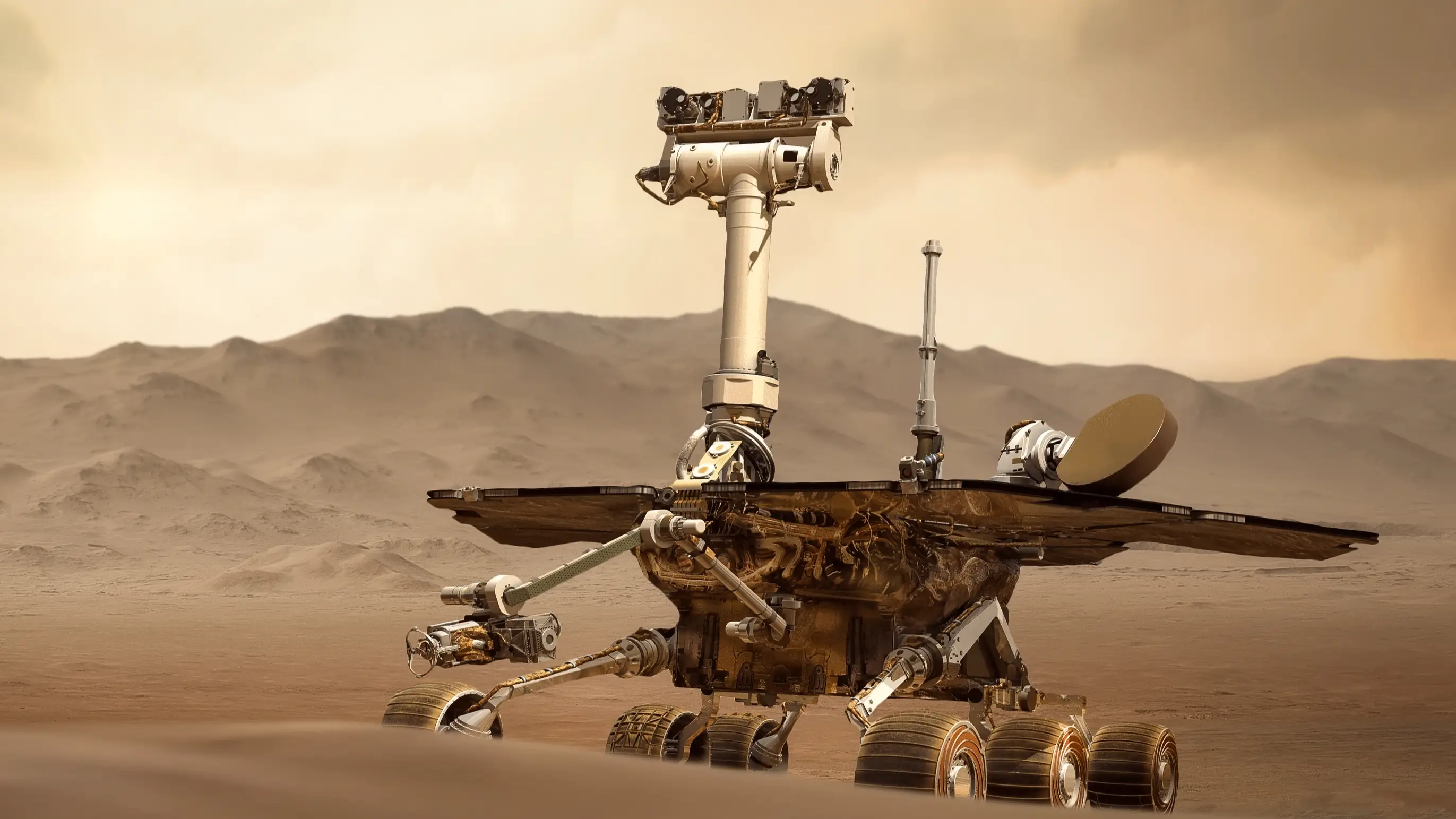
An exciting discovery made by NASA's Mars Perseverance rover might be able to tell us more about how the planets in our solar system formed some 4.1 billion years ago.

The National Aeronautics and Space Administration (NASA) sent the Perseverance Rover to Mars on July 30, 2020 in a hunt for 'signs of ancient microbial life' and to collect rock samples.

And it's since been revealed that the rover has collected a rock sample of 'immense scientific interest'.

The Perseverance rover landed in the Jezero Crate, measuring up at 28 miles wide and located on the western edge of a flat plain called Isidis Planitia, 'lying just north of the Martian equator,' NASA explains.

Advert

And it was a recent discovery on the red planet's Blue Hill, located in the larger Shallow Bay area, which sparked delight among scientists.

The rover 'successfully cored and sealed a 2.9-centimeter (1.1-inch) rock sample from Blue Hill, officially named Silver Mountain' which is of 'immense scientific interest'.

The discovery is the first sample from the Noachian-age - between 4.1 and 3.7 billion years ago, as per the ESA - extending back in time to the beginnings of the planet.

The sample contains low-calcium pyroxene, with NASA explaining how Shallow Bay is the only location along its planned route where this mineral was 'identified from orbit', making it 'a one-of-a-kind treasure for future Mars Sample Return analyses'.

Ken Farley, project scientist for Perseverance at Caltech in Pasadena, explained: “These rocks represent pieces of early Martian crust and are among the oldest rocks found anywhere in the solar system."
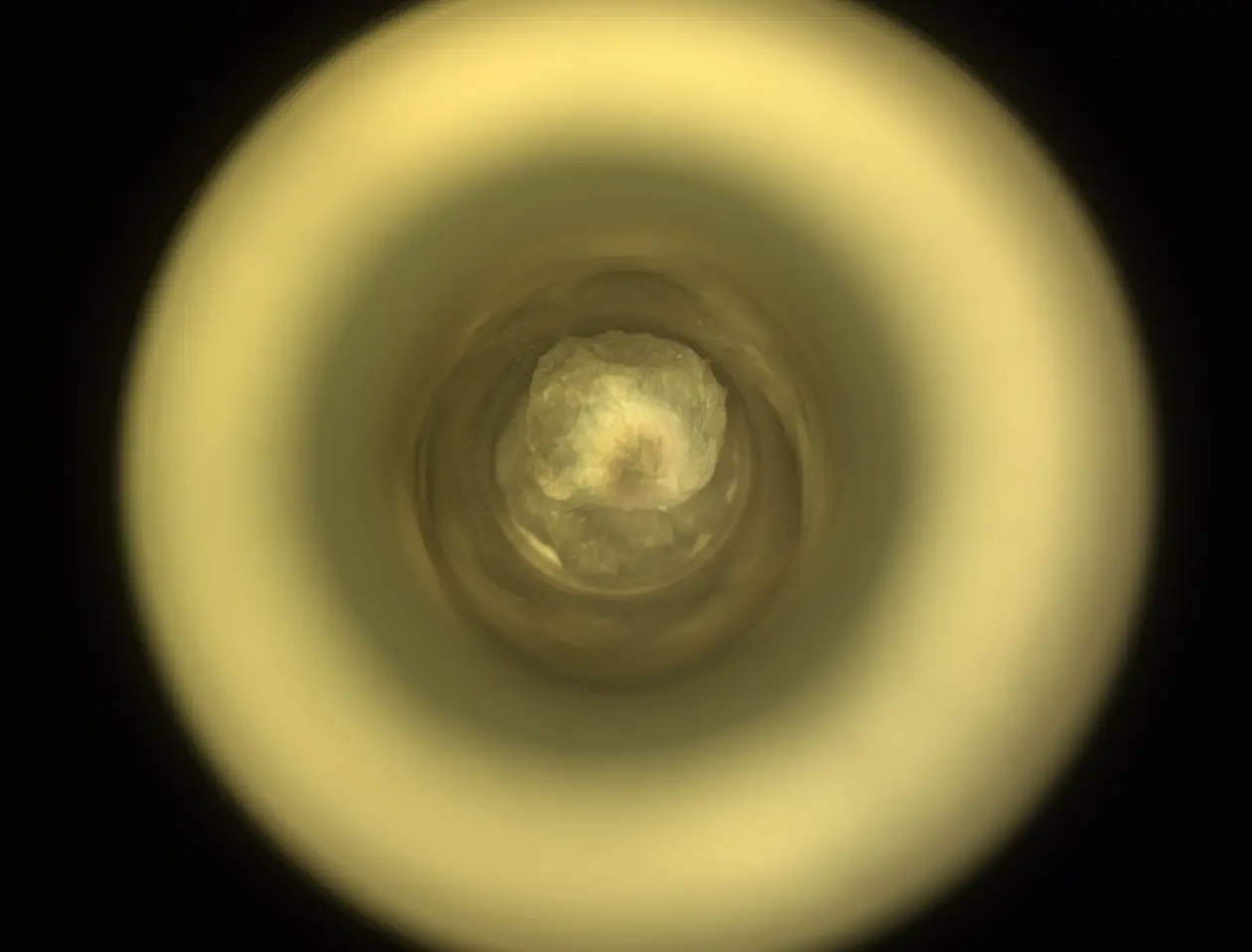
The 'Silver Mountain' rock sample (NASA/JPL-Caltech)

The rocks are believed to have been thrust from deep inside the planet to its surface by ancient impact billions years ago.

Asteroids and comets were thought to have frequently battered Mars, shaping many of the craters we see today.

Farely added that investigating this new sample could help us understand what both Mars and Earth may have looked like 'in the beginning.'

It might also help to determine whether life could've ever been sustained on Mars, with previous studies suggesting 'meltwater beneath Martian ice could support microbial life'.

The next challenge NASA faces is safely returning these Martian rock samples back to Earth.

The space agency confirmed it would be exploring two different landing missions, with the program and its design expected to be confirmed in the second half of 2026.

The return of the samples means scientists can 'better understand the planet’s geological history and the evolution of climate on the planet, where life may have existed in the past', NASA said.

The discovery can also help the agency prepare 'to safely send the first human explorers to Mars'.

Choose your content:

a day ago
4 days ago
6 days ago
  • Justin Sullivan/Getty Images
    a day ago

    OpenAI names 22 industries at risk of job losses as it proposes four day week

    Two new reports suggest AI might be coming for your job - but you could also get a three day weekend

    Technology
  • Kayla Bartkowski/Bloomberg via Getty Images
    4 days ago

    Congressman Tim Burchett claims he has seen UFO footage that ‘defies logic’

    Tim Burchett says he has seen UFO footage that couldn't be man made - and he wants answers from the government

    Technology
  • NASA/JPL-Caltech/MSSS
    6 days ago

    NASA's Curiosity rover makes groundbreaking discovery that suggests Mars can support life

    An expert has claimed the new reveal 'increases the prospect that Mars offered a home for life in the ancient past'

    Technology
  • John Nacion/Variety via Getty Images
    6 days ago

    Bill Nye issues stern warning to Trump over concerns he could 'end NASA'

    Bill Nye the Science Guy revealed that Donald Trump's NASA proposal is a 'huge mistake'

    Technology
  • NASA's Curiosity rover makes groundbreaking discovery that suggests Mars can support life
  • NASA's James Webb telescope's discovery about universe shows humanity got something 'seriously wrong'
  • NASA reveals significant new evidence that shows potential signs of previous life on Mars
  • NASA investigation into thousands of 'dark streaks' on Martian surface changes everything it thought about the phenomenon