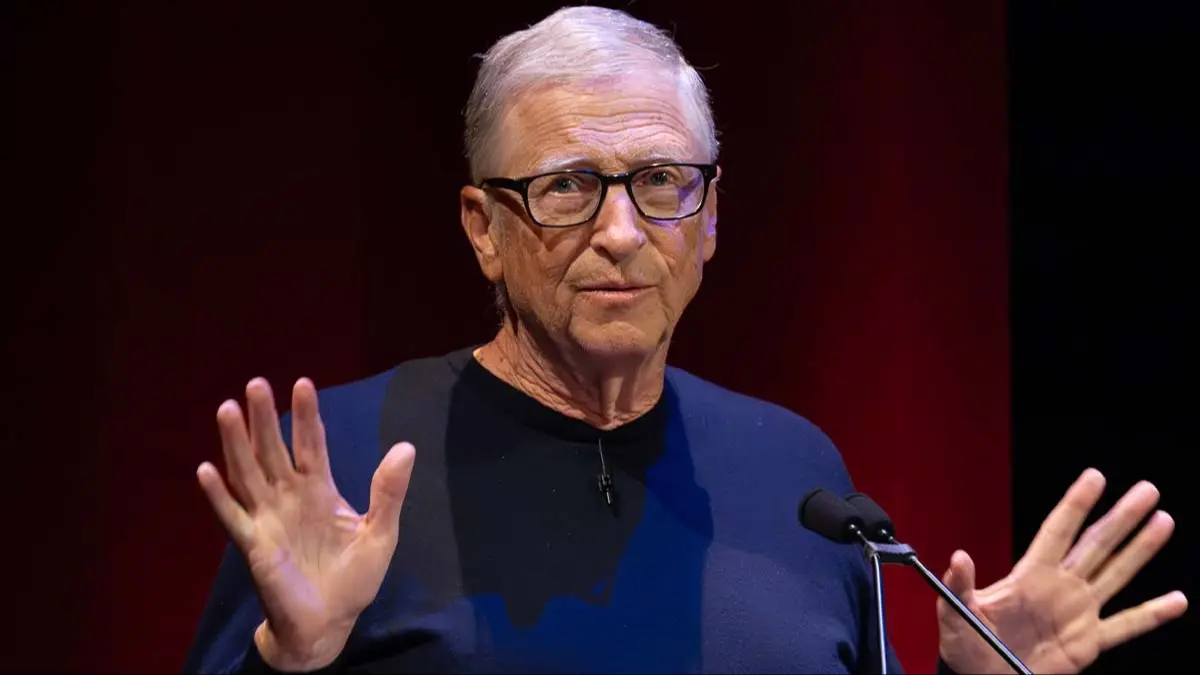
AI reacts to Bill Gates' bold claim that only three jobs will survive the artificial intelligence takeover

Microsoft founder Bill Gates made a bombshell prediction about Artificial Intelligence's takeover of the world - and ChatGPT has now ‘hit back’.
The Microsoft founder made headlines last year with his bleak predictions, warning that many jobs will no longer require real humans, as technology, and AI, takes over workplaces across the globe.
However, there was good news for some as he thought three certain professions would all be safe.
Those lucky lot are coders, energy experts and biologists.
Advert
Microsoft also listed the 40 jobs which were most at risk, which included interpreters, translators, mathematicians and journalists.
Of course, no one can see into the future, but who better to provide their opinion than AI itself?
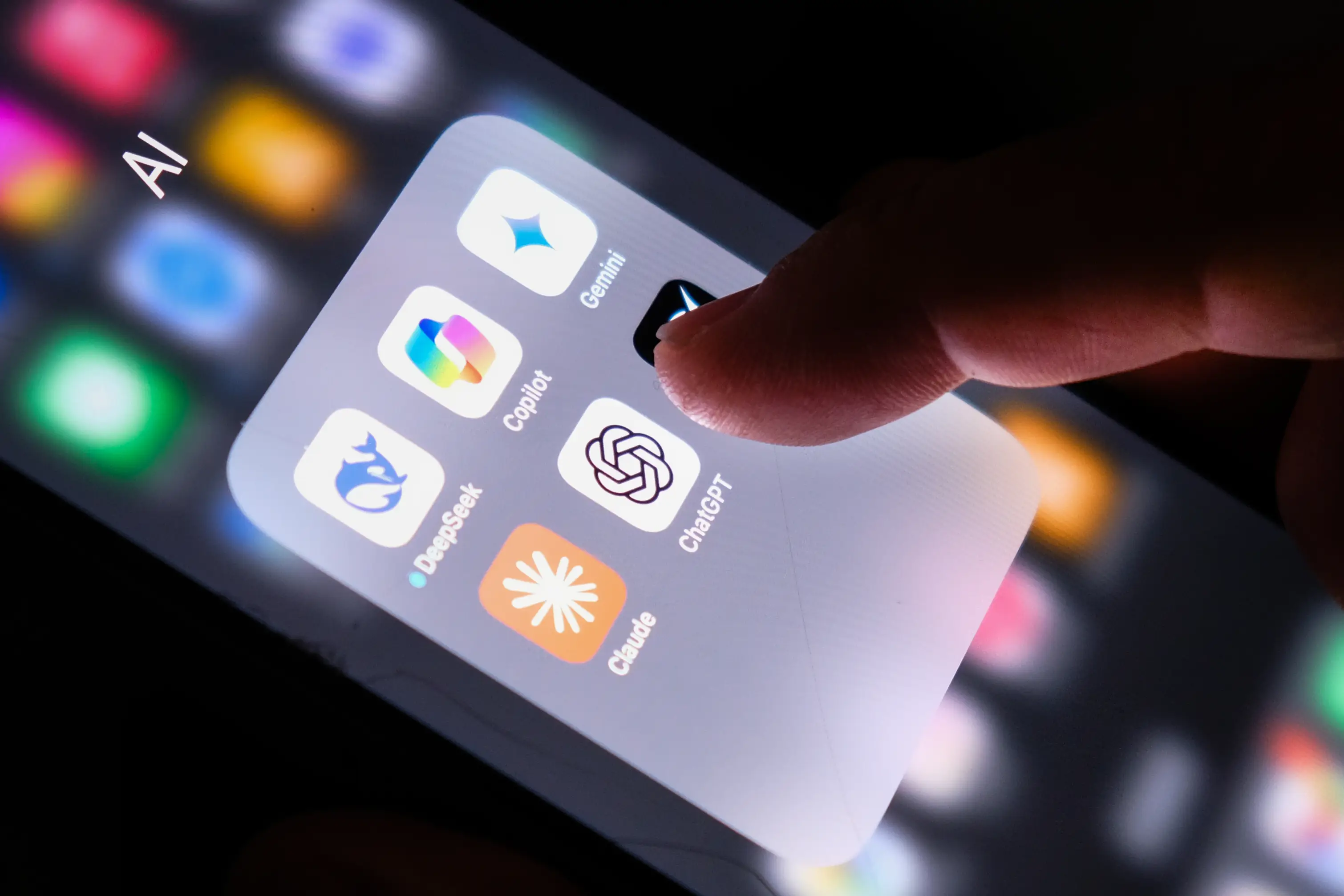
UNILAD asked good old ChatGPT what it thought - and according to the bot, AI may not be after all our jobs after all! Well, not in the way we think…
What did AI say in response to human jobs being at risk?
“I think Bill Gates is directionally right, but the real dividing line isn’t which profession you’re in — it’s which tasks within that profession are repetitive, predictable, and easy to standardize,” the AI bot said.
It admitted that while AI is ‘already replacing or shrinking parts of jobs’, it's also creating new work, and ‘increasing productivity’.
What jobs does AI think are the safest?
AI didn’t seem as confident it could take away as many jobs as Gates predicts, telling us that the ‘safest’ jobs will be skilled trades, such as plumbing and electricians, and those in healthcare, including nurses and therapists.
Like we said, no one can see into the future, but we can make predictions, right? Well, AI believes in 10 years time the most valuable will be those who can ‘work with AI’ as well as combining technical skills with communications.
ChatGPT claims that although AI can assist healthcare professionals with diagnosis, ‘patients still want humans making final calls and providing care’. Very understandable.
AI also agrees with Gates that scientists will remain safe, stating that although AI is powerful for analysis, breakthroughs still require human skills such as intuition and hypothesis generation.
Plus, AI thinks leaders such as execs and entrepreneurs will be safe, claiming, 'the higher the uncertainty and responsibility, the harder replacement becomes'.
What jobs does AI think are at risk?
In what can only be described as a great analogy, ChatGPT said that ‘calculators didn’t eliminate accountants, and the internet didn’t eliminate journalists', but in fact, they changed their jobs 'drastically'.
Unlike Gates, AI didn’t want to pick on any particular job at risk, but in fact, came for us all.
“I don’t think any profession is permanently 'safe'," Chat wrote.
“AI capability is moving too fast for absolute predictions. The question isn’t 'Will AI affect this field?' The question is, 'Which human skills in this field remain scarce?'"
Unfortunately though, according to AI’s predictions, it expects that those who will be most vulnerable are ‘workers doing repetitive computer-based tasks’ and those who 'avoid using AI tools'.
Plus, those whose work are 'easy to measure and standardize'.
In terms of risks, AI predicts it won’t always equal unemployment, just 'lower wages, fewer openings, tougher competition and higher skill requirements'.
It claims that more jobs can be done with one person, for example, 'a lawyer using AI may do the work of three junior associates'. Therefore, it predicts it may mean fewer entry level roles, and smaller teams.
And we’ll leave you with a closing thought from the bot: “AI changes jobs more than it destroys them.”
We’ll check back in 10 years!
Topics: Bill Gates, ChatGPT, Technology, Artificial Intelligence
 Kiesha Dosanjh