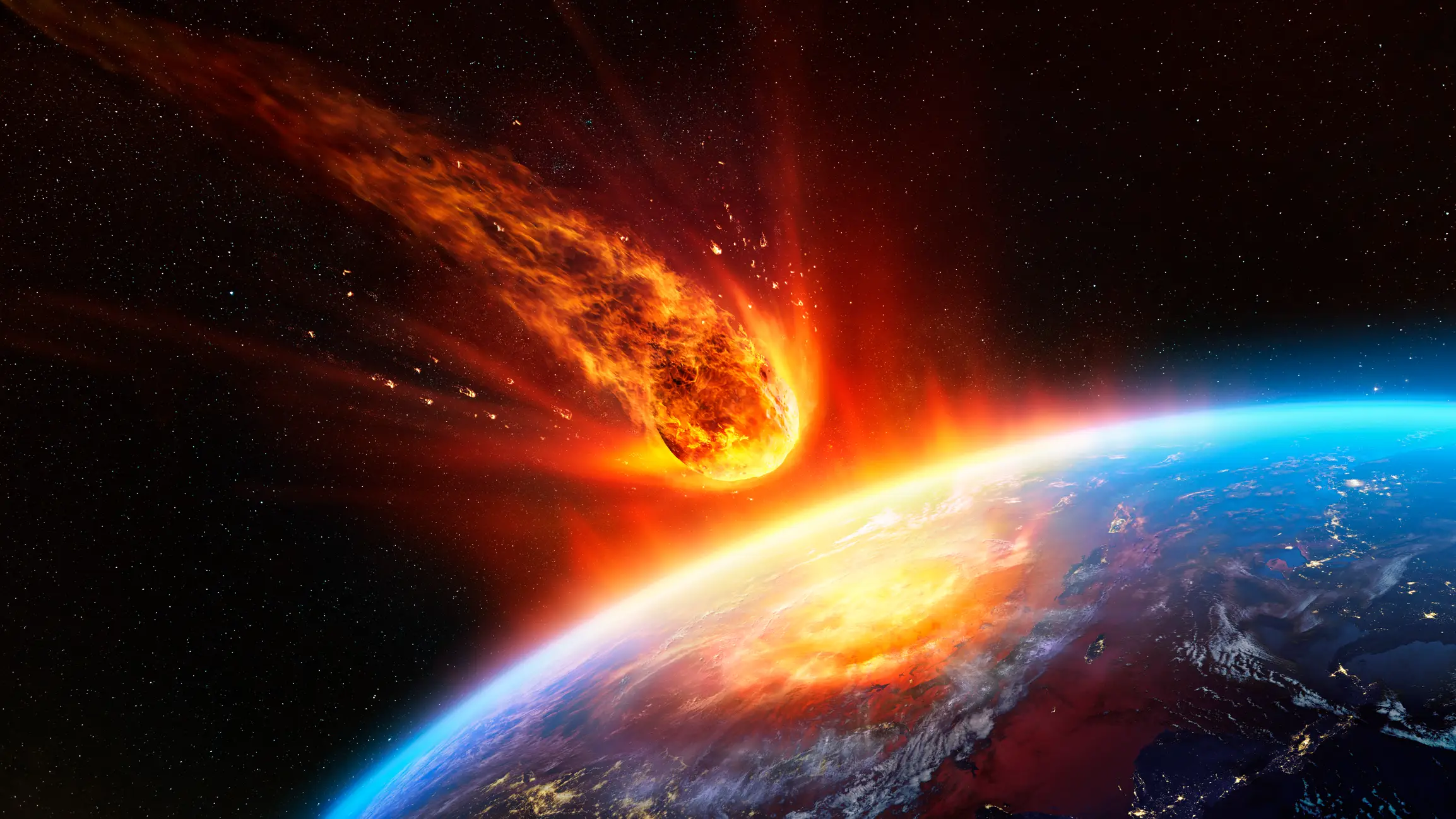
Scientists give chilling update on 'city-destroying' asteroid that may hit Earth as NASA makes emergency decision

There is a possibility that an asteroid large enough to destroy an entire city could crash into Earth in the coming years.
It is said to be as big as the Statue of Liberty, so plans are now being drawn up about how humanity can protect itself against '2024 YR4' - the life-threatening space rock initially spotted in December.
Now, scientist Dr Robin George Andrews, who's written a book titled How to kill an asteroid, has warned of the dangers that could arise through firing rockets at it to deflect it from its path.
Advert
But first, let's get into the emergency decision NASA has made to combat the threat. That move is to allocate an international team of astronomers access to use the James Webb Space Telescope to help determine the dimensions of the asteroid the best they can.
That way, they can attempt to work out just how much damage it would cause if it were to hit Earth, and where.
The collision is expected to happen in 2032 with NASA's Center for Near Earth Object Studies (CNEOS) predicting that the chances of the asteroid colliding with our planet is one-in-43, or to be specific, 2.3 percent out of 100.
When it was first spotted, it was reported that there was a one-in-83 chance of it impacting us, so who knows if those odds will increase again?
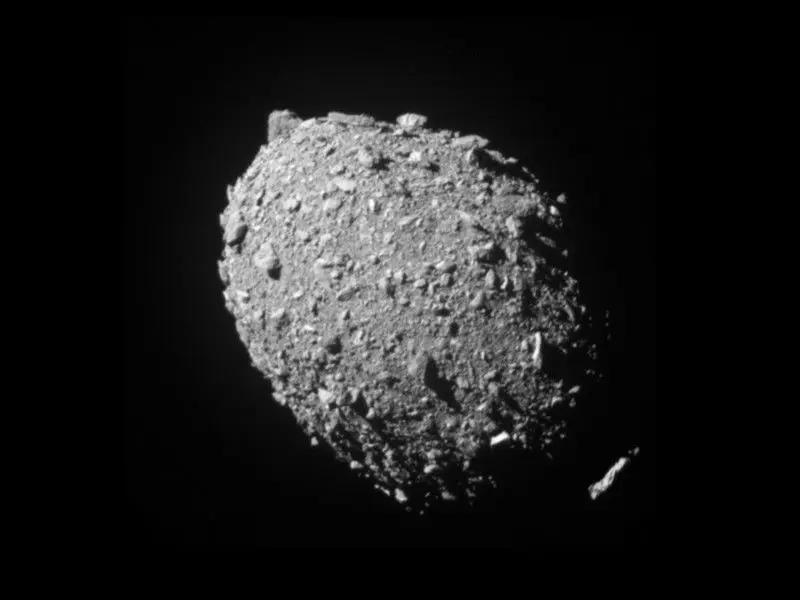
Anyway, taking to Twitter, Andrews posted a lengthy, yet insightful, thread where he referred to the Double Asteroid Redirection Test (DART), which was the first-ever mission dedicated to investigating and demonstrating one method of asteroid deflection by changing an asteroid’s motion in space through kinetic impact.
It was launched in November 2021 and impacted its targets, the asteroid Didymos and its moonlet Dimorphos, in September 2022.
Andrews spoke about how successful the mission was and that it is possible to deflect asteroids although he warned 'it doesn't mean we can use kinetic impactors like it to deflect any asteroid whenever we want'.
Andrews said: "Nobody wants to accidentally 'disrupt' an asteroid, because those components can still head for Earth. As I often say, it's like turning a cannonball into a shotgun spray.
"But we aren't going to see it again until another Earth flyby in 2028. So much could go wrong if we try and hit it with something like DART.
"It may be smaller, or larger. If it's too big, we may not be able to deflect it with one spacecraft. We'd need several to hit it perfectly, all without catastrophically breaking it."
He continued: "And with only a few years down the line, we could accidentally deflect it—but not enough to make it avoid the planet. Then, it still hits Earth, just somewhere else that wasn't going to be hit.
"Maybe 2024 YR4's odd will rise, and we will successfully deflect it in 2028 using a monster-sized spacecraft. Or maybe we'll break an awkward taboo and instead opt to use a nuclear warhead to try to deflect it, which would provide a bigger punch to the asteroid than DART."
Andrews added that we might just need to move out of the way of it - meaning let it hit us and evacuate the forecasted impact area.
 Joe Yates