unilad homepage
  • News
    • UK News
    • US News
    • World News
    • Crime
    • Health
    • Money
    • Sport
    • Travel
  • Film and TV
    • Netflix
  • Music
  • Tech
  • Features
  • Celebrity
  • Politics
  • Advertise
  • Terms
  • Privacy & Cookies
  • LADbible Group
  • LADbible
  • SPORTbible
  • GAMINGbible
  • Tyla
  • UNILAD Tech
  • FOODbible
  • License Our Content
  • About Us & Contact
  • Jobs
  • Latest
  • Archive
  • Topics A-Z
  • Authors
Facebook
Instagram
X
Threads
TikTok
YouTube
Submit Your Content
Asteroid worth $10,000,000,000,000,000,000 that NASA is capturing was discovered 172 years ago

Home> Technology> NASA

Published 12:56 21 Jun 2024 GMT+1

Asteroid worth $10,000,000,000,000,000,000 that NASA is capturing was discovered 172 years ago

It was discovered two centuries ago, and while the price is staggering - so too are the facts!

Joe Yates

Joe Yates

google discoverFollow us on Google Discover
Featured Image Credit: Getty Stock Images/CHANDAN KHANNA/AFP via Getty Images

Topics: Space, NASA, Science, Technology

Joe Yates
Joe Yates

Joe is a journalist for UNILAD, who particularly enjoys writing about crime. He has worked in journalism for five years, and has covered everything from murder trials to celeb news.

X

@JMYjourno

Advert

Advert

Advert

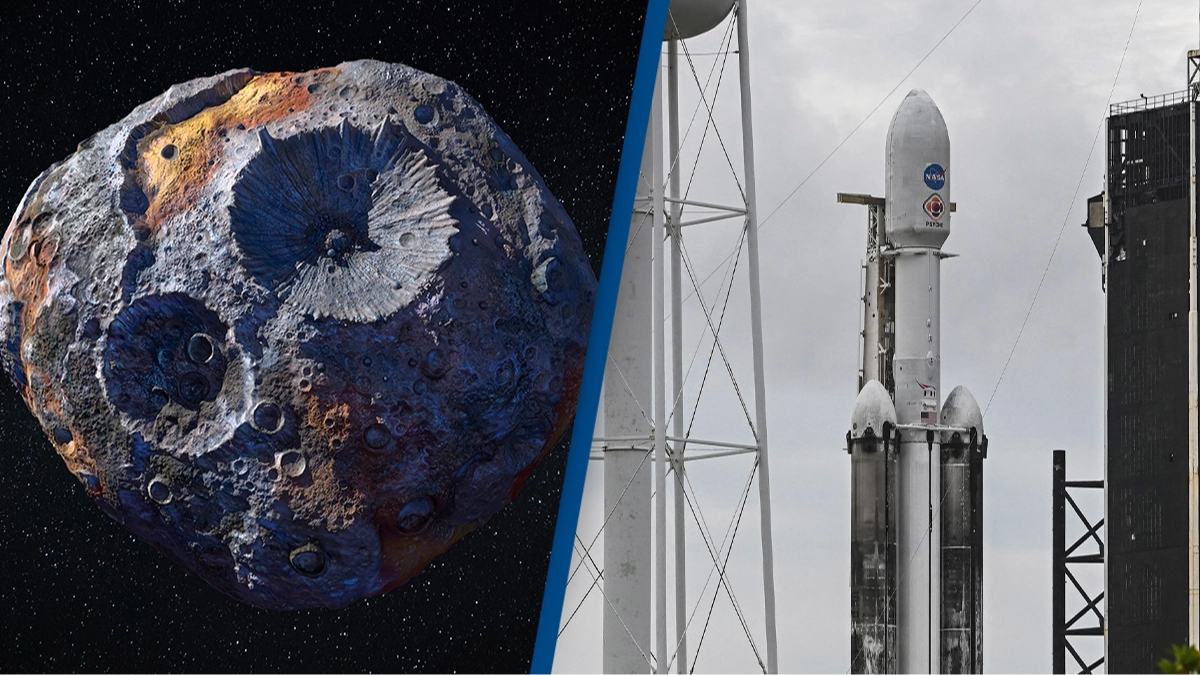
There's an asteroid out there more expensive than everything Elon Musk, Jeff Bezos, and Donald Trump own put together, and it's been floating around in space for centuries.

While the asteroid costs a whopping $10,000,000,000,000,000,000 ($10 quintillion) - the most costly thing to ever exist - what is really baffling is that it was discovered 172 years ago.

The journey to capture the asteroid

Last year, space agency NASA announced that it was going to set off for the asteroid named 16 Psyche, which is likely a mixture of rock and metal, with metal making up between 30 percent to 60 percent of its volume.

It's thought to contain precious metals including gold, iron and nickel, which are worth an eye-watering amount.

Advert
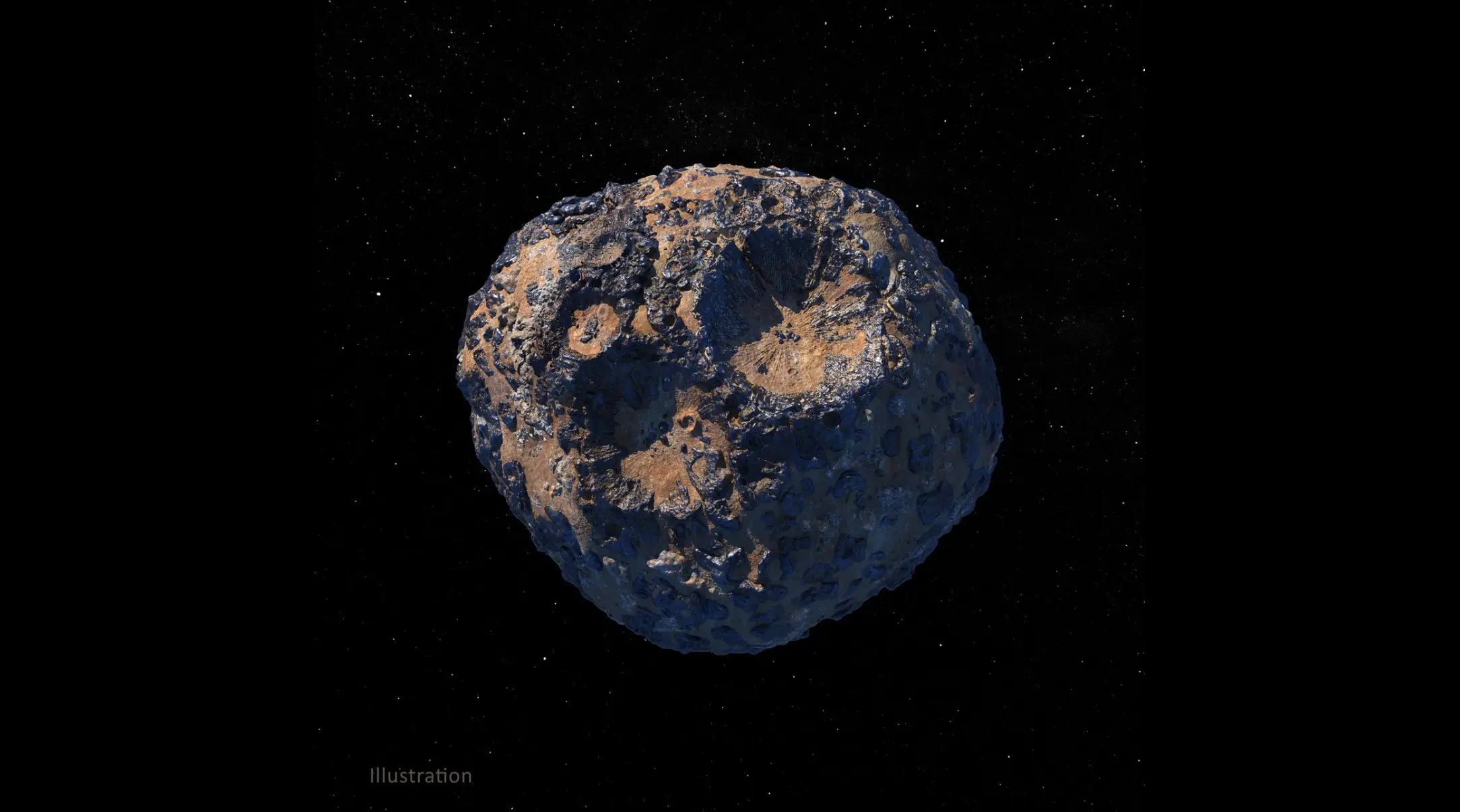
An illustration of 16 Psyche. (Jet Propulsion Laboratory California Institute of Technology)

In a statement released in July, Nasa said: "Teams of engineers and technicians are working almost around the clock to ensure the orbiter is ready to journey 2.5 billion miles to a metal-rich asteroid that may tell us more about planetary cores and how planets form."

And the journey has begun; the spacecraft was launched from NASA's Kennedy Space Center in Cape Canaveral, Florida on 13 October, 2023.

When will the spacecraft reach 16 Psyche?

The vessel is expected to fly by Mars in May 2026, using the planet’s gravity as a slingshot to increase velocity, and if all goes as planned, in July 2029 the asteroid Psyche’s gravity will capture the spacecraft after a journey of about 2.2 billion miles (3.6 billion kilometers).

The spacecraft will then conduct its prime mission, gathering science data while orbiting the asteroid from August 2029 to November 2031.

But NASA has revealed that it was in the year 1852 that an Italian astronomer Annibale de Gasparis actually discovered the asteroid.
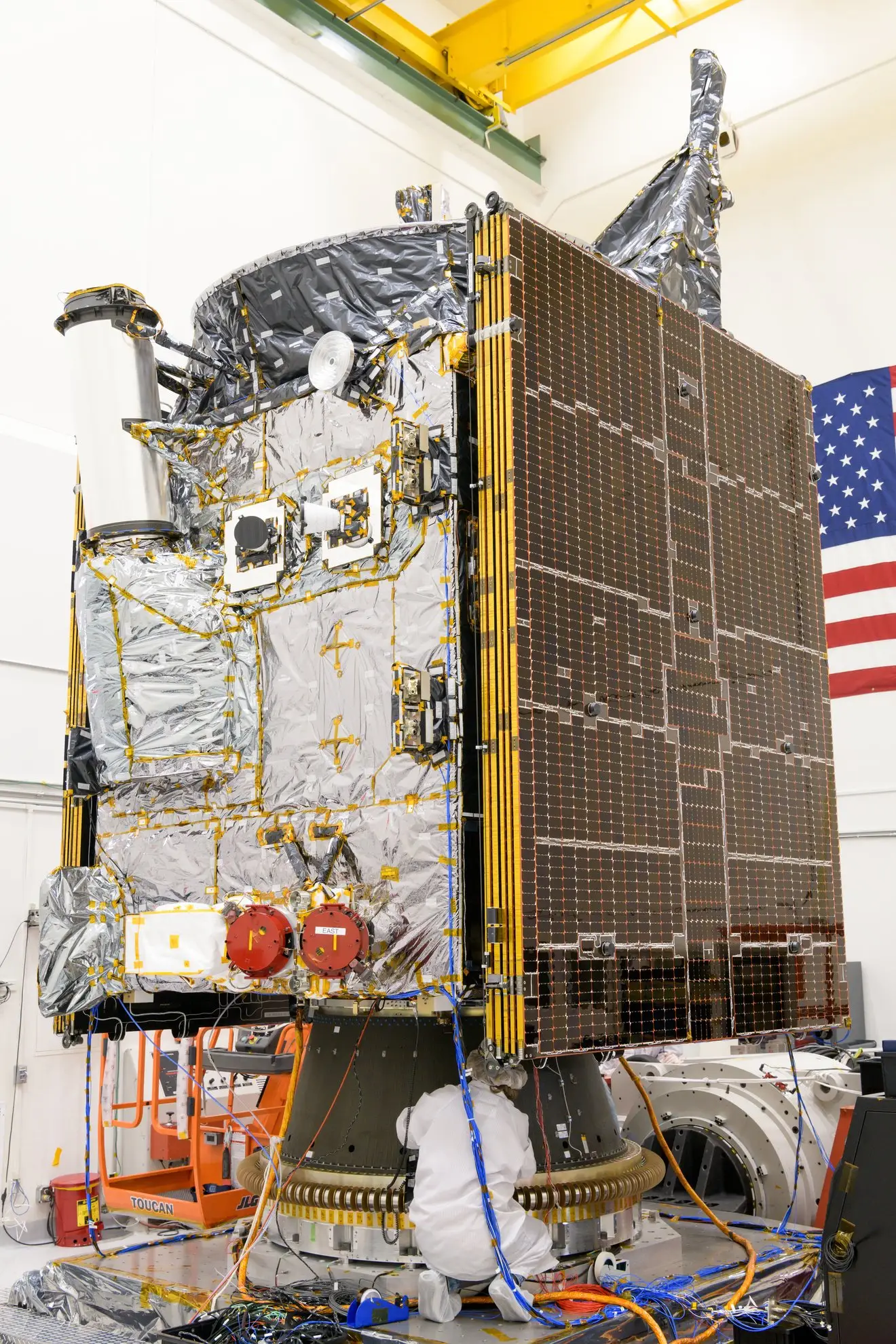
The full flight system, including the spacecraft’s two five-panel solar arrays, is about the size of a singles tennis court. (NASA/JPL-Caltech)

The asteroid's origins

The name 16 Psyche references the fact it was the 16th asteroid to be discovered, as well as Pysche, the goddess of the soul in ancient Greek mythology, often depicted as a butterfly-winged female figure.

The space organization listed some cool facts about it - one of those being that it orbits the Sun in the outer part of the main asteroid belt between Mars and Jupiter, and it is approximately three times farther from the Sun than Earth is.

NASA has invested approximately $1.2 billion to develop, launch, and operate the Psyche mission.

This includes about $131 million in launch services for Psyche and the Deep Space Optical Communications (DSOC) technology demonstration - the cost for developing and operating DSOC is about $206 million.

It's an awful lot of money being splashed on a rock, but just how valuable could the discovery be to mankind?

Choose your content:

18 hours ago
23 hours ago
2 days ago
3 days ago
  • Anna Barclay/Getty Images
    18 hours ago

    iPhone users warned to change specific setting when using public chargers

    Using public chargers can be risky

    Technology
  • Raquel Natalicchio/Houston Chronicle via Getty Images
    23 hours ago

    Artemis II astronauts share powerful realization they had when returning to Earth

    Reid Wiseman, Victor Glover, Christina Koch, and Jeremy Hansen made history this month

    Technology
  • Getty Stock
    2 days ago

    How to get money from $135 million Android settlement as millions of users could be eligible

    Android users all over the country could be owed money after Google's settlement

    Technology
  • Getty Stock Photo
    3 days ago

    ChatGPT's unsettling answer when I asked what's the scariest thing about AI

    The chat bot listed six concerns when it comes to the future of AI

    Technology
  • Asteroid worth $10,000,000,000,000,000,000 that NASA is capturing was discovered nearly 200 years ago
  • Artemis II astronauts prepare for most dangerous phase of mission yet as NASA warns there is 'no plan B'
  • Reason why NASA video has sparked conspiracy theory that Artemis II mission is being faked with green screens
  • NASA Artemis II astronaut realized what he was really afraid of when doing his spacewalk