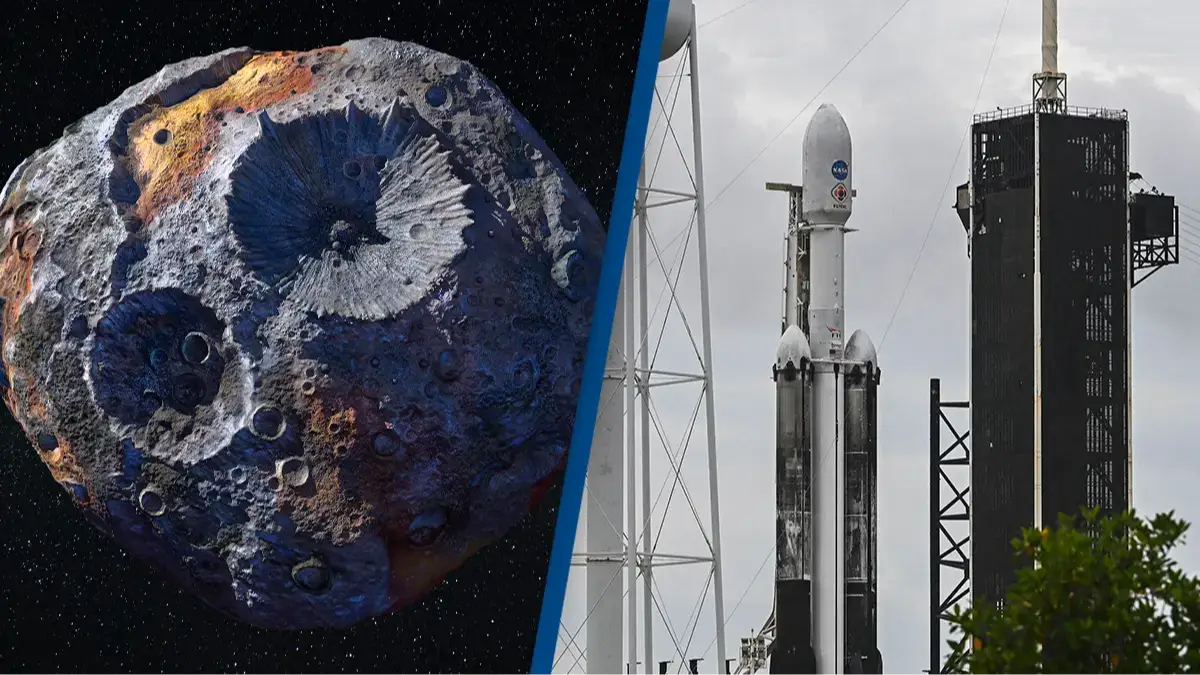
Asteroid worth $10,000,000,000,000,000,000 that NASA is capturing was discovered nearly 200 years ago

Move out Elon Musk, your net worth is nothing compared to the value of this asteroid.
If there was an asteroid worth a staggering $10,000,000,000,000,000,000 ($10 quintillion) you'd think someone would've known about it?
And apparently they did 172 years ago, but not much has been done about it since - until last year that is.
The asteroid
The asteroid has been dubbed 'Asteroid Psyche' and is described by NASA as 'a unique, metal rich world'.
Advert
NASA's website continues: "One of the most intriguing objects in the main asteroid belt, Psyche is a giant metal rich asteroid, about three times farther away from the Sun than is Earth.
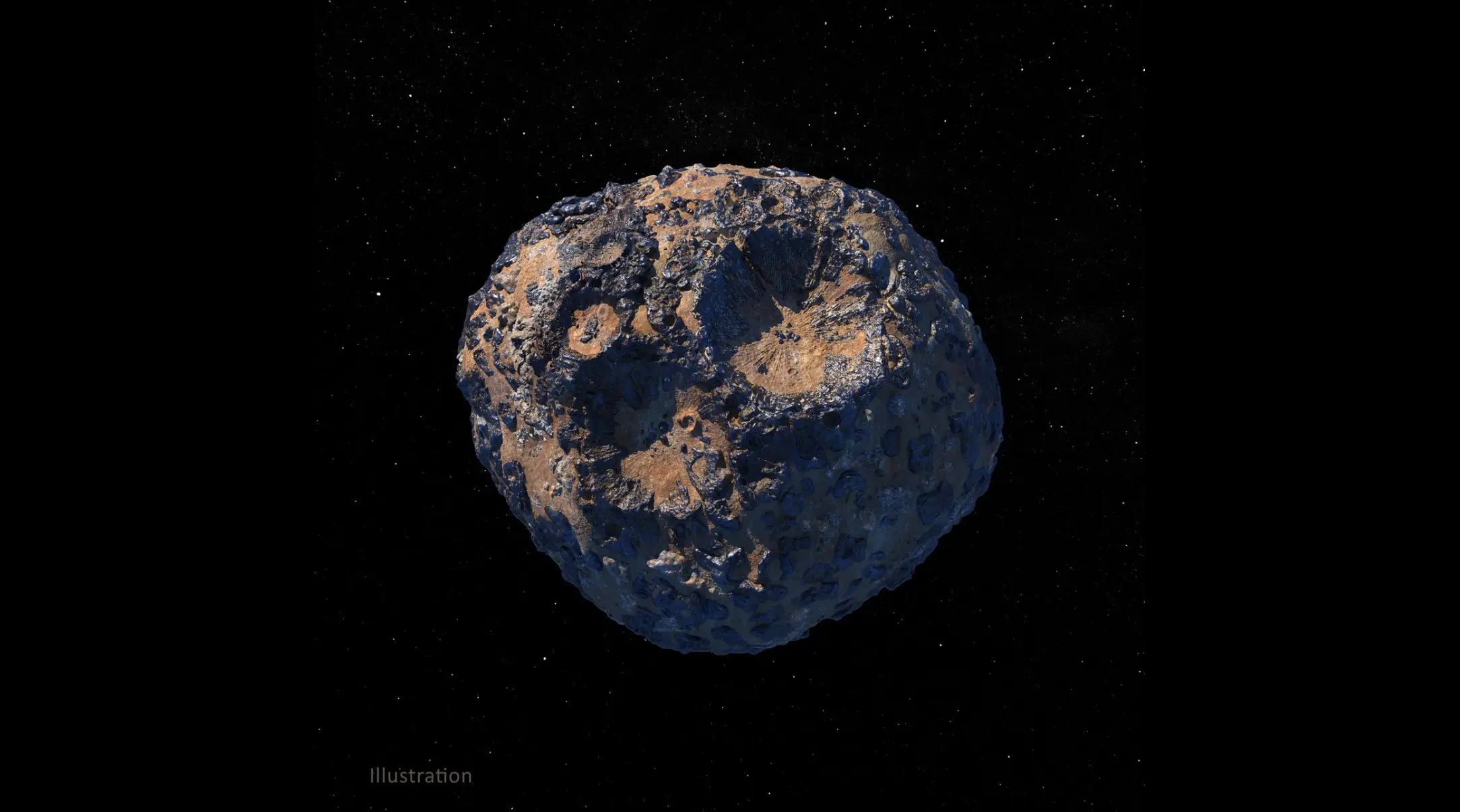
"Psyche has an irregular, potato-like shape. If it were sliced in half horizontally at the equator - picture a squished oval - it would measure 173 miles (280 kilometers) across at its widest point and 144 miles (232 kilometers) long. Its surface area is 64,000 square miles (165,800 square kilometers)."
Analysis indicates the asteroid is made of 'a mixture of rock and metal, with metal composing 30 percent to 60 percent of its volume' - metals worth an eye-watering amount.
And last year, NASA announced it was going to set off for the asteroid.
The journey to the asteroid
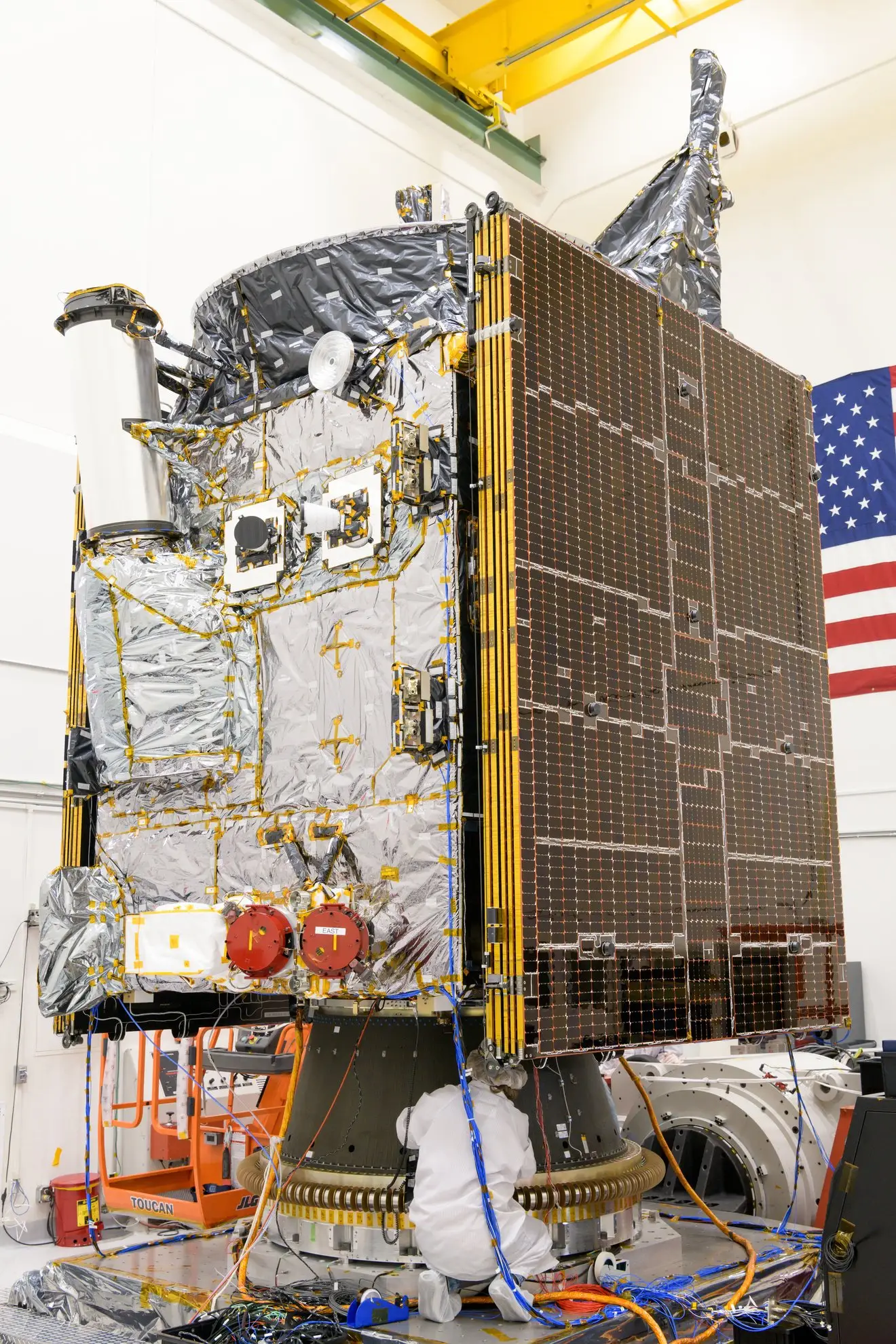
In a statement released in July, Nasa said: "Teams of engineers and technicians are working almost around the clock to ensure the orbiter is ready to journey 2.5 billion miles to a metal-rich asteroid that may tell us more about planetary cores and how planets form."
And the journey has begun; the spacecraft was launched from NASA's Kennedy Space Center in Cape Canaveral, Florida on 13 October, 2023.
When will the spacecraft reach 16 Psyche?
The vessel is expected to fly by Mars in May 2026, using the planet’s gravity as a slingshot to increase velocity, and if all goes as planned, in July 2029, the asteroid Psyche’s gravity will capture the spacecraft after a journey of about 2.2 billion miles (3.6 billion kilometers).
The spacecraft will then conduct its prime mission, gathering science data while orbiting the asteroid from August 2029 to November 2031.
But NASA has revealed that it was in the year 1852 that an Italian astronomer Annibale de Gasparis actually discovered the asteroid.
The asteroid's origins
The name 16 Psyche references the fact it was the 16th asteroid to be discovered, as well as Pysche, the goddess of the soul in ancient Greek mythology, often depicted as a butterfly-winged female figure.
The space organization listed some cool facts about it - one of those being that it orbits the Sun in the outer part of the main asteroid belt between Mars and Jupiter, and it is approximately three times farther from the Sun than Earth is.
NASA has invested approximately $1.2 billion to develop, launch, and operate the Psyche mission.
This includes about $131 million in launch services for Psyche and the Deep Space Optical Communications (DSOC) technology demonstration - the cost for developing and operating DSOC is about $206 million.
It's an awful lot of money being splashed on a rock, but just how valuable could the discovery be to mankind?
 Joe Yates