unilad homepage
unilad homepage
    • News
      • UK News
      • US News
      • World News
      • Crime
      • Health
      • Money
      • Sport
      • Travel
    • Music
    • Technology
    • Film and TV
      • News
      • DC Comics
      • Disney
      • Marvel
      • Netflix
    • Celebrity
    • Politics
    • Advertise
    • Terms
    • Privacy & Cookies
    • LADbible Group
    • LADbible
    • SPORTbible
    • GAMINGbible
    • Tyla
    • UNILAD Tech
    • FOODbible
    • License Our Content
    • About Us & Contact
    • Jobs
    • Latest
    • Archive
    • Topics A-Z
    • Authors
    Facebook
    Instagram
    X
    Threads
    TikTok
    YouTube
    Submit Your Content
    World’s 'most dangerous' plant can cause pain that lasts for months with a single touch

    Home> News> World News

    Published 12:03 17 Sep 2024 GMT+1

    World’s 'most dangerous' plant can cause pain that lasts for months with a single touch

    The plant has been described as 'torture' but there's an important reason it shouldn't be eradicated anytime soon

    Poppy Bilderbeck

    Poppy Bilderbeck

    google discoverFollow us on Google Discover

    People are flooding to social media in horror over a 'torture' plant which can cause pain which lasts 'months' from just a single touch.

    As if there wasn't enough to worry about in the world already - taxes, pandemics and sharks - how about adding a painful plant to the list?

    Be warned if you're ever in Australia and go for a wilderness wee to not grab a leaf of this to wipe your behind.
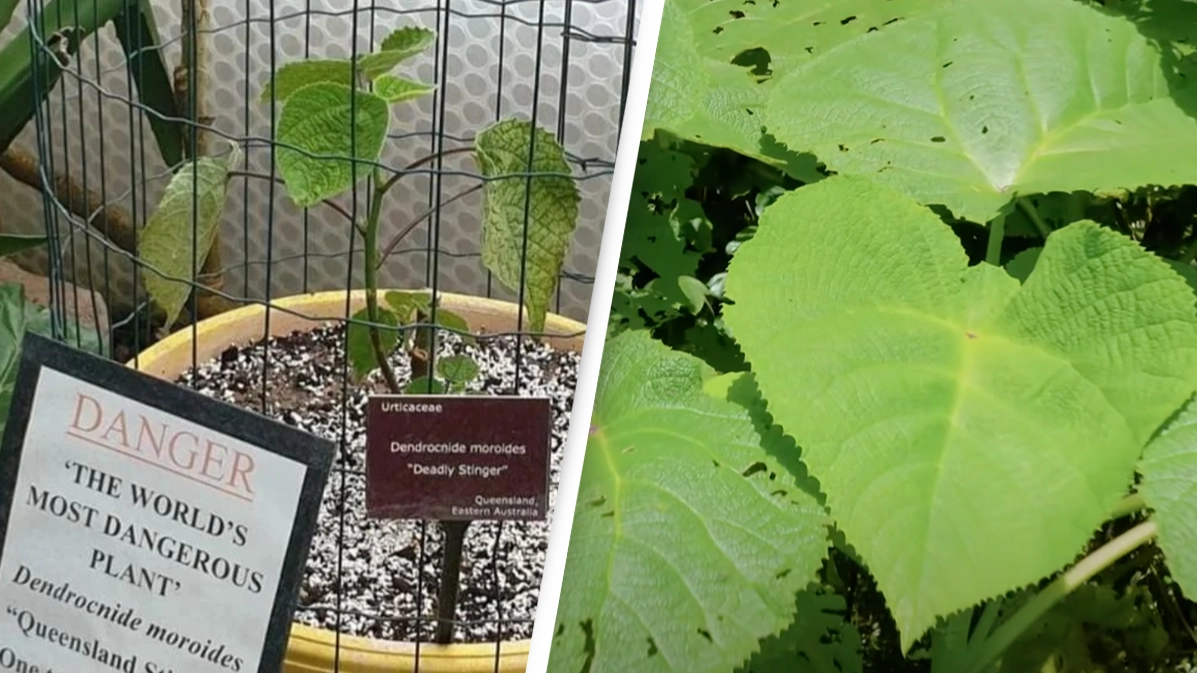
    The world's 'most dangerous' plant (The University of Queensland)
    The world's 'most dangerous' plant (The University of Queensland)

    What is the world’s 'most dangerous' plant?

    An image of 'the world's most dangerous plant' has been circulating on social media, showing a pot containing a Dendrocnide moroides, AKA a 'Deadly Stinger'.

    Advert

    The plant is native to Queensland, Eastern Australia and in the photograph, it can be seen with a wire cage built around the pot.

    The 'DANGER' sign reads: "One touch can induce nine months of intense re-occurring throbbing pain!"

    But how?
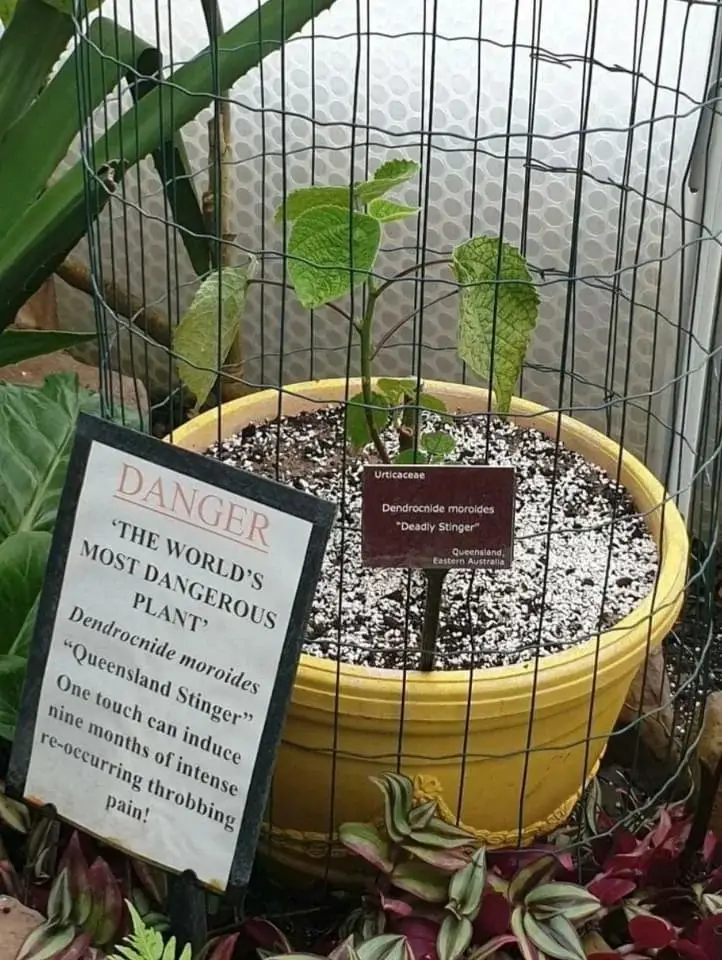
    The plant is known as the 'Queensland Stinger' (Twitter)
    The plant is known as the 'Queensland Stinger' (Twitter)

    Why it's so painful

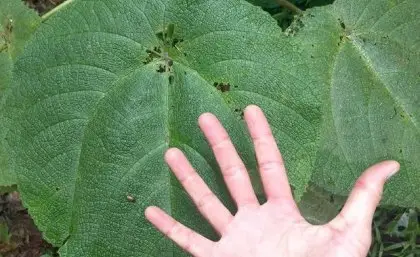
    The State Library of Queensland explains 'every part' of the plant is covered in 'silica hairs' and these hairs 'act like hypodermic needles'.

    Should you accidentally touch part of the plant, well you'd be in for a very nasty shock.

    Queensland researcher Professor Irina Vetter told ABC: "When you brush past them, the needles act like a hypodermic syringe, penetrating your skin to inject what we now really consider a venom

    "The minimum time that it can hurt for is around six to eight hours, but the really intriguing thing is you can trigger this pain for days, weeks and in some cases even months after being exposed."

    And some people have even found that out for themselves.
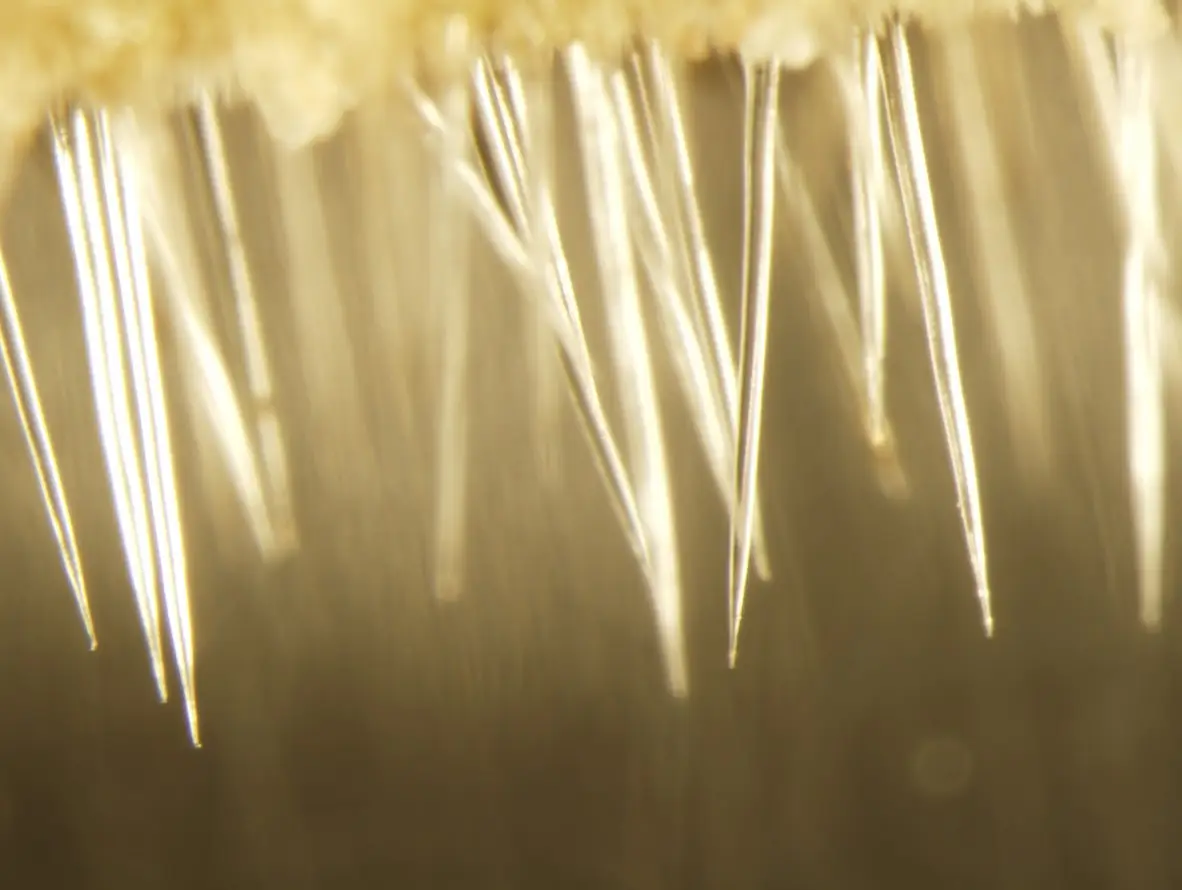
    The plant is covered in hairs which are like 'needles' (University of Queensland)
    The plant is covered in hairs which are like 'needles' (University of Queensland)

    Far North Queensland trekking guide, Wayne Fitcher, ended up coming into contact with the plant when he tried to remove the plant after it stung a schoolchild he was touring through the rainforest.

    He explained: "It was bordering on agony and that agony, in various degrees, lasted four or five months before it went away."

    One Twitter user shared the image of the dangerous plant and questioned: "To whom would you gift such a plant?"

    And it hasn't taken long for people to weigh in. One user wrote: "There is no one in my knowing that I would subject to that torture."

    Another added: "That woke up my inner daredevil. The curiosity would consume me."

    A third commented: "Wow, that just needs to be eradicated!"

    However, the plant actually may end up serving an important purpose, with the Professor Vetter revealing the 'sting' of the plant could 'teach us a lot about how pain works in general'.

    She resolved, as per a release on The University of Queensland's site: "The persistent pain the stinging tree toxins cause gives us hope that we can convert these compounds into new painkillers or anaesthetics which have long-lasting effects."

    Featured Image Credit: Twitter/@tradingMaxiSL/Youtube/Brave Wildnerness

    Topics: Australia, Health, Nature

    Poppy Bilderbeck
    Poppy Bilderbeck

    Poppy Bilderbeck is a freelance journalist with words in Daily Express, Cosmopolitan UK, LADbible, UNILAD and Tyla. She is a former Senior Journalist at LADbible Group. She graduated from The University of Manchester in 2021 with a First in English Literature and Drama, where alongside her studies she was Editor-in-Chief of The Tab Manchester. Poppy is most comfortable when chatting about all things mental health, is proving a drama degree is far from useless by watching and reviewing as many TV shows and films as possible.

    Advert

    Advert

    Advert

    Choose your content:

    an hour ago
    2 hours ago
    • Graeme Sloan/Getty Images
      an hour ago

      Pete Hegseth addresses rumors Iran has 'kamikaze dolphins’ as secret weapon

      Hegseth also announced 'Project Freedom' in a bid to bring down skyrocketing gas prices

      News
    • CHARLY TRIBALLEAU / AFP via Getty Images
      an hour ago

      TSA will let under 30s cut airport queues until 2031 for less as long as you act before May deadline

      It's a great time to travel as the government shutdown has just come to an close

      News
    • Getty Stock
      2 hours ago

      Chicago O'Hare International Airport is paying pilots $100,000 a year to not fly planes

      The job has come about due to an agreement between two popular airlines

      News
    • Rudy Carezzevoli/Getty Images
      2 hours ago

      Woman who worked as Mickey Mouse at Disney details week-long training she went through for the role

      Elaina had to undergo an intensive history of Disney but there was extra training for staff who were 'mouse height'...

      News
    • Expert explains symptoms behind issue that can cause stinging semen
    • Doctor makes controversial claim on the 'most dangerous fruit you can eat' that millions enjoy
    • Five of the world’s most forbidden places that you are not allowed to visit
    • Doctor reveals exact amount of oral sex that can raise your risk of throat cancer as it becomes leading cause