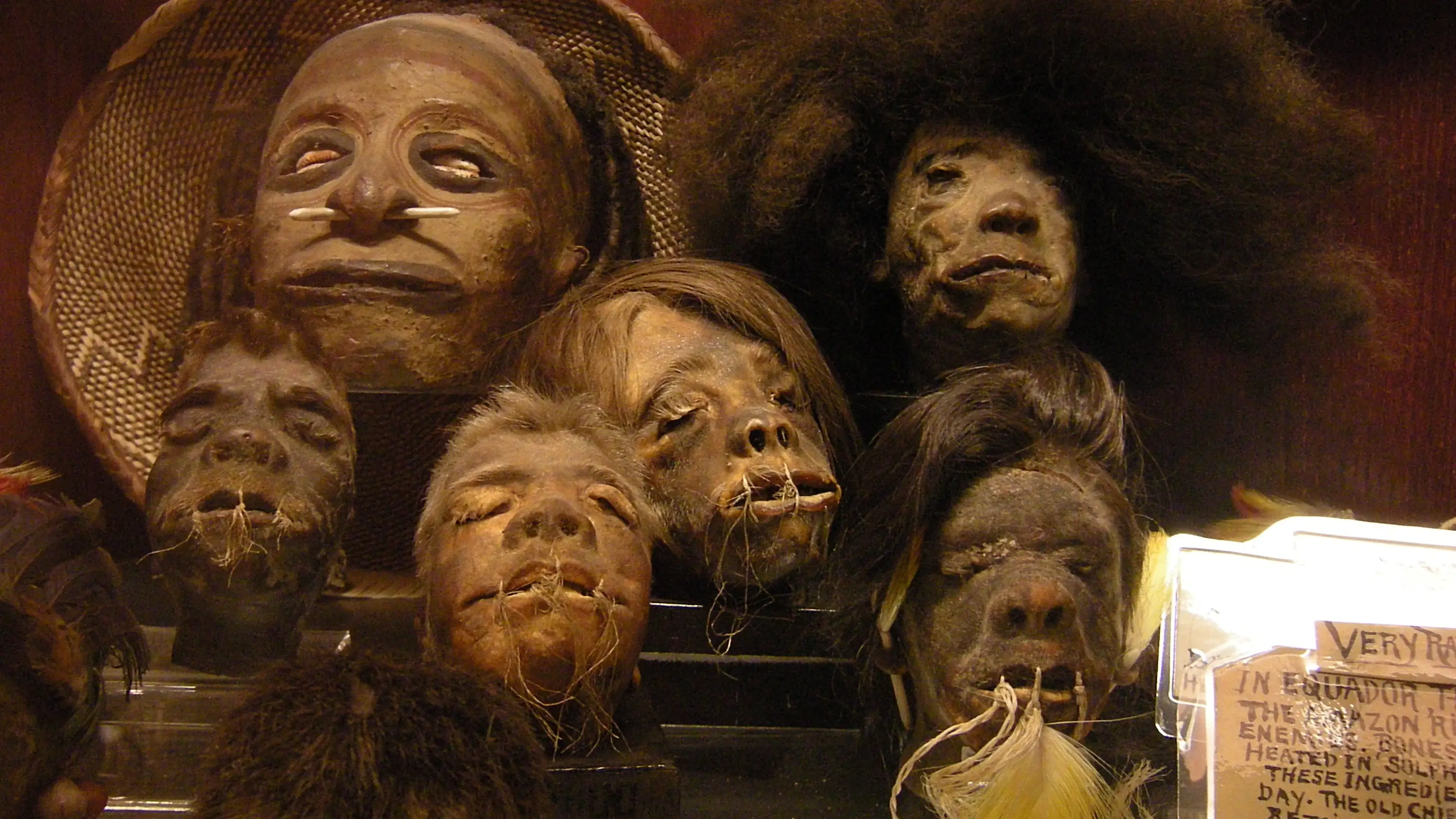
Indigenous tribe members are being paid to kill people and shrink their heads

A man who left the US to build a life with an Amazonian tribeswoman has revealed the scary stories passed down to him by his wife's grandmother, describing how the practice of making shrunken heads, once a sacred warrior tradition, has allegedly been corrupted into something far darker.
Justin, who is half Amazonian and now lives among the Shuar people in the Ecuadorian Amazon, spoke to UNILAD about how his wife Maria's grandmother described how the ritual, known as 'tsantsa', including what she believes has changed about it in recent years.
"Our ancestors, our grandparents, used to kill people," she told him on one of his YouTube videos documenting life with the Shuar tribe.
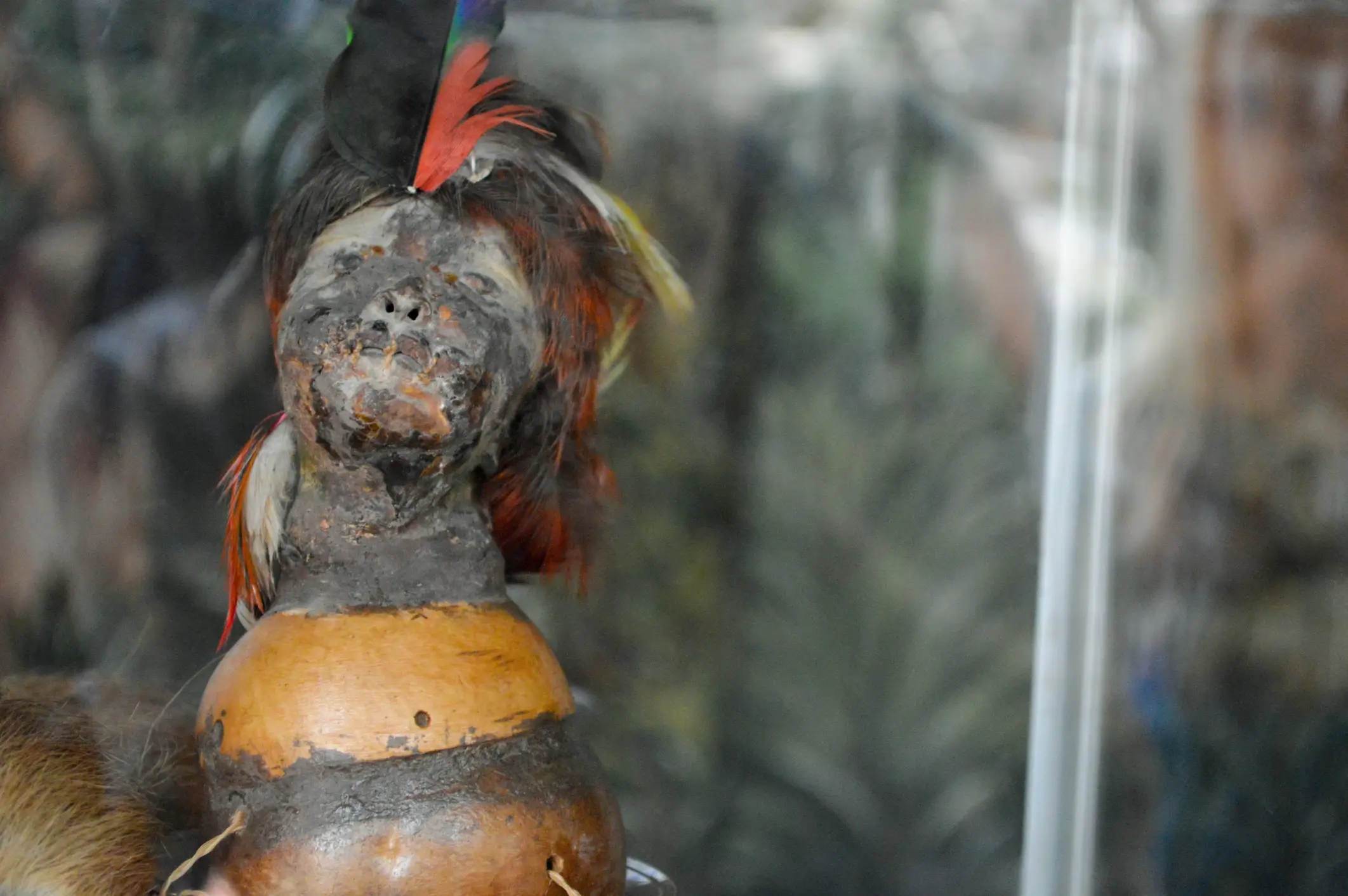
"They cut off the head, peeled it along with all its hair, and then cooked it. And then they did a festival with them, put something through their nose, and hung them like a flag. It was a ceremony, that's how my grandma explained it to me, but I never really knew.
Advert
"I never saw it. It was before my time."
According to the grandmother, the practice was traditionally reserved for enemies killed in battle, but she claimed the custom has since been distorted by outsiders paying for the ritual to be carried out on members of the same community for money.
'It's easy money'
Justin's wife's grandmother described how the meaning behind the ritual has been lost in recent years, claiming: "Now they say the gringos order people to be killed so that they can do the tsantsa, our own people," she said. "Some in the tribe don't work, so it's easy money for them.
"They go to kill their own people, their own family, to get their heads. It wasn't like that before."
She was clear that this modern version bears little resemblance to the tradition she grew up hearing about.
"My grandparents did it only to their enemies, to make the shrunken head, then celebrate. Now people do it for money, like a business for the lazy people. We don't approve of that," she said.
Justin, who has documented Shuar life extensively on social media since moving to the Amazon, said the stories reflect just how much tension exists within the community between preserving genuine tradition and the pressures of outside interest, technology and money.
How are shrunken heads made?
Tsantsas were historically made from the heads of warriors killed in combat, and in some cases from monkeys or sloths, though a number held in Western museum collections have since been identified as forgeries.
Academic research from Western University describes the process as removing the skin of the head from the base of the neck, sewing the eyes and mouth shut, then boiling it until it shrank to roughly the size of a fist. Hot stones were then used to reshape the features, with the skin darkened before the finished tsantsa was used in ceremony.
The Shuar and neighboring Achuar people consider tsantsas sacred.
Traditional belief is that the ritual was used trap the avenging spirit, or 'muisak' of the killed warrior, transferring its power to the women of the tribe to help ensure plentiful harvests.
Once that spiritual power had been passed on, the head itself was considered to have no further purpose and was discarded.
Because of this, a proper ceremonial tsantsa was traditionally always taken from a male warrior, since women and children were not believed to hold the same spiritual power sought in the ritual.
Topics: World News, Travel
 Thomas Bamford