Diver appears to accidentally discover ‘lost’ US nuclear weapon linked to chilling Cold War incident

A diver has reportedly found a 'lost' US nuclear weapon which was involved in a terrifying Cold War incident.
If there's anything which it's extremely important to know where it is at all times, and to not lose, then a nuclear weapon is definitely such an item.
But on February 13 1950 a US air force bomber unfortunately ended up doing just that.
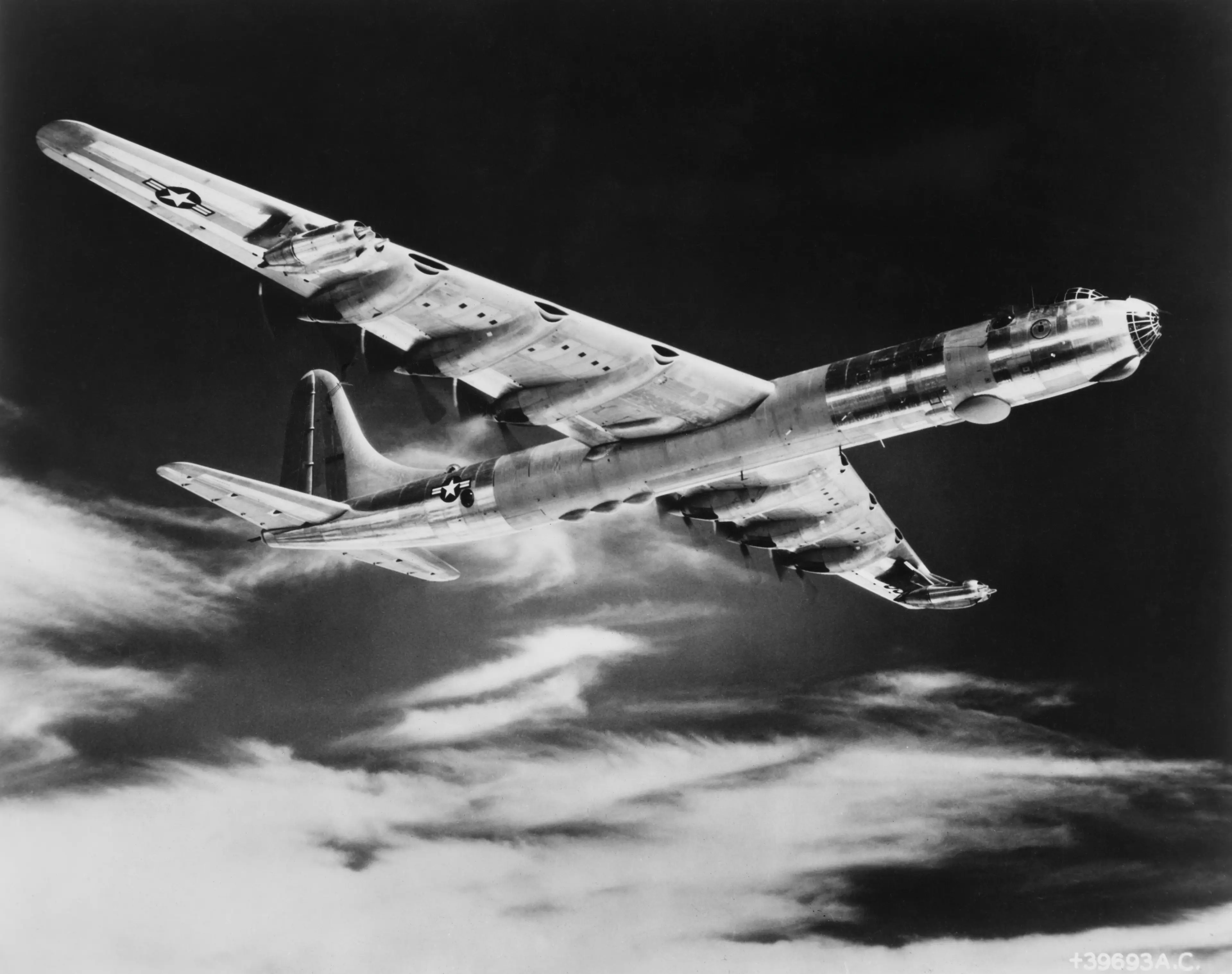
This was a Convair B-36B, a large strategic bomber that the US Air Force used at the time to carry nuclear payloads, before the advent of inter-continental ballistic missiles.
Advert
The bomber had been flying between Texas and Alaska simulating a nuclear strike when its wings iced up and at least one of the six engines caught fire.
During the fire, the plane's 17-strong crew decided to evacuated, but first jettisoned a Mark IV nuclear bomb into the sea.
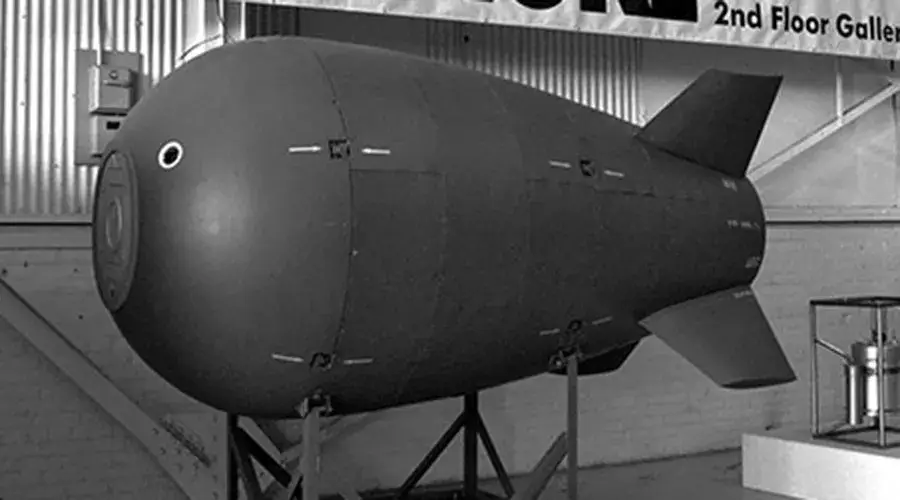
Fortunately, the bomb itself was not 'live', and had been packed with lead, uranium, and TNT to make the training as close as possible, but didn't have the plutonium needed to go off.
Years later, and diver Sean Smyrichinsky happened upon a strange object underwater while diving for sea cucumbers.
He described that the device was around 12-ft long and shaped like a bagel, and initially thought he'd found a UFO.
“I came up telling all my buddies on the boat ‘Hey, I found a UFO. It’s really bizarre.’ And I drew a picture of it, because I didn’t have a camera," said Smyrichinsky.
Describing the object, he said: "It resembled a bagel cut in half, and then around the circle of the bagel these bolts all molded into it, like half spheres. It was the strangest thing I had ever seen."
Speaking to the Vancouver Sun about the strange discovery, he said: "Nobody had ever seen it before or heard of it. Nobody ever dives there. Then some old-timer said: 'Oh, you might have found that bomb'."
In 2016, Canadian Armed Forces said that they would be dispatching a ship to investigate Smyrichinsky's discovery.
Despite reiterating that the device had not been live, they said: "Nonetheless we do want to be sure and we do want to investigate it further. A team specialising in unexploded ordnance will determine what risk, if any, the object poses and whether it should be retrieved from its resting place or left as is."
However, there are also some doubts about whether this is indeed the lost nuke.
Dirk Septer is an aviation historian, who told the BBC's Robin Levinson-King that the US Navy had searched the area for the bomb following the crash, to prevent the USSR from getting hold of it.
Septer claimed that from his research on the search efforts and the original flight, the object that Smyrichinsky found was not in the right place to be the lost bomb.
Topics: News, US News, World News
 Kit Roberts