Chernobyl footage shows what happened when man filmed inside reactor pit

40 years ago, the world witnessed one of the most catastrophic events in human history.
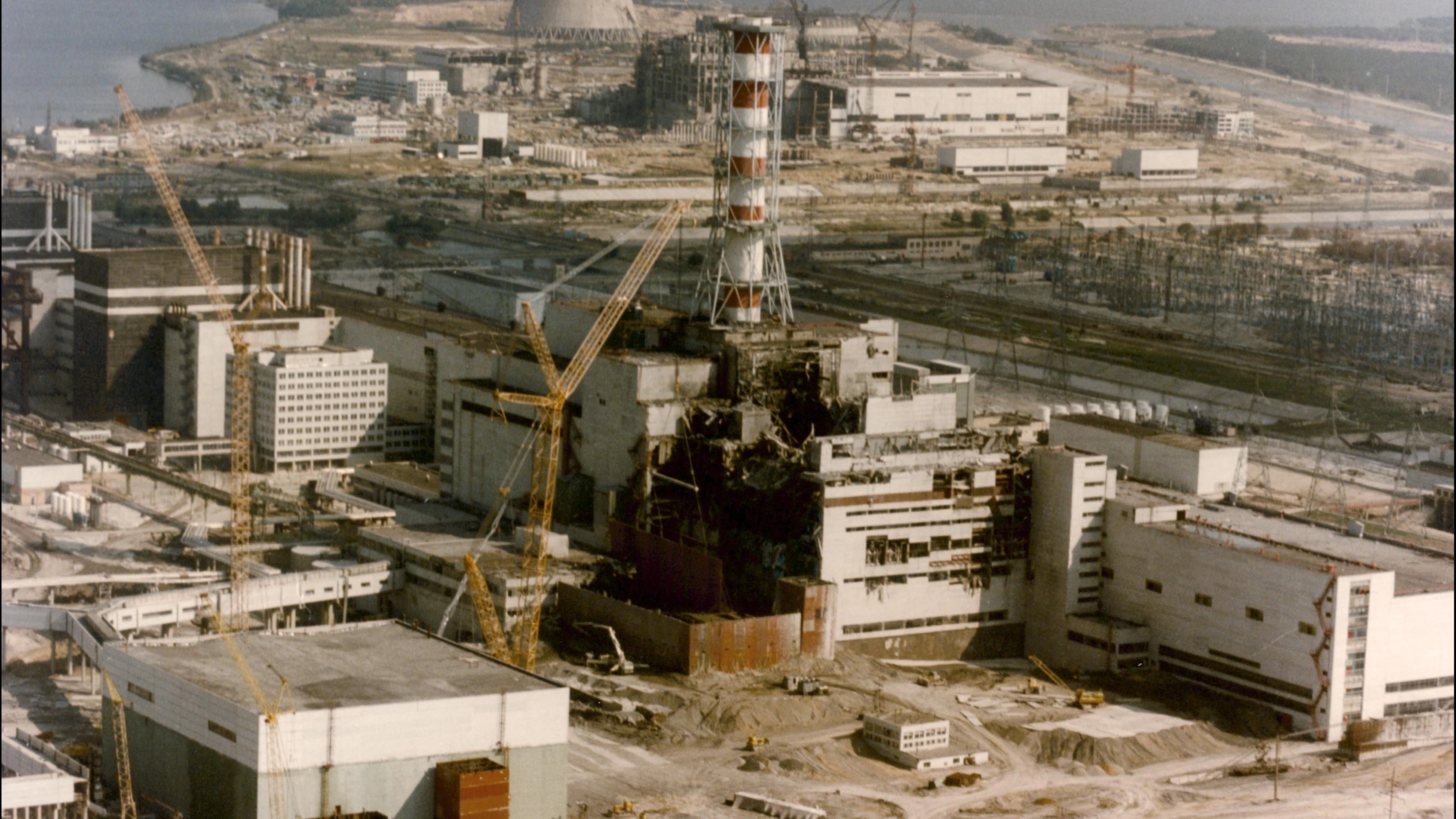
On April 26, 1986, Reactor No. 4 at the Chernobyl Nuclear Power Plant in Ukraine exploded during a botched safety test, sending a radioactive cloud across Europe and sparking global panic.
Around 30 people died in the immediate blast, but thousands more would go on to die from radiation exposure in the years that followed.
For a lot of people, Chernobyl became forgotten over the years. It came back to the forefront of our minds in 2019 when HBO and Sky dropped their five-part miniseries of the same name, created by Craig Mazin.
Advert
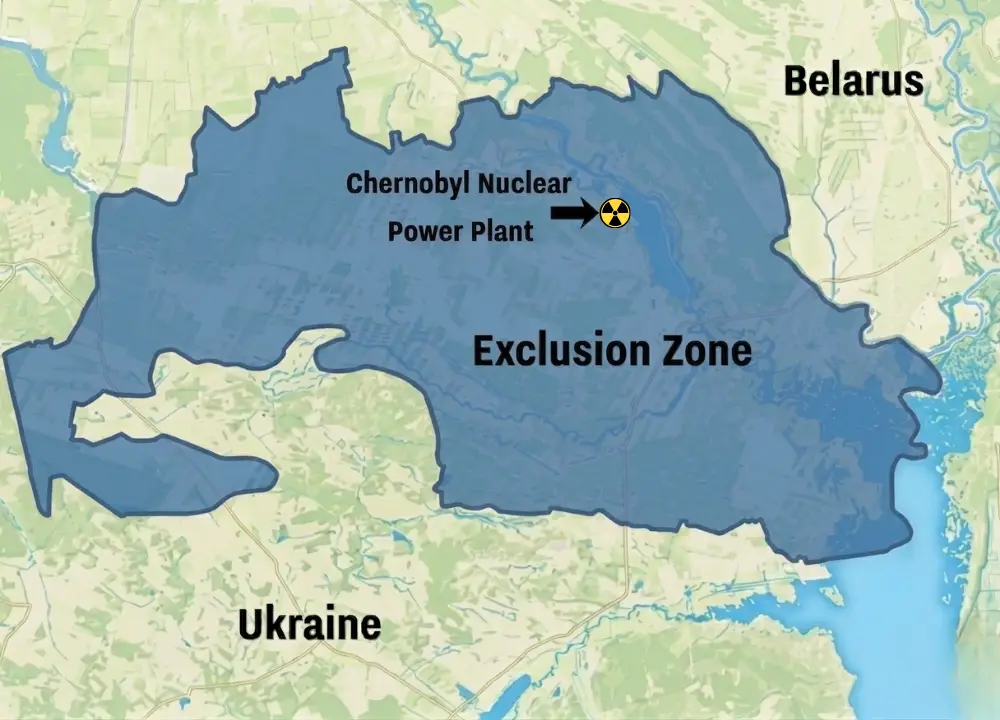
Critics said it turned one of mankind's darkest disasters into one of television's greatest achievements. Audiences agreed and tourism to the Chernobyl Exclusion Zone, already growing before the show, surged. People wanted to see it for themselves.
But one video had been doing the rounds long before the show came along. And it's far more unsettling than any drama.
What's Chernobyl like inside?
Alexander Kupny worked as a health physics technician at Reactor No. 3 back in 1989. In the late 2000s, during a period when unauthorized visits to the site were becoming more frequent, he and his friend Sergei Koshelev decided to go somewhere almost no living person has ever been; inside Reactor No. 4 itself.
Fortunately, they did wear all the protective gear they could get their hands on. And they filmed everything.
The footage looks, at first glance, like someone wandering around a derelict basement. Grimy walls, broken equipment, darkness. Then you notice the static cracking across the screen.
That flickering, crackling interference across the image, which seems so uncanny is not a problem with the camera.
It's radiation, physically interacting with the camera sensor in real time. Every speck of visual noise is invisible death, made briefly visible.
When the footage resurfaced on Reddit, people couldn't look away.
"Every time the camera goes over something dark, the invisible death becomes visible with all the little speckles showing on the camera," one user wrote. "That is the radiation interacting with the sensor."
"Crazy how it affects the camera sensor," said another.
A third put it best: "You basically just see some dirty factory basement, until you realise you're looking at one of the most hazardous places on earth and its invisible death."
Kupny and Koshelev made it out.
Many of the workers who spent months in and around that reactor in 1986 did not.
How the Soviets tried to cover up Chernobyl
The soviets initially sought to keep the explosion completely hushed up - as it would be disastrous for their global image.
They said nothing for over 40 hours, and when they finally made a statement - it was only to say two people had died and they had set up a committee. The reality, of course, was catastrophic.
A radioactive cloud drifted northwest into Belarus before spreading across much of Europe. Radiation was being detected hundreds of miles away within hours.
The plant's chief scientist, Valery Legasov,sp later told international investigators it was all down to human error. Conveniently, this ignored more than 30 known design flaws in the reactor.
He took his own life on the eve of the second anniversary of the disaster, reportedly broken by authorities refusing to act on his safety warnings.
Building Chernobyl's Sarcophagus
With the reactor still burning and radiation levels at lethal levels, Soviet engineers had one job: bury it.
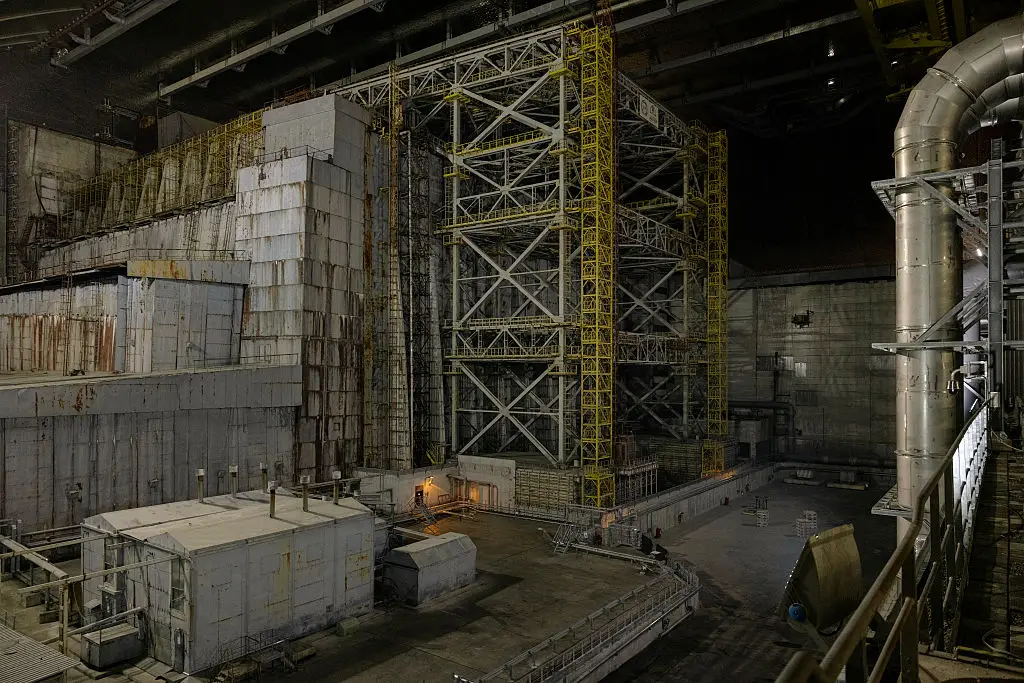
Working at extraordinary speed and extraordinary personal risk, they constructed a steel and concrete shell around the destroyed reactor.
It took 206 days and over 400,000 cubic metres of concrete. They called it the sarcophagus.
It was always meant to be temporary. By 1988, scientists were already warning it would only last 20 to 30 years.
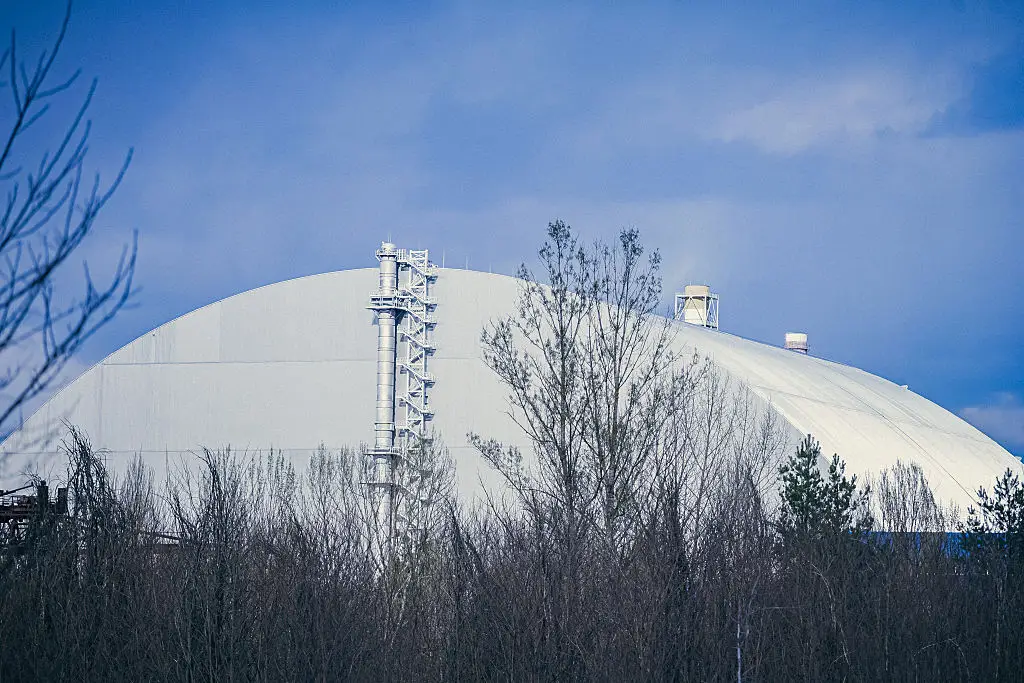
A permanent replacement, the New Safe Confinement, a vast arched structure roughly the size of the Stade de France, was eventually slid over the top of the old sarcophagus in November 2016 at a cost of $1.6 billion. It's designed to last for 100 years.
But right now, it's in trouble. In February 2025, a Russian drone strike punched through both the inner and outer layers of the dome. Greenpeace has warned that the damage hasn't been fully repaired and that a collapse could release four tonnes of highly radioactive dust into the atmosphere.
The most dangerous object on Earth: Chernobyl's 'Elephant's Foot'
When reactor no.4 exploded during a failed steam test at the Chernobyl nuclear power plant, the volume of radiation that was immediately released was unprecedented.
The spread of radiation was devastating, with it going on to be detected as far away as Sweden.
And where reactor no.4 once stood was suddenly a toxic wasteland, resulting in the creation of the most dangerous object on Earth... this is what happened.
How was the 'Elephant's foot' formed?
Uranium fuel inside the reactor's core became molten when it overheated. When the steam blew the reactor apart, heat, steam, and molten nuclear fuel combined to form a 100-ton flow of searing-hot chemicals that poured out of the reactor and through the concrete floor to the basement of the facility, where it eventually solidified.
This would later form into something researchers would dub the 'Elephant's Foot', due to its large, wrinkled appearance.
The deadly structure was discovered by the brave volunteers who ventured into the reactor months after the disaster, with it being found to still be searing hot in temperature and weighing an incredible 2.2 tons.
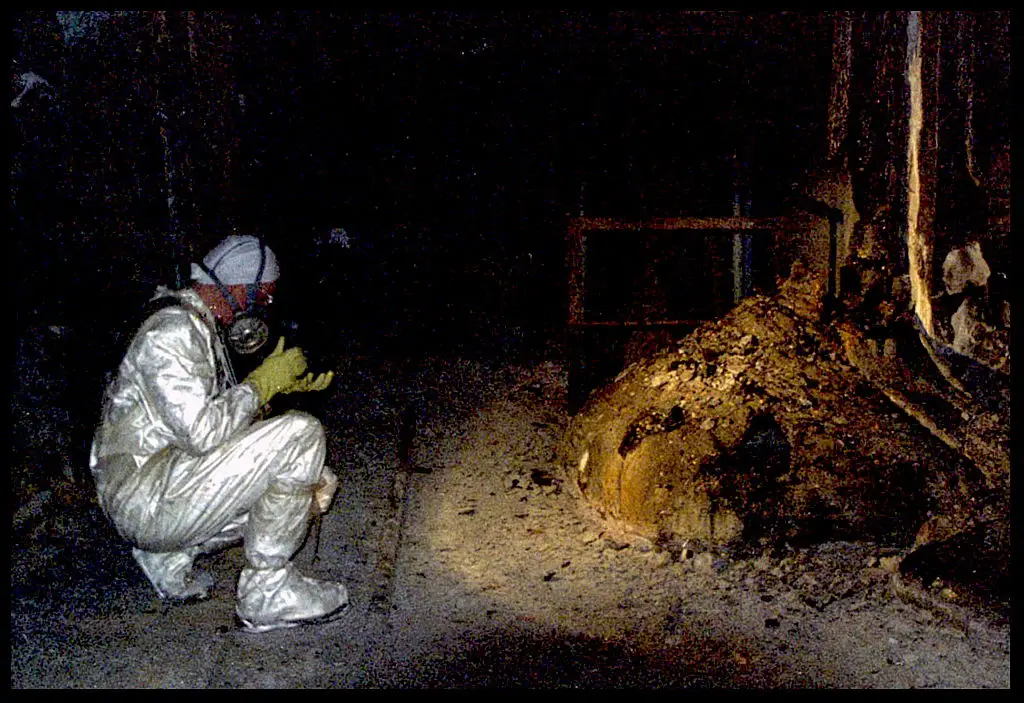
It was that dense that scientists had to use a Kalashnikov assault rifle to chip off pieces for analysis.
It was also measured to be releasing nearly 10,000 roentgens per hour, which is comparable to that of four and a half million chest X-rays in just one hour.
Science magazine Nautilus described how just 30 seconds of exposure to the Elephant's Foot would have your cells haemorrhaging, and after four minutes, vomiting and diarrhoea would follow.
It is also believed that standing for five minutes next to the toxic mass would result in you having only two days left to live.
What is the state of the Elephant's Foot today?
IFLScience reports that as the years went on, it lost some of its potency due to the natural radioactive decay of uranium, thus allowing scientists, clean-up crews, and photographers to eventually - and safely - visit the site.
While it isn't known for sure how much radiation the mass is emitting today, due to it being shielded within the Shelter Object that covers the remains of reactor no.4.
 Thomas Bamford