Two people moving to one of the most remote places on Earth reveal what they're most nervous about

A former Royal Air Force officer and a returning Antarctic postmaster have revealed what they expect to find hardest about spending five months living in one of the most remote places on Earth.
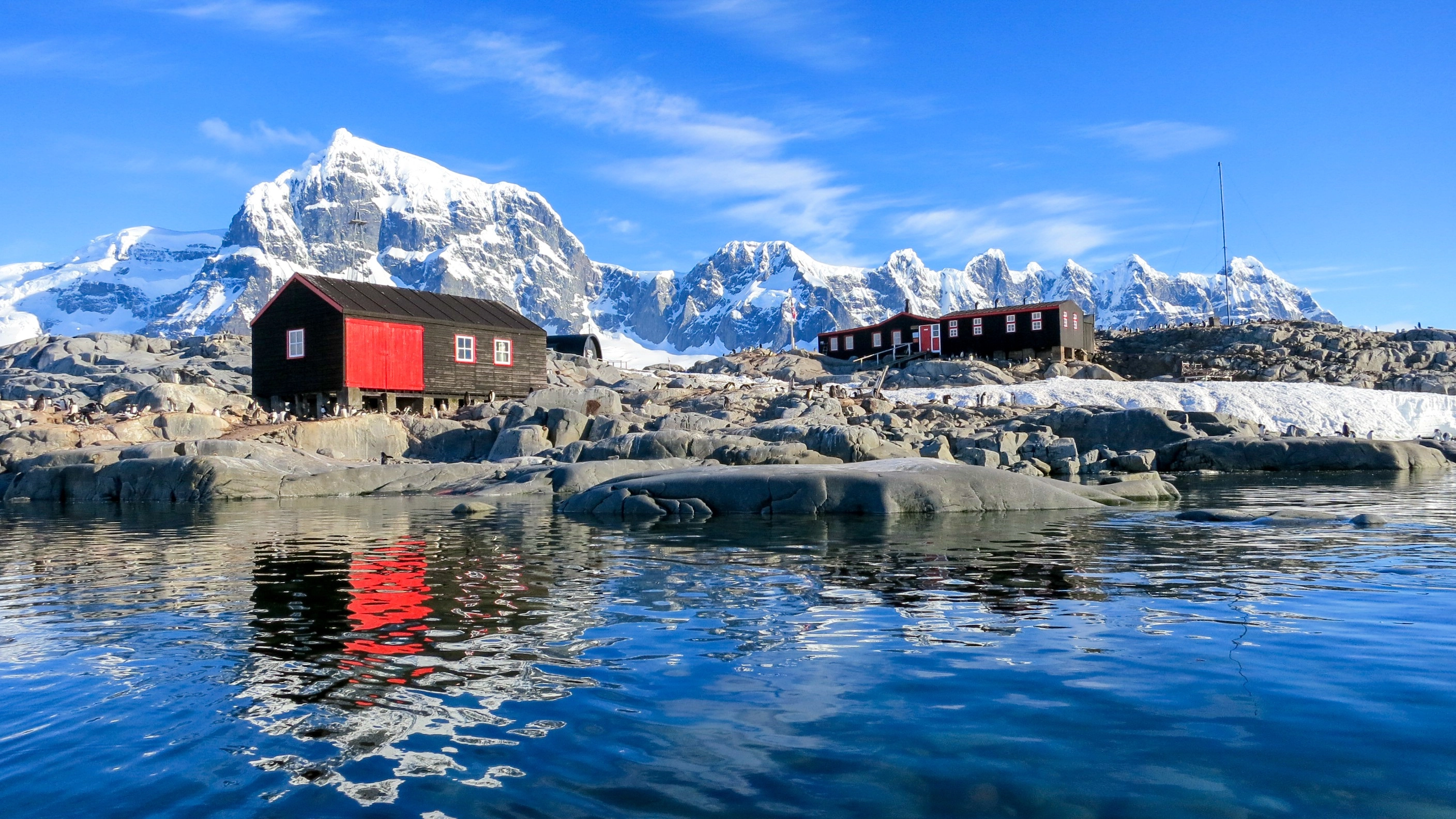
Carole McCullough, who served in the RAF for 18 years, will lead the team at Port Lockroy, a historic British base on the Antarctic Peninsula. She will be joined by George Clarke, who is returning for his third season running the world's southernmost post office.
The pair will live without running water or flushing toilets, share close quarters with their teammates and spend the summer surrounded by around 1,000 gentoo penguins. But while the prospect of the journey has Carole feeling nervous, George says he is simply excited to get back.
"The remoteness is a huge part of the appeal," Carole explained. "Antarctica is somewhere people dream of visiting one day."
Advert
When she spotted the job advert, she was immediately drawn to the adventure. Learning more about the UK Antarctic Heritage Trust (UKAHT), which looks after historic sites in the region, made the opportunity even more appealing.
"The more I learned about the charity and what it does, the more I realised what a privilege it would be to become part of that history," she said.
George, whose background includes the arts, music events and construction work, already knows what life at Port Lockroy involves. Nevertheless, the opportunity to return was one he did not want to miss.
"Going to Antarctica is a once-in-a-lifetime opportunity, and working for the UK Antarctic Heritage Trust is incredibly special," he said. "When I was offered the chance to go back again, it was too good to pass up."
What is the hardest part of living at Port Lockroy in Antarctica?
For Carole, the first challenge may come before she even reaches the island. She admitted that crossing the Drake Passage, the stretch of water between South America and Antarctica, is the part of the journey playing most on her mind.
"I'm probably most nervous about the journey there," she said. "Crossing the Drake Passage is notorious, and I get seasick, so that's definitely playing on my mind."
Once she arrives, however, she expects the remote environment itself to be manageable. Having previously worked in isolated settings and shared accommodation with people she did not know, she feels comfortable with the idea of adjusting to life in a close-knit team.
There is one thing she already knows she will miss: the chance to get away from everyone for a while.
"I think what I'll miss most is being able to go for a run and clear my head," she explained. "But then again, stepping outside into Antarctica every day should make up for that."
George agreed that finding time alone can be difficult when the island is so small.
"Time alone can be hard to come by," he said. "And of course, I'll miss family and loved ones. It's a long way from home."
Despite those challenges, he is not particularly worried about returning. "To be honest, my overwhelming feeling isn't nerves, it's excitement," he said. "Every season is different. Conditions change constantly and there are always surprises, so I'm mostly just excited to get back and get stuck into it all again."
Daily life is also shaped by the weather, which can change quickly. George's job involves welcoming visitors, boarding visiting ships and postmarking postcards, but the team also shares chores and helps with the conservation work taking place around the historic buildings.
"There really isn't a typical day because the weather can change in an instant," he explained.
"We all pitch in with chores and day-to-day life. We'll also be working alongside the carpenters carrying out conservation work on the historic buildings, so whenever we can we get involved with that too."
And anyone imagining a pristine, silent wilderness might be surprised by the reality of sharing an island with so many penguins.
"The noise and the smell," George said, when asked what might surprise people about daily life there. "There are only six people on the island, but we're sharing it with around 1,000 penguins. They make a lot of noise and, frankly, quite a lot of smell."
The landscape may be spectacular, but the wildlife is never far away.
What is life like during Antarctica's 24-hour daylight?
The Antarctic summer brings another adjustment: daylight that barely seems to end. With the sun remaining visible for long stretches, the team will need to create its own routine to make sure it gets enough rest.
"George had a great idea from a previous season of bringing one of those alarm clocks that gradually lights up, because otherwise you're constantly moving between blackout curtains and full daylight," Carole said.
George explained that closing the curtains in the evening helps make the accommodation feel more like night. But stepping outside the next morning can still feel strange when the sunlight is already bright.
Carole said the team would need to be disciplined about keeping to a schedule.
"We have to remind ourselves that even if it's bright daylight at 8pm, it's still evening and we need to rest," she said. "Otherwise it would be very easy to stay awake constantly."
For George, the return of darkness later in the season is one of the most memorable parts of the experience.
"One of the amazing moments towards the end of the season is when darkness starts returning," he said. "Suddenly you realise you haven't seen a sunset in months. When that golden hour finally arrives, it's really special."
The wildlife, meanwhile, offers its own daily distractions. George said that even ordinary tasks can come with extraordinary views.
"Honestly, just looking out of the window," he said, when asked about his favourite way to pass the time. "Whether you're in the museum, the post office or washing up, you can look outside and see whales passing by, seals in the water or penguins wandering past the door."
"The remarkable thing is that eventually it becomes normal, and that's what makes it so special."
Carole is also looking forward to meeting visitors and sharing the history of the site. She said many people are surprised to discover there is a museum in Antarctica at all.
The buildings at Port Lockroy preserve a glimpse of life decades ago, with bunk rooms, a kitchen and a workshop, alongside original objects including food tins, hand tools and coal stored in the bunker.
Carole traced the site's history back to Operation Tabarin, a British wartime operation established in 1944.
"It's essentially a time capsule from the 1940s and 1950s," she said. "To become part of that story and help preserve it for future generations is really exciting."
She added that the work is about more than looking after old buildings. Port Lockroy is one of six historic sites cared for by UKAHT, and the history of the base is connected to the beginnings of British Antarctic scientific research.
The role is not without its unusual comforts. Team members can send a personal box ahead of time, giving them something familiar to look forward to after arriving.
Carole's box is packed with 'cup-a-soups, some birthday presents and plenty of Freddo bars'.
"It's nice knowing you'll have a few comforts from home waiting for you," she said.
For anyone tempted to apply for a future season, George said the jobs are not limited to people with scientific backgrounds.
"If you've ever dreamed of going to Antarctica, you should apply," he said. "Most opportunities to go there require specialist scientific skills, but these roles are open to people from all sorts of backgrounds."
"What you really need is a sense of adventure and the ability to live closely with other people."
Carole agreed that the experience can be a little unconventional.
"Well, they're right, it is a little bit mad," she said.
But she believes the rewards make it worthwhile, from discovering transferable skills during the application process to eventually reaching the continent itself.
"If you make it to Antarctica, it's a genuinely extraordinary experience," she said.
Topics: Antarctica, Travel, Climate Change
 Thomas Bamford