NASA discovers how Super El Niño is actually changing the color of the ocean

By now we're all aware of the unprecedented super El Niño that is set to batter large parts of the world - including the US.
But it feels like each day we're discovering something completely new about this beast.
As of this October, the National Oceanic and Atmospheric Administration predicts there is an 83 percent chance that the current cycle will be the absolute strongest recorded since tracking began in 1950.
For those unaware of what this super El Niño is... basically, it's a naturally occurring cycle that usually comes around every two to seven years.
Advert
We already know that these rising ocean temperatures will heavily impact global weather patterns over the coming months, but experts have just noticed another concerning side effect happening out in the water.
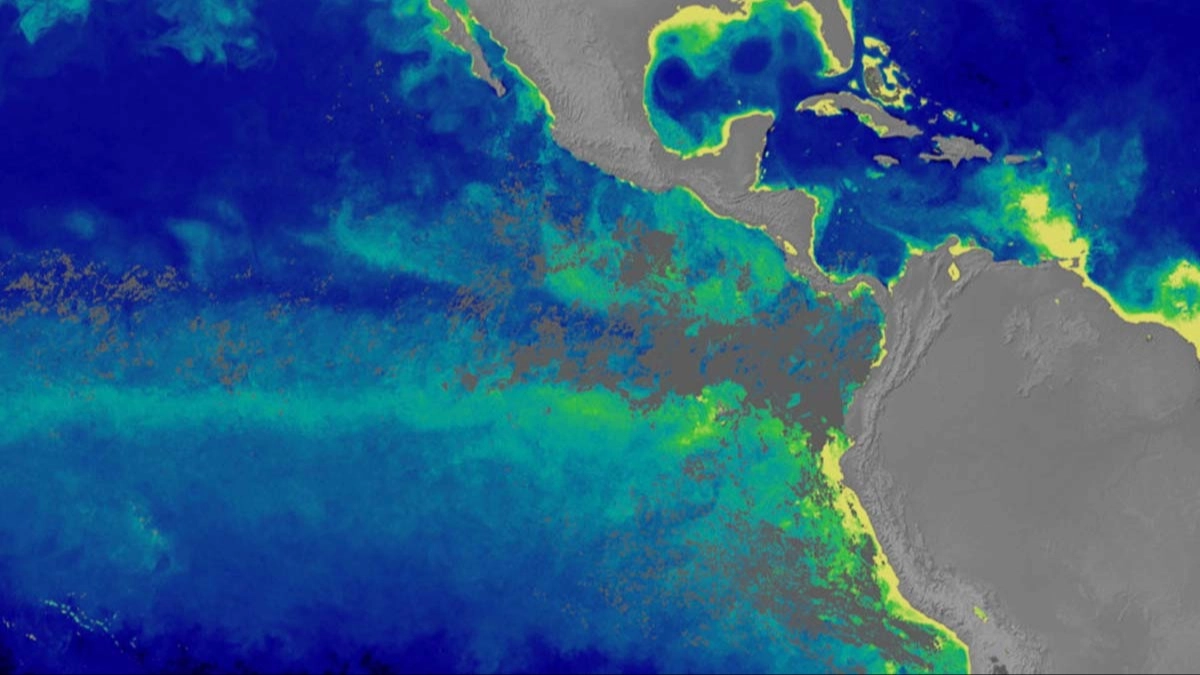
According to recent satellite images released by NASA, the developing super El Niño is actually changing the color - that's right, the COLOR - of the world's oceans, transforming the equatorial Pacific from lush green to bright blue.
The historic weather event has interfered with the ocean currents that carry cold, nutrient-rich water to the surface, which is essential to the survival of photosynthesizing plankton in the area.
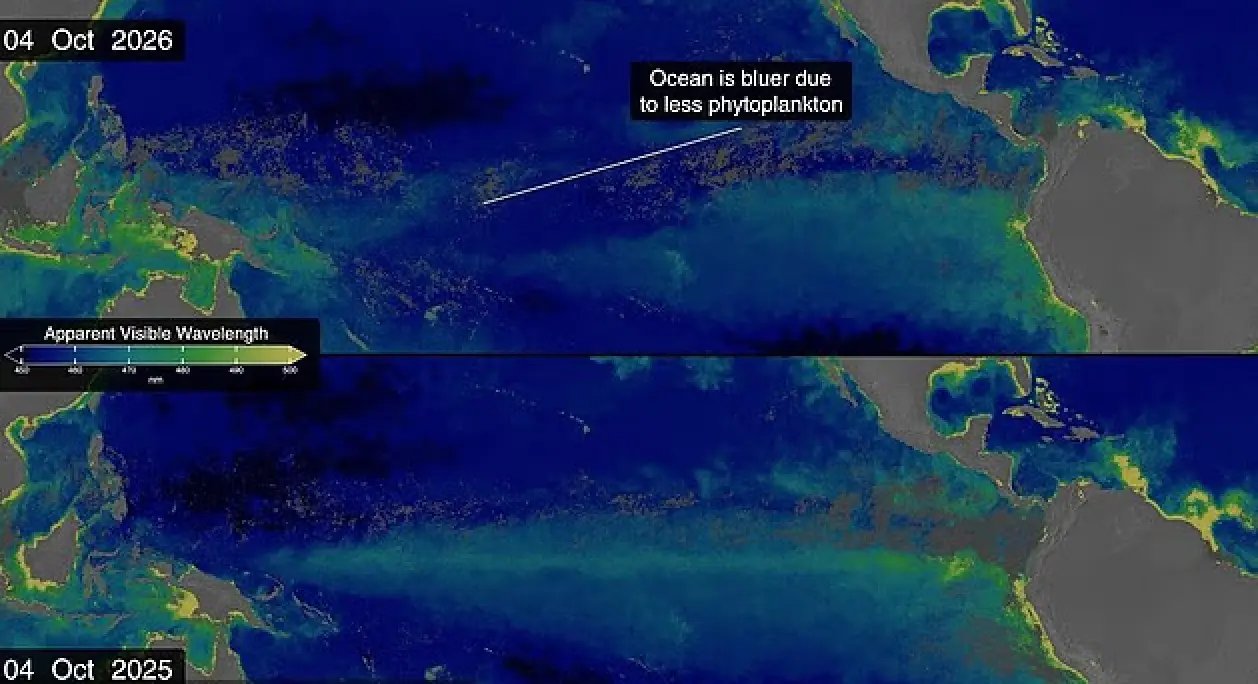
These tiny organisms typically turn the specific areas they inhabit a dazzling emerald green, but without their essential food source, the plankton have starved and a wash of deep blue has returned.
NASA launched the Plankton, Aerosol, Cloud, Ocean Ecosystem satellite earlier this year, equipped with an advanced instrument that continuously observes the ocean in hyperspectral color to measure wavelengths in the visible spectrum.
Dr Matthew Kehrli, a lead research scientist at NASA's Goddard Space Flight Center, explained that the ongoing visual data they are receiving from the satellite has been eye-opening for the team.
Speaking about the recent satellite imagery of the Pacific Ocean, he said: "Some people think of water as being just blue, but it's amazing the multitude of colours the ocean can be.
"You have expectations of what you would think would happen, but to visually see the results with the data products that you’re working with in real time is gratifying."
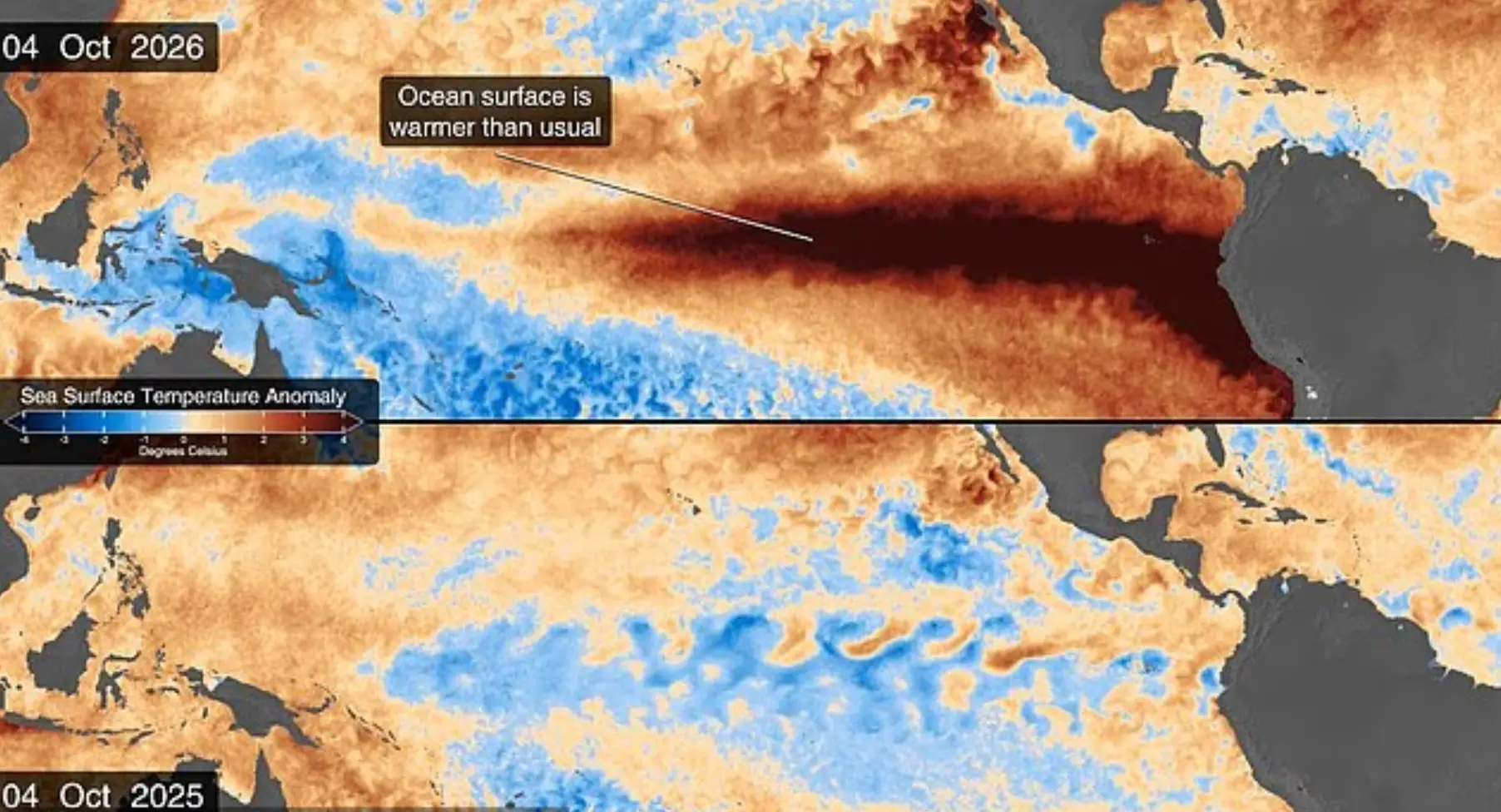
Current measurements show that sea surface temperatures in the eastern Pacific are already sitting three degrees Fahrenheit above the long-term average, and that intense heat could jump even higher in the coming months.
This expanding band of warm water has triggered a decline in algae numbers, which could create cascading effects across the entire marine ecosystem by forcing animals to relocate to entirely new feeding grounds.
The situation is being driven by slow-moving pulses of water known as Kelvin waves, which span thousands of miles and act like underwater highways transporting extreme heat directly across the Pacific Ocean.
Because warm water naturally expands as it heats up, this shift has also caused sea levels to physically rise by over a foot near South America and the coast of California.
Dr Josh Willis from NASA's Jet Propulsion Laboratory added: "Kelvin waves are like the heartbeat of El Niño. And our sea level satellites let us peer into the ocean and watch every beat.
"El Niño touches almost all of us in some way every time it occurs. While many have seen what it can do, we look to the ocean to understand why."
Topics: Climate Change, NASA
 Joe Yates