Tourist hotspot hits back at claims it caused hantavirus after 'patient zero' visit

The end of the world is not where the current hantavirus outbreak is heading, but it may well be where the deadly disease originated from, according to epidemiologists.
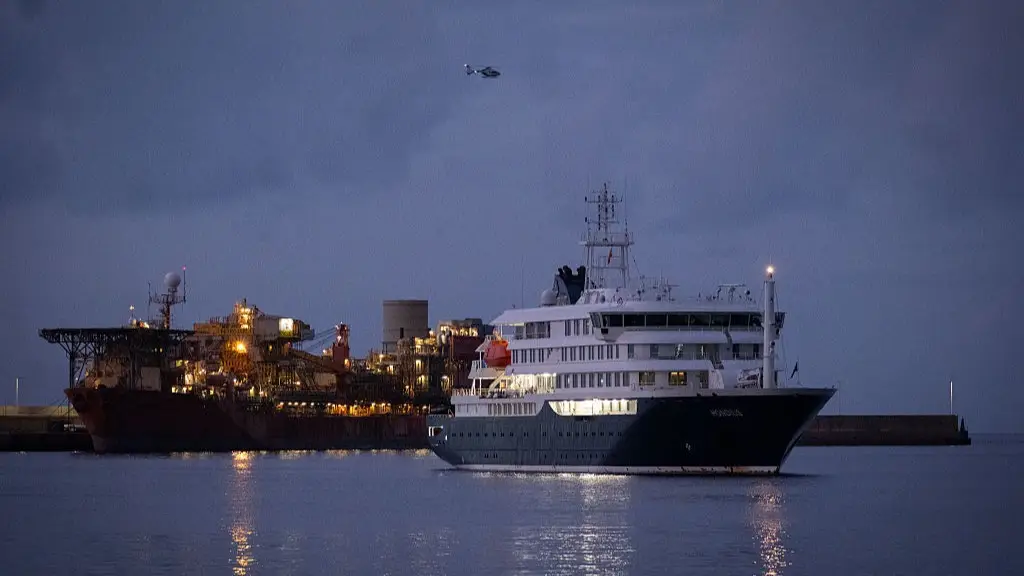
That's because a city on the southern tip of Argentina has become the focus for health experts as the final boarding location for the MV Hondius cruise ship before a form of hantavirus, called the Andes strain, broke out on board.
Often called a city at 'the end of the world', Ushuaia has become a major tourist hub with its startling skyline of snow-capped mountains and ready access to two of the Earth's most untouched places, Antartica and Patagonia.
But Ushuaia's reputation has taken a massive tumble in recent days, as epidemiologists rush to identify the source of the current hantavirus outbreak, with the current leading theory indicating that 'patient zero' had visited a site close to the city.
Advert
It is believed that two passengers visited a landfill site near the remote city in the hope of spotting some rare Patagonian birds, but one contracted the Andes strain of the virus, the only one known to pass from animals to humans.
This was likely passed on from rat dropping at the refuse dump, with unnamed Argentinian officials telling the BBC that this is their most likely hypothesis at this time. But the locals have not taken this theory kindly.
The director of epidemiology and environmental health in the region, Juan Petrina, has hit back at this claim by saying the disease is not present in their area, saying: "In Tierra del Fuego we have no record of hantavirus cases in our history.
"And specifically, since 1996 - when the National Surveillance System included it among mandatory reporting diseases - we haven't had a single case in Tierra del Fuego."
But while this is the leading theory, the man believed to be 'patient zero' had actually moved around a great deal before boarding the MV Hondius for an expedition to the Antarctic.

Leo Schilperoord, the Dutch man believed to have been the first to be infected with the virus, had spent month in South America already. First arriving in Argentina in November, 2025.
Believed to be traveling with his wife, Schilperoord crossed into Chile by car on January 7, spending the next 44 days seeing sites in both countries, even visiting Uruguay before returning to Argentina on March 27.
They then headed to Ushuaia, where they boarded the cruise on April 1.
This is what the Terra del Fuego public health chief argued when asked is hantavirus came from his region, with Petrina stating that the disease is much more likely to have originated more than 900 miles to the north.
"To begin with, we do not have the subspecies of the long-tailed mouse [which transmits the disease], nor do we share the same climatic conditions as northern Patagonia - neither in humidity nor temperature - for its development," he said.
And Ushuaia's remote geography makes it even more unlikely that the rodent-borne disease could just enter the region. Petrina explained: "And if rodents were to start moving, since they don't respect geographical boundaries, it's important to remember that we are an island.
"They would face the limitation of crossing the Strait of Magellan in order to infect local species, so that is an additional difficulty, beyond the climate."
The symptoms of the Andes strain of hantavirus and how it spreads
The Andes strain of hantavirus is very rare. Microbiologist Dr Gustavo Palacios told CNN there have only ever been 3,000 known cases.
It is the only documented form of hantavirus with human-to-human transmission. One study showed that window for patients to be infectious was about a day, when they develop a fever. But they also found it was transmissible through only brief proximity to an infected person.
Andes virus (ANDV) is primarily found in South America and has a high fatality rate, between 20 and 40 percent. It can cause hantavirus pulmonary syndrome (HPS), which attacks the lungs. Symptoms start one to eight weeks after infection and the first signs can include:
- Fatigue
- Fever
- Muscles aches
- Headaches
- Dizziness
- Chills
- Nausea and vomiting
- Diarrhoea
Later symptoms include:
- Coughing
- Shortness of breath
 William Morgan